


Flat Top Writing Desk
A flat top writing desk brings classic European craftsmanship and refined workspace utility into a room.
Flat Top Writing Desk
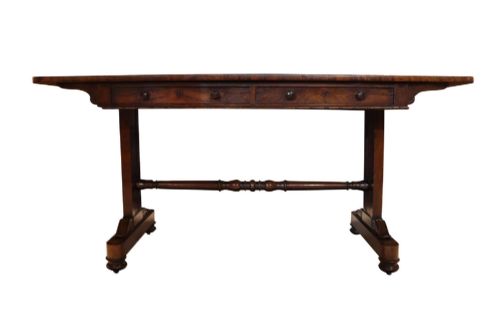
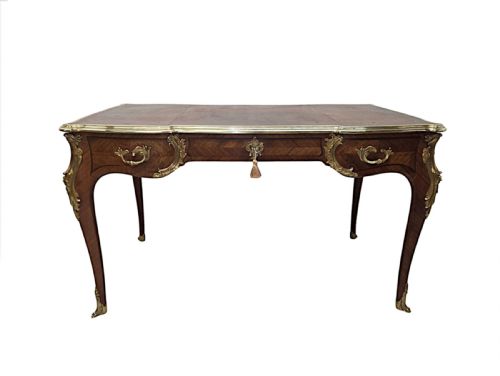
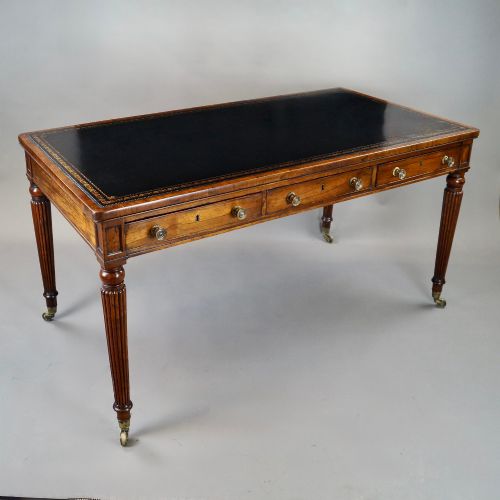
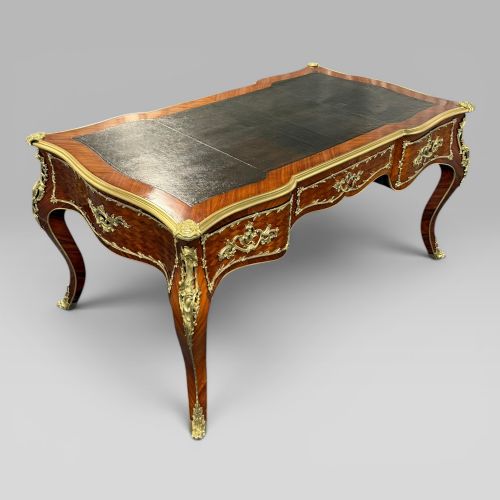
A flat top writing desk serves as a dedicated workspace, frequently taking the form of a freestanding bureau plat or library table designed to sit away from a wall. These pieces bridge British and continental traditions, ranging from English mahogany library tables to elaborate French bureau plat examples.
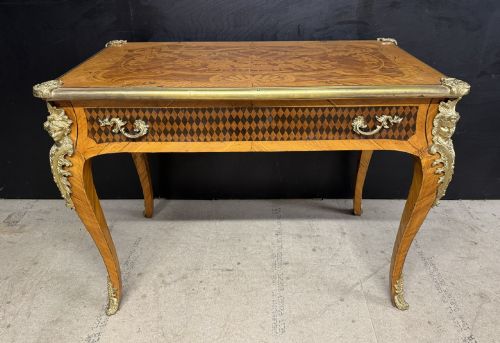
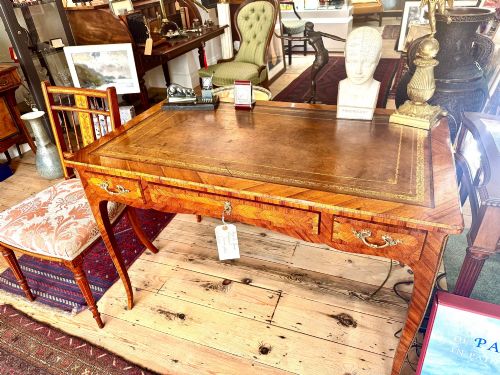
The selections here showcase distinct historical periods, prominently featuring 19th Century craftsmanship alongside Regency and 18th Century antecedents. Forms vary from simple mahogany writing tables to grander pieces adorned with marquetry and gilt metal mounts.
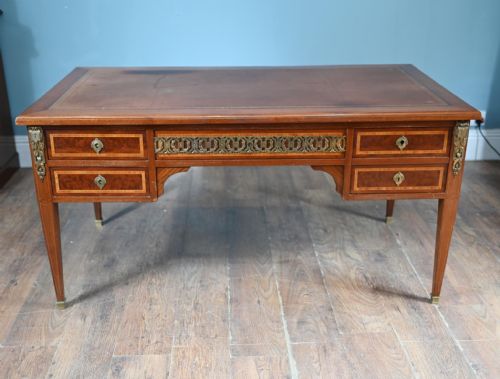
Makers and designers from notable firms like Gillows and Johnstone & Jeanes appear alongside continental cabinetmakers working in the Louis XV style and Directoire manner. Buyers encounter both pedestal desks and broader tables suited for central placement in a room.
How They Were Made
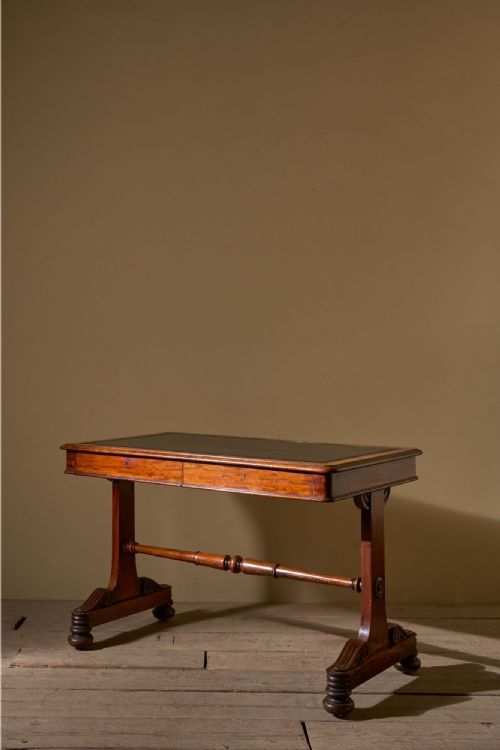
Cabinetmakers utilised dense timbers such as mahogany, rosewood, kingwood, and burl walnut as the primary structural foundations for these desks. Surfaces frequently incorporate inset leather writing panels framed by polished wood borders.
Decorative enrichment relied on brass, ormolu, and bronze mounts cast in Louis XV and Rococo revival styles, alongside intricate parquetry and marquetry patterns. Skilled artisans combined traditional joinery with applied metalwork to achieve formal elegance.
The listings feature mahogany, rosewood, kingwood, and burl walnut alongside bronze and ormolu mounts.
What Varies in Quality
Quality depends on the precision of the cabinetmaking, seen in the crispness of applied ormolu mounts and the complexity of the wood veneers. Superior pieces display harmonious proportions and meticulous attention to secondary timbers.
Attribution to documented makers or workshops elevates a desk, as does the preservation of original leather writing surfaces and patinated hardware. The integration of fine marquetry or lacquer work further distinguishes high-end examples.
Johnstone & Jeanes·Gillows·William Trotter·Henry Dasson·Gillow & Co
The Flat Top Writing Desk Glossary
- Bureau plat
- A type of French freestanding writing desk featuring a rectangular top and one or more drawers in the frieze. These desks traditionally stand away from walls to display finished backs.
- Ormolu
- Gilt bronze ornamentation applied to furniture, popular in French cabinetmaking of the eighteenth and nineteenth centuries. This decorative metalwork adds architectural definition to desk corners and aprons.
- Marquetry
- The art of applying pieces of veneer to a structure to form decorative patterns and pictorial designs. Craftsmen use varied woods to create tonal contrast on desk tops.
- Library table
- A large freestanding table utilised for reading and writing, often finished on all sides. These pieces feature prominently in 19th Century English interiors.
- Parquetry
- Geometric mosaic woodwork used for surface decoration on tabletops and desk drawers. The technique employs small blocks of timber arranged in repeating patterns.
Flat Top Writing Desk: Frequently Asked Questions
Where should I place a flat top writing desk?
These desks look best positioned towards the centre of a room rather than pushed against a wall. Their finished backs and detailed mounts make them suitable for standalone placement.
Ensure adequate natural light falls across the leather writing surface from the side. Leave sufficient surrounding space for a chair to pull out comfortably.
How do I care for the leather top?
Keep leather inserts clean by dusting them gently with a dry, soft cloth. Avoid placing hot cups or sharp objects directly on the surface.
Apply specialised leather cream sparingly to maintain suppleness and prevent cracking over time. Protect the material from direct sunlight to preserve its colour.
What is the difference between a bureau plat and a library table?
A bureau plat originates from French cabinetmaking traditions and typically includes frieze drawers with decorative bronze mounts. These pieces lean towards formal decorative arts.
Library tables often reflect English design traditions with an emphasis on sturdy timber construction. They serve similar functional workspace needs within domestic settings.
How do I identify a 19th century piece?
Examine the secondary timbers inside the drawer construction and look at the assembly methods used for the framing. Nineteenth-century cabinetmakers often combined machine assistance with traditional hand joinery.
Check the style of the brass hardware and the application of any ormolu mounts. Historical revival movements during this era drew heavily on Louis XV and Directoire aesthetics.