


Flat Top Wooden Trunk
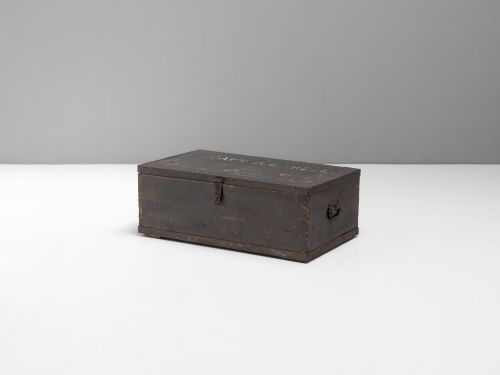
These flat top wooden trunk pieces are practical storage items and coffee tables built from pine, elm, and canvas, prized for their sturdy utility and historic hardware.
Flat Top Wooden Trunk
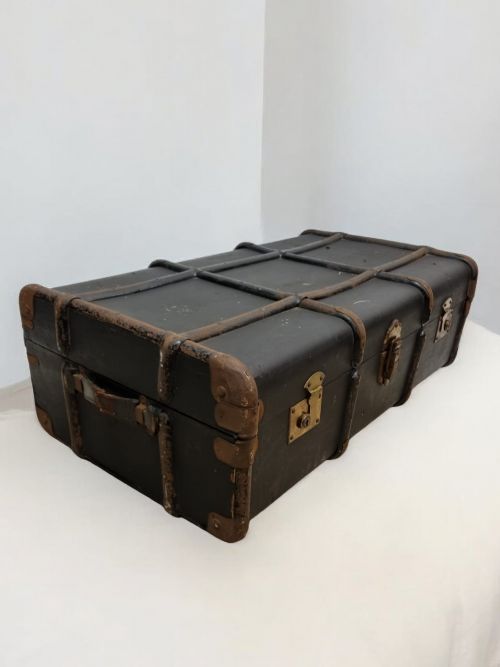
A flat top wooden trunk provides robust storage and versatile surface space, frequently utilised today as a coffee table or blanket box. When searching for a flat top wooden trunk, buyers encounter various forms including travelling chests, sea chests, and steamer trunks spanning the Victorian, Edwardian, and early twentieth century periods.
The pine painted travel trunk and the waxed box adapted for domestic interior use represent the most common variations met on this page. These pieces originate from diverse contexts, ranging from Scandinavian country workshops to maritime travel and French luggage makers.
How they were made
Construction relies primarily on solid woods such as pine and elm, assembled to withstand the rigours of nineteenth century and twentieth century travel. Surfaces appear painted, waxed, or covered in canvas.
Metal reinforcement defines the manufacturing technique, incorporating brass and iron hardware, locks, and protective corners. Leather strapping and original metal fittings secure the structure and complete the fabrication of these travel chests.
Listings feature items spanning the nineteenth century through the 1930s, constructed from pine, elm, leather, and canvas with iron and brass hardware.
What varies in quality
Quality separates ordinary utility boxes from exceptional examples through the integrity of the original hardware and the survival of surface finishes. Retaining original locks, brass corners, and leather handles elevates a piece above standard utilitarian storage.
The refinement of the timber selection and the retention of authentic painted or waxed patination distinguish regional country items from specialised maker luggage. Pieces with documented provenance or specialised maker association demonstrate superior craftsmanship within the range.
Aux Etats Unis·Louis Vuitton
The Flat Top Wooden Trunk Glossary
- Steamer trunk
- A lower-profile luggage piece designed to fit beneath a steamship berth. These items often feature canvas coverings and robust metal hardware.
- Travelling coffer
- A heavy-duty chest intended for transporting belongings during long journeys. They typically display solid timber construction with iron reinforcement.
- Maritime chest
- A sea-going storage box built to endure damp conditions aboard ship. These often incorporate sturdy elm or pine timbers and secure iron lock plates.
- Campaign style
- Furniture and luggage built for portability by military officers or travellers. Such pieces utilise brass corners and flush handles to resist damage in transit.
Flat Top Wooden Trunk: Frequently Asked Questions
How are flat top trunks used today?
These pieces function primarily as living room coffee tables, blanket boxes, or decorative storage chests. Their flat lids provide a stable surface for everyday items while concealing interior storage space.
They integrate easily into various interior styles, from rustic country rooms to modern living spaces, offering both practical utility and historical character.
What materials were used to build them?
Builders relied predominantly on softwoods and hardwoods like pine and elm for the main body. Iron and brass hardware provided structural reinforcement and security for travellers.
Additional materials included canvas coverings, leather straps, and painted finishes which protected the wood from moisture and rough handling during transit.
How do I date a wooden trunk?
Dating relies on examining the construction methods, the type of wood, and the style of the metal hardware. Victorian and nineteenth-century examples often feature hand-forged iron fittings and exposed dovetail joints.
Later pieces from the 1920s and 1930s frequently incorporate branded locks, canvas coverings, and standardised brass or steel fixtures typical of twentieth-century travel luggage.
Are these trunks waterproof?
While historical travel trunks were designed to withstand rain and sea spray during journeys, they are not completely waterproof by modern standards. Painted pine, canvas wraps, and treated leather offered substantial weather resistance in transit.
Today, standard indoor humidity is sufficient to preserve the timber without requiring modern waterproofing treatments.