


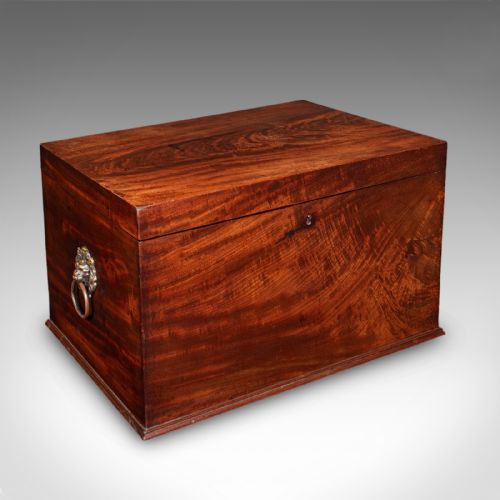


Flame Mahogany Wine Box
A flame mahogany wine box secures bottles with deep, figured grain and heavy brass fittings, offering a commanding centrepiece for any dining room.
Flame Mahogany Wine Box
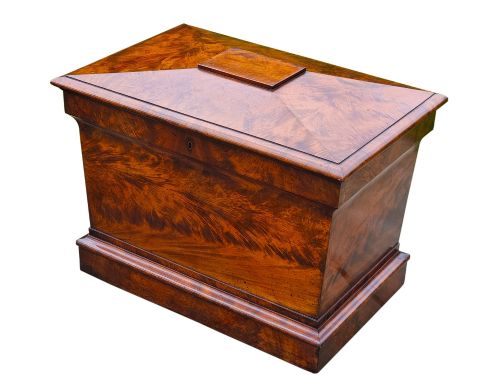
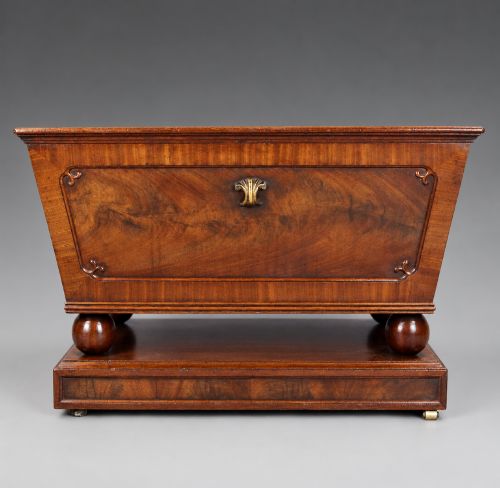
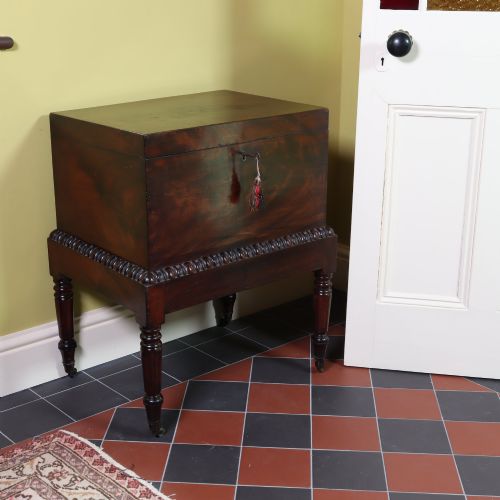
A flame mahogany wine box, commonly termed a cellarette or wine cooler, stores and chills bottles within structured compartments. These pieces emerge predominantly from the Georgian, Regency, and Victorian periods.
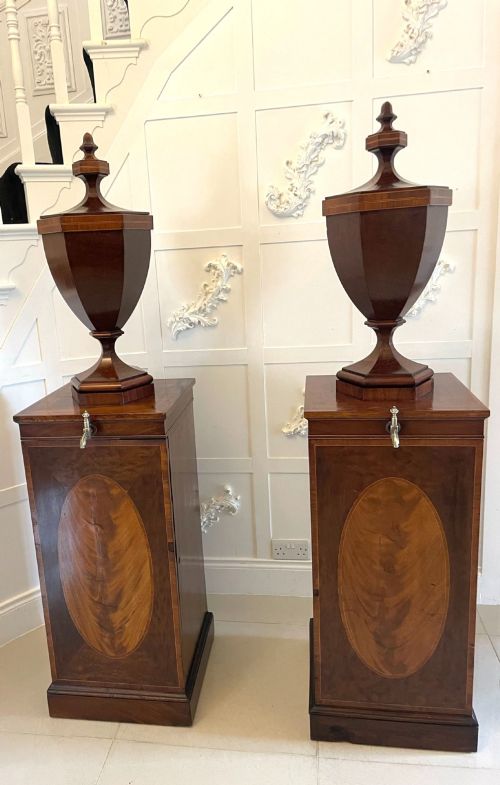
The most frequent form on this page is the sarcophagus shape, featuring a hinged lid and robust proportions, alongside occasional pedestal urns. They sit low on paw feet or rest directly upon the floor to hold heavy loads of wine.
Originating in Irish and English workshops, these items served the dining rooms of large country houses before transitioning into domestic living spaces. Buyers encounter varied formats, from modest rectangular boxes to imposing sarcophagi.
How they were made
Cabinet makers selected dense mahogany and applied figured veneer to create the distinctive flame pattern across the exterior panels. Boxwood inlay frequently provides fine linear borders to accentuate the geometry of the box.
Metal linings, sometimes zinc or lead, protected the internal timber from melting ice and moisture when bottles rested in cooling water. Heavy brass handles and claw feet were cast and screwed into place to bear the substantial weight.
Carved wooden details and giltwood accents appear on grander examples, reflecting George III Neoclassical and Regency design vocabularies. Joinery relies on solid carcass construction to withstand the stresses of holding liquid and stone.
Flame Mahogany Wine Box Retail Price Guide 2026
Typical asking prices for flame mahogany wine box among the pieces listed under this phrase on Sellingantiques today, from the lower quarter to the upper quarter. They describe what is for sale here now, not the wider market.
These heavy boxes doubled as miniature cellars, keeping precious vintages locked away from thirsty footmen.
What varies in quality
The selection of the veneer sets the visual hierarchy, with symmetrical flame patterns commanding greater presence than plain timber. The depth of the figuring and the book-matching across the lid indicate the maker's ambition.
Hardware quality distinguishes workshop output, where heavy cast brass handles and original fitted interiors demonstrate superior investment. Secondary woods and the execution of internal bottle dividers reveal whether a piece came from a premier cabinet maker or a provincial workshop.
Proportion and architectural confidence separate exceptional examples from standard production. A well-balanced sarcophagus curve with crisp moulding retains an imposing dignity.
Gillingtons·Gillows
The Flame Mahogany Wine Box Glossary
- Cellarette
- A lockable container designed to hold bottles of wine safely beneath a secure lid. They sit on the floor near the dining table for easy access during meals.
- Flame mahogany
- A timber cut from the fork of the mahogany tree where the branch meets the trunk, producing a rippling, flame-like grain pattern. Cabinet makers used veneers of this wood on primary display surfaces.
- Sarcophagus shaped
- A burial-chest form adopted by furniture makers in the Regency period with a domed lid and flared sides. This profile allowed for deep storage capacity inside.
- Boxwood inlay
- Narrow strips of pale boxwood set flush into dark mahogany to create contrasting geometric borders. This technique highlights the edges of panels and lids.
- Paw foot
- A carved foot shaped like the paw of a lion or beast, frequently seen on Regency furniture. They lift the heavy body of the cooler slightly off the floor.
Flame Mahogany Wine Box: Frequently Asked Questions
What is a flame mahogany wine box?
A flame mahogany wine box is a heavily figured storage chest designed to hold and cool wine bottles during the dining process. These pieces utilise rich veneers and internal compartments to manage bottles.
They reflect the formal dining customs of the eighteenth and nineteenth centuries, offering both functional storage and an imposing visual anchor for a room.
How were these boxes used?
Servants filled the zinc or metal-lined interiors with ice and water to keep wine chilled before serving it to guests at the dining table. The heavy lids helped maintain the internal temperature.
Locks secured the valuable contents away from domestic staff, reflecting the high cost of imported wine during the Georgian and Regency eras.
Where should I place a wine box?
These pieces suit dining rooms, libraries, or spacious hallways where their strong architectural presence can be appreciated. They work well standing independently against a wall or beneath a large mirror.
Because of their original function and solid construction, they also serve effectively as side tables or storage chests for blankets and books in modern settings.
How do I tell Regency from Georgian pieces?
Georgian examples often display cleaner, straighter lines influenced by classical restraint, while Regency pieces tend to adopt bolder, more dramatic sarcophagus shapes. Regency items frequently feature heavier brass mounts, paw feet, and more flamboyant flame mahogany veneers.
Reviewing the leg styling, moulding profiles, and hardware weight helps clarify the period of manufacture.