






Vintage Mahogany Sarcophagus
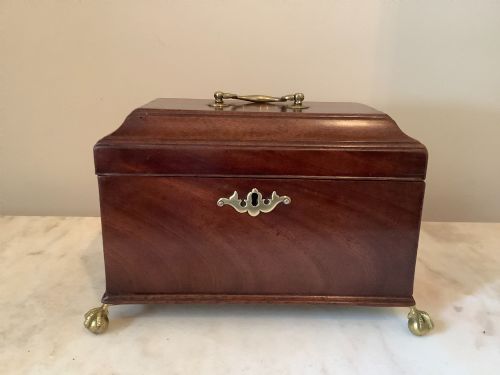
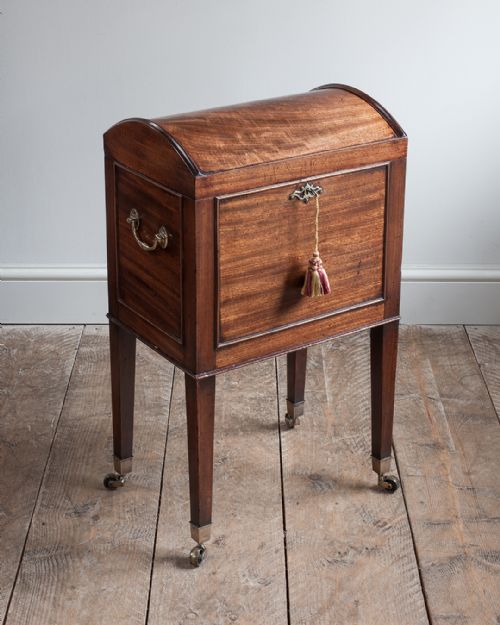
A vintage mahogany sarcophagus is a substantial, classical container built for storing wine or tea, prized for its architectural presence and rich timber grain.
Vintage Mahogany Sarcophagus
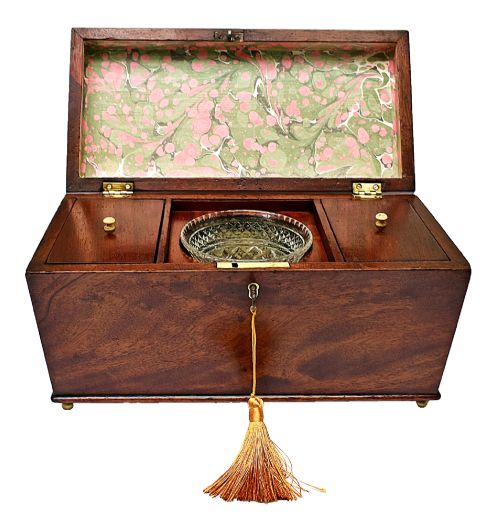
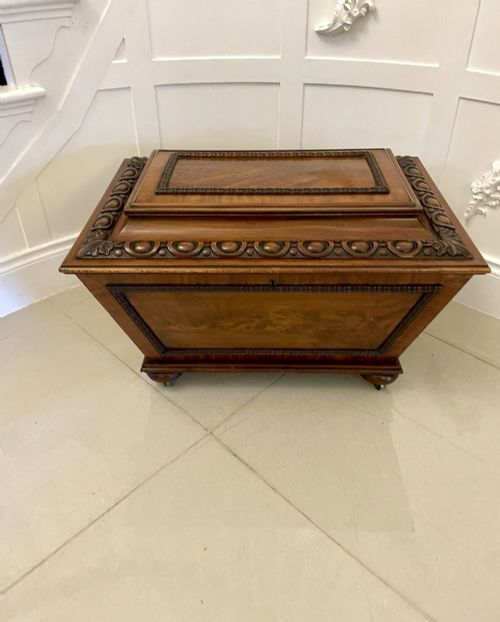
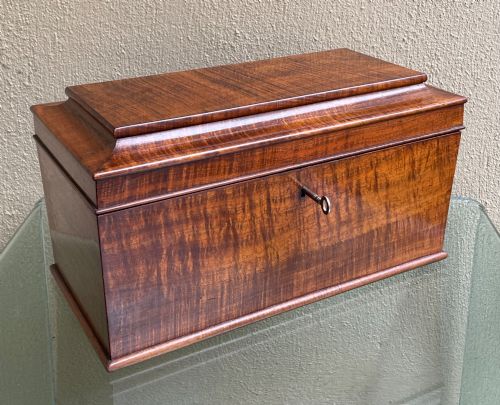
A vintage mahogany sarcophagus typically appears in forms such as cellarettes, wine coolers, and tea caddies spanning the Georgian, Regency, and Victorian eras. These containers draw upon classical architectural proportions, often sitting upon sturdy feet or pedestals with distinct tapering bodies.
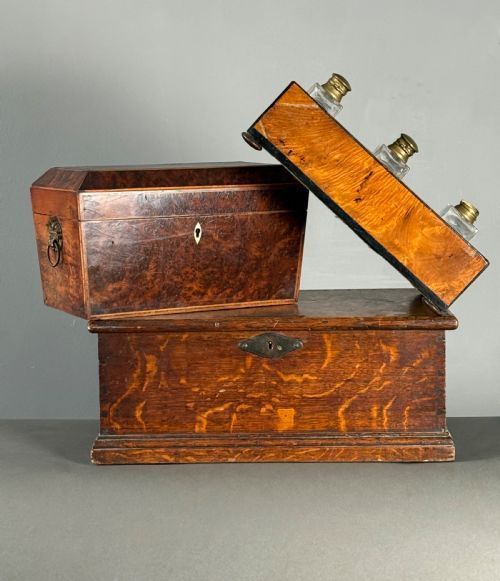
The pieces on this page heavily favour larger wine coolers and cellarettes alongside smaller tea caddies, reflecting how domestic storage needs shifted across the eighteenth and nineteenth centuries. Makers utilised the sarcophagus silhouette to bring grandeur into formal dining rooms and drawing rooms alike.
Materials and construction methods
Cabinet makers relied primarily on solid mahogany and figured mahogany veneers, sometimes selecting flame mahogany for dramatic visual depth on the primary surfaces. Carved details, brass handles, and brass feet frequently punctuate the dark timber.
Inlay work adds intricate contrast through boxwood, ebony, and satinwood, while internal compartments occasionally incorporate materials like bone and metal linings. Construction joints remain hidden or tightly pinned, demonstrating rigorous eighteenth and nineteenth-century joinery.
Vintage Mahogany Sarcophagus Retail Price Guide 2026
Typical asking prices for vintage mahogany sarcophagus among the pieces listed under this phrase on Sellingantiques today, from the lower quarter to the upper quarter. They describe what is for sale here now, not the wider market.
Listings span multiple eras from the 18th century through the Edwardian period, uniting cellarettes, wine coolers, and tea caddies under classical styles.
Assessing quality in mahogany containers
Quality rests heavily on the selection of the timber, where highly figured or flame mahogany commands greater visual authority than plain boards. The precision of inlaid boxwood, ebony, and satinwood banding further separates standard production items from masterworks.
Hardware integrity and structural carving also dictate overall standard. Original brass mounts, robust internal lead or metal linings, and crisp carving on paw feet or classical motifs indicate superior workshop output.
Freemans of Norwich·Gillows of Lancaster
The Vintage Mahogany Sarcophagus Glossary
- Cellarette
- A lockable container designed to hold bottles of wine or spirits beneath the dining room sideboard. These pieces often feature internal dividers to protect glass vessels.
- Sarcophagus shape
- A classical box design featuring a sloping lid and a wider top that tapers toward the base, echoing ancient stone tombs. Cabinet makers popularised this silhouette during the Regency period.
- Flame mahogany
- A highly figured veneer cut from the fork of the mahogany tree where the branch meets the trunk. This grain creates a flickering, flame-like pattern across the timber.
- Boxwood inlay
- Narrow strips of pale boxwood embedded into contrasting dark mahogany surfaces to create geometric borders and decorative stringing. This technique requires meticulous hand-cutting.
- Wine cooler
- A large standing or floor-based vessel designed to chill bottles using ice or cold water. Many examples include fitted metal interiors to contain moisture.
Vintage Mahogany Sarcophagus: Frequently Asked Questions
What is a sarcophagus cellarette used for?
These containers originally stored bottles of wine and spirits safely beneath lock and key in the dining room.
Today, collectors repurpose them as distinctive side tables or deep storage chests in living spaces.
How do I date a mahogany sarcophagus?
Dating relies on examining the timber grain, hardware style, and structural proportions against known Georgian and Regency design periods.
Earlier pieces often display heavier classical carving while later Victorian examples introduce simpler mechanical joinery.
Are tea caddies related to wine coolers?
Tea caddies share the same timber vocabulary and architectural sarcophagus silhouette on a much smaller scale.
Both items served luxury commodities in the formal rooms of eighteenth and nineteenth century homes.
How should I care for vintage mahogany?
Keep timber pieces away from direct heat sources and strong sunlight to prevent the mahogany veneer from drying out or splitting.
Apply traditional beeswax occasionally to nourish the grain and maintain a soft, natural sheen.