
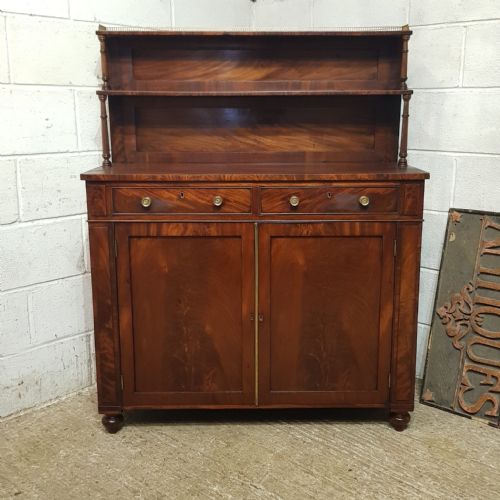
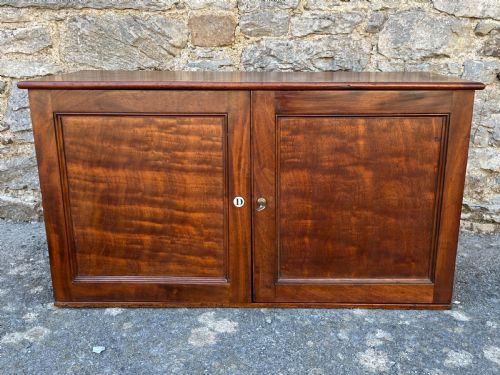


Flame Mahogany Two Door Credenza
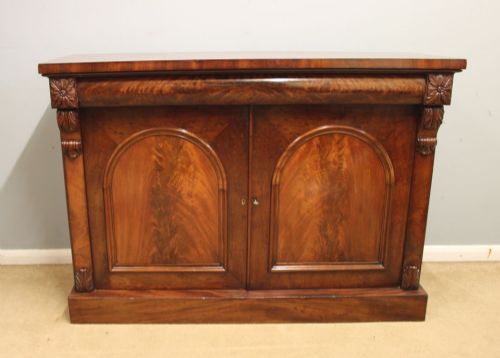
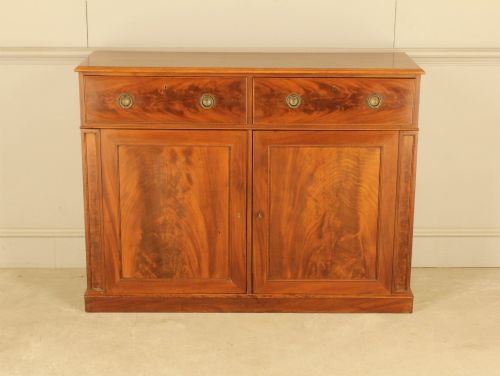
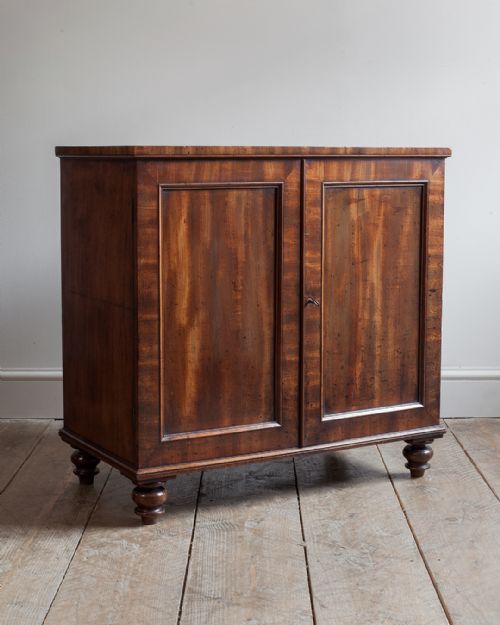
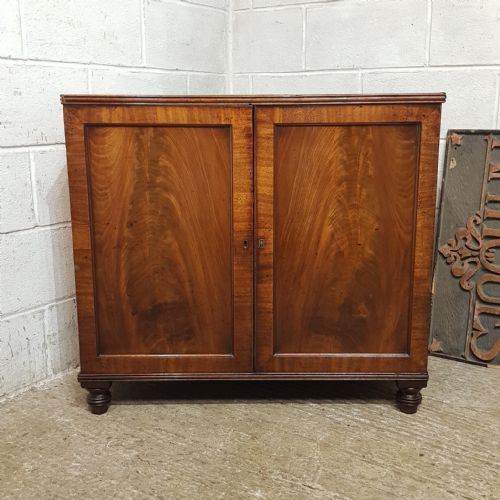
A flame mahogany two door credenza brings rich cabinet work and deep timber figuring into a room.
Flame Mahogany Two Door Credenza
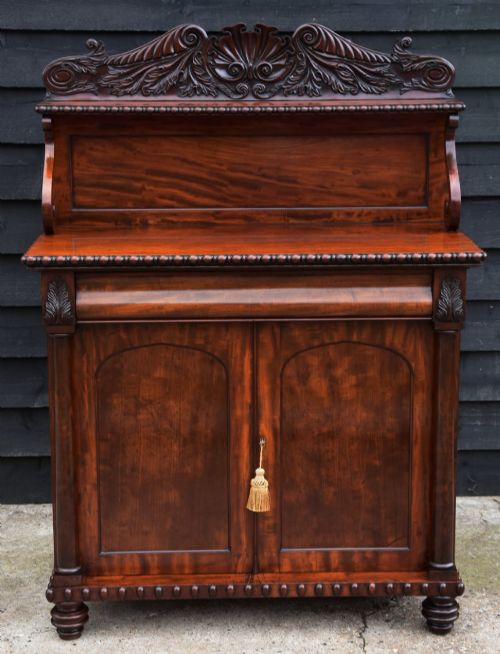
A flame mahogany two door credenza sits within a lineage of low storage furniture that includes sideboards, chiffoniers, and enclosed cabinets. The pieces seen here span the Georgian, Regency, William IV, and Victorian periods, reflecting the shift in domestic interiors toward compact and heavily figured timber furniture.
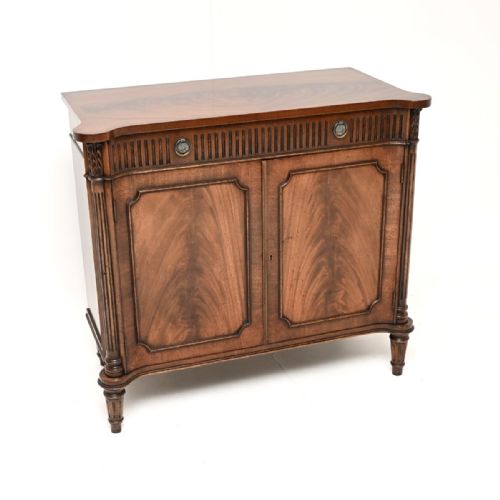
Most examples adopt the form of a low side cabinet or chiffonier with twin doors concealing shelved interiors. They appear in English, French Empire, and Belgian idioms, frequently taking their place in dining rooms or entrance halls.
Makers utilised dense tropical hardwoods, applying figured veneers to create striking visual movement across the front elevation. The resulting cabinet functions simultaneously as a display surface and a practical repository for tableware or papers.
How they were made
Cabinet makers constructed carcass frames from solid secondary timbers, applying thin slices of flame mahogany veneer to the primary visible surfaces. This technique exploited the swirling grain patterns found at the junction of branches, laying them out in symmetrical book-matched configurations across the two doors.
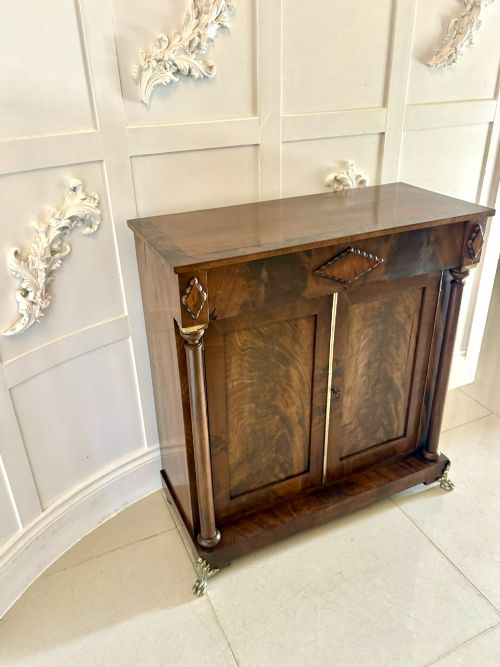
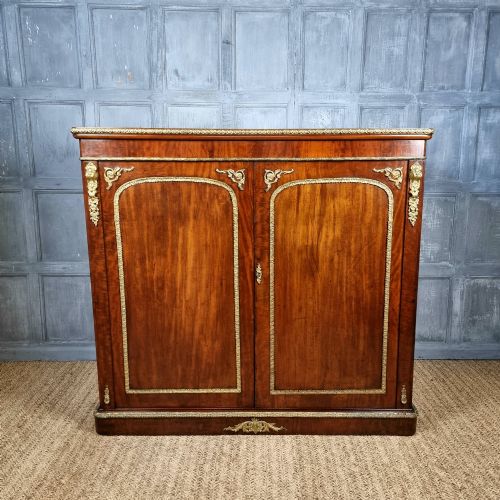
Joinery relied on traditional housing and dovetail methods to ensure stability across wide panels prone to seasonal movement. Brass mounts, ormolu accents, and turned columns frequently integrated into the design to frame the timber work.
Listings feature Regency, Victorian, and William IV periods, constructed primarily from mahogany with brass and ormolu details.
What varies in quality
Quality rests primarily on the selection and matching of the timber veneers across the door panels. Superior cabinets demonstrate continuous grain alignment and deep chatoyancy within the flame figure, whereas lesser examples rely on flat or dull cuts of mahogany.
The execution of the secondary joinery and the retention of original hardware distinguish the better workshops. Subtle details such as finely turned barley twist columns, rebated door edges, and sound internal carcass construction elevate a piece above standard utilitarian production.
Gillows·S Jamar
The Flame Mahogany Two Door Credenza Glossary
- Flame mahogany
- A timber veneer exhibiting a rippled, flickering grain pattern resembling tongues of fire. It is sliced from the point where a branch joins the main trunk.
- Chiffonier
- A low cabinet originating in the early nineteenth century, typically fitted with two doors and used for serving or storing china.
- Book-matching
- A veneer technique where adjacent slices are opened like a page to mirror each other's grain pattern. This creates symmetrical patterns across cupboard doors.
- Ormolu
- Gilt bronze mounts applied to furniture for decorative effect. It gained widespread use during the Regency and French Empire periods.
- Secondary timber
- The internal or structural wood used in cabinet making, such as pine or oak, which remains hidden behind primary mahogany veneers.
Flame Mahogany Two Door Credenza: Frequently Asked Questions
What is a flame mahogany two door credenza?
A flame mahogany two door credenza is a low storage cabinet featuring figured wood grain across its twin front doors. These pieces derive from nineteenth-century sideboards, chiffoniers, and side cabinets designed for domestic reception rooms.
They combine enclosed shelving with a flat top surface suited for display. The form bridges decorative arts and practical storage.
How do I date a flame mahogany cabinet?
Dating relies on architectural styling, construction methods, and hardware signatures. Regency and William IV pieces often display turned columns, brass inlay, or brass grillework, while Victorian examples lean toward heavier proportions and bolder mouldings.
Secondary timbers inside the carcass also shift over decades, moving from native oak and pine to various imported softwoods. Examining the dovetailing on internal drawers helps narrow the period of manufacture.
Where should I place a low cabinet?
These cabinets suit dining rooms, living spaces, and wide hallways where floor space is limited. Their low profile allows art or mirrors to hang comfortably above them.
Keeping them away from direct sunlight and strong heat sources protects the fragile mahogany veneer from splitting or fading. Regular polishing maintains the natural lustre of the polished wood.
How do I care for flame mahogany?
Care involves applying traditional beeswax and avoiding silicone-based sprays that damage old French polish surfaces. Gentle dusting with a soft cloth prevents abrasive particles from scratching the thin veneer.
Maintaining stable room humidity prevents the timber beneath the veneer from expanding and causing the surface to lift.