

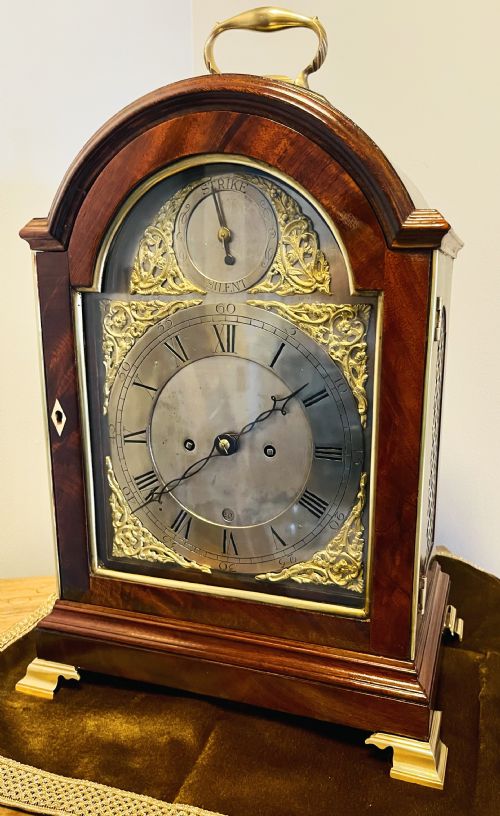
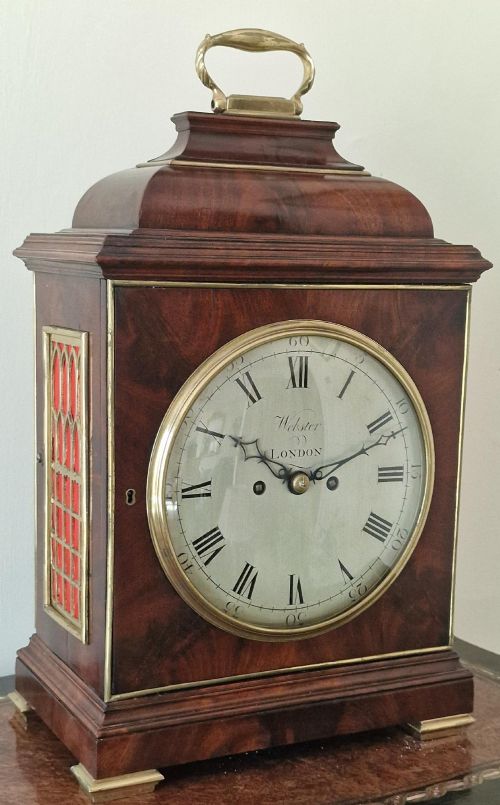


Flame Mahogany Table Clock
A flame mahogany table clock brings rich grain and precision engineering together, offering a functional centrepiece from the Georgian and Regency periods.
Flame Mahogany Table Clock
A flame mahogany table clock stands as a sophisticated horological piece designed for domestic interiors during the Georgian and Regency eras. These timepieces typically take the form of bracket clocks or mantel clocks, serving both timekeeping and decorative functions.
The pieces on this page span the eighteenth and nineteenth centuries, including specific years such as seventeen ninety, eighteen hundred, eighteen ten, and eighteen fifty. Buyers encounter bracket clocks and table clocks featuring distinct architectural silhouettes like bell tops, chamfer tops, and lancet tops.
Makers working in London and provincial towns produced these works using figured timber alongside brass, glass, enamel, and silvered metal. The selection includes provincial examples alongside signed works from urban workshops.
How they were made
Cabinetmakers selected mahogany timbers with pronounced grain patterns to construct the outer cases, applying skilled joinery to shape complex forms like bell tops and lancet arches. Brass mounts, feet, and bezels were cast and fitted to protect corners and frame the dials.
Clockmakers fitted mechanical movements driven by fusee mechanisms, powering eight-day trains and striking arrangements. Dials were formed from enamel or silvered metal, then inscribed with numerals and signatures before mounting behind glass doors.
Flame Mahogany Table Clock Retail Price Guide 2026
Typical asking prices for flame mahogany table clock among the pieces listed under this phrase on Sellingantiques today, from the lower quarter to the upper quarter. They describe what is for sale here now, not the wider market.
Listings feature Georgian and Regency periods alongside nineteenth-century works, utilising mahogany, brass, glass, enamel, and silvered metal.
What varies in quality
The visual impact depends largely on the choice of mahogany veneer, where striking flame patterns and matched grain distribution elevate the appearance of the case. Master cabinetmakers shaped proportions with greater refinement, ensuring architectural details like bell tops and chamfered edges remained crisp and balanced.
Movement sophistication sets individual examples apart, particularly the presence of twin fusee systems, striking trains, and signed dials from notable makers. The integration of high-grade brass mounts and finely engraved silvered metal dials reflects the original investment in the clock's production.
Webster, London·Hyde of Salisbury·Hampson And Son·Watson, London·Ganthony Of London·John Ellicott·Barraud And Lund·Vulliamy
The Flame Mahogany Table Clock Glossary
- Bracket clock
- A portable spring-driven clock originally designed to sit on a wall bracket or a table. These domestic timepieces often feature striking mechanisms and elaborate wooden cases.
- Fusee
- A conical pulley used in mechanical clocks to maintain an even pull on the movement as the mainspring unwinds. This device ensures more accurate timekeeping throughout the power reserve.
- Silvered metal
- A brass or copper dial plate treated with a silver compound to produce a bright, reflective surface. Numbers and maker signatures are typically engraved into this layer and darkened for legibility.
- Bell top
- An architectural case silhouette rising to a curved, dome-like peak reminiscent of a church bell. This form appeared frequently on Georgian bracket clocks.
- Chamfer top
- A case design where the upper edges are bevelled or angled off rather than meeting at a sharp right angle. This style adds subtle geometric depth to Regency mahogany clocks.
Flame Mahogany Table Clock: Frequently Asked Questions
What is a flame mahogany table clock?
A flame mahogany table clock is a mechanical timepiece housed in a wooden case featuring distinctive, rippling grain patterns. These pieces originated during the Georgian and Regency periods.
Craftsmen built them as portable bracket or mantel clocks, combining cabinetmaking with precision clockwork. They served as functional timekeepers and status objects in period homes.
How do fusee movements work?
A fusee movement uses a conical pulley connected to the mainspring by a fine chain or cord. As the spring unwinds and loses power, the chain moves to a wider part of the cone.
This mechanical adjustment compensates for the decreasing tension of the spring. It delivers consistent force to the gear train for more reliable timekeeping.
How do I identify a Georgian clock?
Georgian clocks generally date from the eighteenth or early nineteenth century and display classical proportions. Their cases frequently feature architectural elements like bell tops or bracket feet.
Many examples showcase maker signatures on silvered metal or enamel dials. The timber work relies on solid mahogany and figured veneers characteristic of the period.
Where were these clocks placed?
These clocks were designed to sit on sturdy tables, chests of drawers, or dedicated wall brackets. Their portable nature allowed owners to move them between rooms as needed.
Their striking mechanisms enabled them to announce the hours audibly across living spaces and hallways. Today, collectors continue to display them on mantelpieces and tables.