

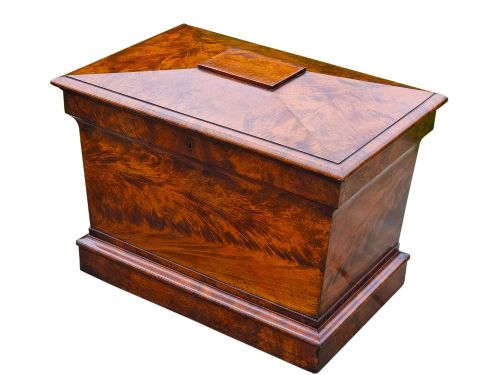
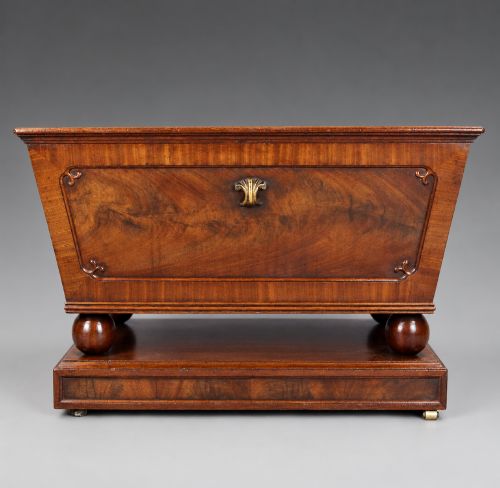
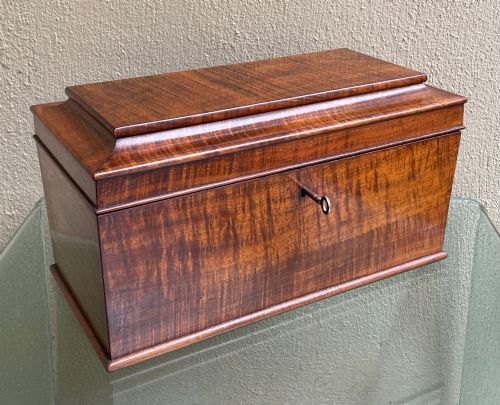
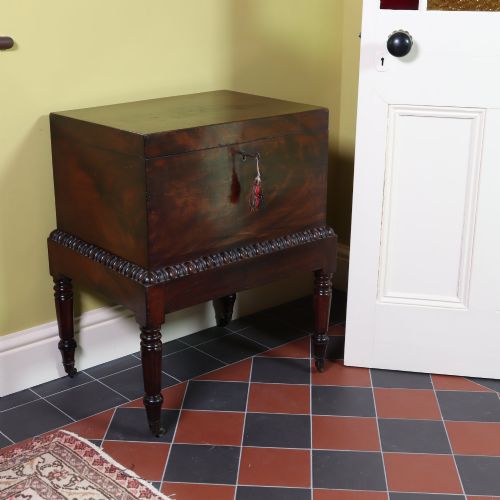


Flame Mahogany Sarcophagus
Flame mahogany sarcophagus pieces are architectural timber containers designed to hold wine or tea, prized for their deep figured grain and classical form.
Flame Mahogany Sarcophagus
A flame mahogany sarcophagus is a substantial timber chest formed with sloping or pedimented sides, shaped to echo classical stone tombs. The form serves primarily as a wine cooler or cellarette, alongside smaller scale tea caddies designed for domestic entertaining.
Most examples encountered here date from the Regency and Georgian periods, manifesting in substantial proportions intended for formal dining rooms. These containers typically rest on carved feet or low pedestals, maintaining a commanding presence in an interior.
The typology encompasses dedicated wine coolers and cellarettes alongside tea caddies, constructed in mahogany and finished with decorative veneers. Makers of the early nineteenth century shaped these vessels to project classical authority and status.
How they were made
Construction relies upon solid timber carcases overlaid with flame mahogany veneer, selected for its swirling figuration and dramatic grain patterns. Cabinetmakers applied these thin leaves of wood to curving surfaces, aligning the flame patterns to create symmetrical visual impact.
Metal components such as brass handles, paw feet, and internal linings of zinc or metal provide structural definition and practical utility. Internal divisions within wine coolers and tea caddies often incorporate bone or glass fittings to secure bottles and loose leaf tea.
Flame Mahogany Sarcophagus Retail Price Guide 2026
Typical asking prices for flame mahogany sarcophagus among the pieces listed under this phrase on Sellingantiques today, from the lower quarter to the upper quarter. They describe what is for sale here now, not the wider market.
Materials recorded across the selection include solid mahogany, flame mahogany veneer, brass, bone, zinc, and glass.
What varies in quality
Quality separates through the selection and bookmatching of the veneer, where superior pieces display intense flame figure mirrored across the principal surfaces. The depth of the timber preparation and the crispness of classical moulding dictate the upper tier of execution.
Hardware integrity and internal configuration separate standard domestic items from grander commission pieces. Original metalwork, intact zinc linings, and well-preserved internal bone or glass elements elevate the standing of an individual box.
Gillows
The Flame Mahogany Sarcophagus Glossary
- Sarcophagus
- A monumental container form shaped with angled or pedimented sides echoing classical stone tombs. This silhouette defines the largest wine coolers and cellarettes.
- Flame mahogany veneer
- A thin slice of timber cut from the fork of the mahogany tree where branches diverge. The resulting grain yields fiery, swirling patterns highly prized by cabinetmakers.
- Cellarette
- A lockable container designed to hold bottles of wine beneath the dining table or sideboard. These vessels often incorporate internal metal linings for ice and water.
- Tea caddy
- A smaller lidded box constructed to store loose tea leaves securely. Examples frequently feature internal compartments and glass mixing bowls.
- Paw foot
- A carved furniture terminal shaped to resemble the foot of a beast. These supports frequently anchor the corners of Regency and William IV pieces.
Flame Mahogany Sarcophagus: Frequently Asked Questions
What is a flame mahogany sarcophagus used for?
These timber chests were originally built to store wine bottles or loose leaf tea within formal dining rooms and drawing rooms. The larger sarcophagus forms functioned as wine coolers, often featuring metal linings to hold ice.
Today, buyers utilise these containers as decorative accent pieces, side tables, or statement storage boxes within traditional and contemporary interiors alike.
How do I date a Regency sarcophagus piece?
Dating relies on examining the timber veneers, classical proportions, and specific decorative motifs characteristic of the early nineteenth century. Regency examples frequently incorporate brass paw feet, heavy ring handles, and pronounced flame mahogany figure.
Later revival pieces from the Victorian era or the 1930s often adopt these same classical forms but differ in timber finish, interior construction, and secondary woods.
Are these pieces lined with metal?
Many of the wine coolers and cellarettes feature internal metal or zinc linings designed to hold ice and chill bottles during dining. Some retain their original partitions for separating individual wine bottles.
Smaller tea caddy versions typically contain wooden partitions or glass bowls rather than metal cooling inserts.
How do I care for flame mahogany veneer?
Maintenance requires keeping the timber away from direct sunlight and maintaining stable room humidity to prevent the veneer from lifting. Gentle dusting with a dry cloth preserves the polished surface.
Application of traditional wax polish helps nourish the grain and protects the historic finish without building up heavy chemical residues.