
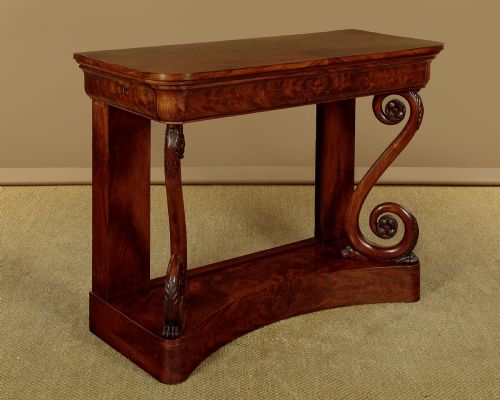


Flame Mahogany Pier Table
A flame mahogany pier table is a console or side table displaying rich timber grain, designed to stand against a wall between windows.
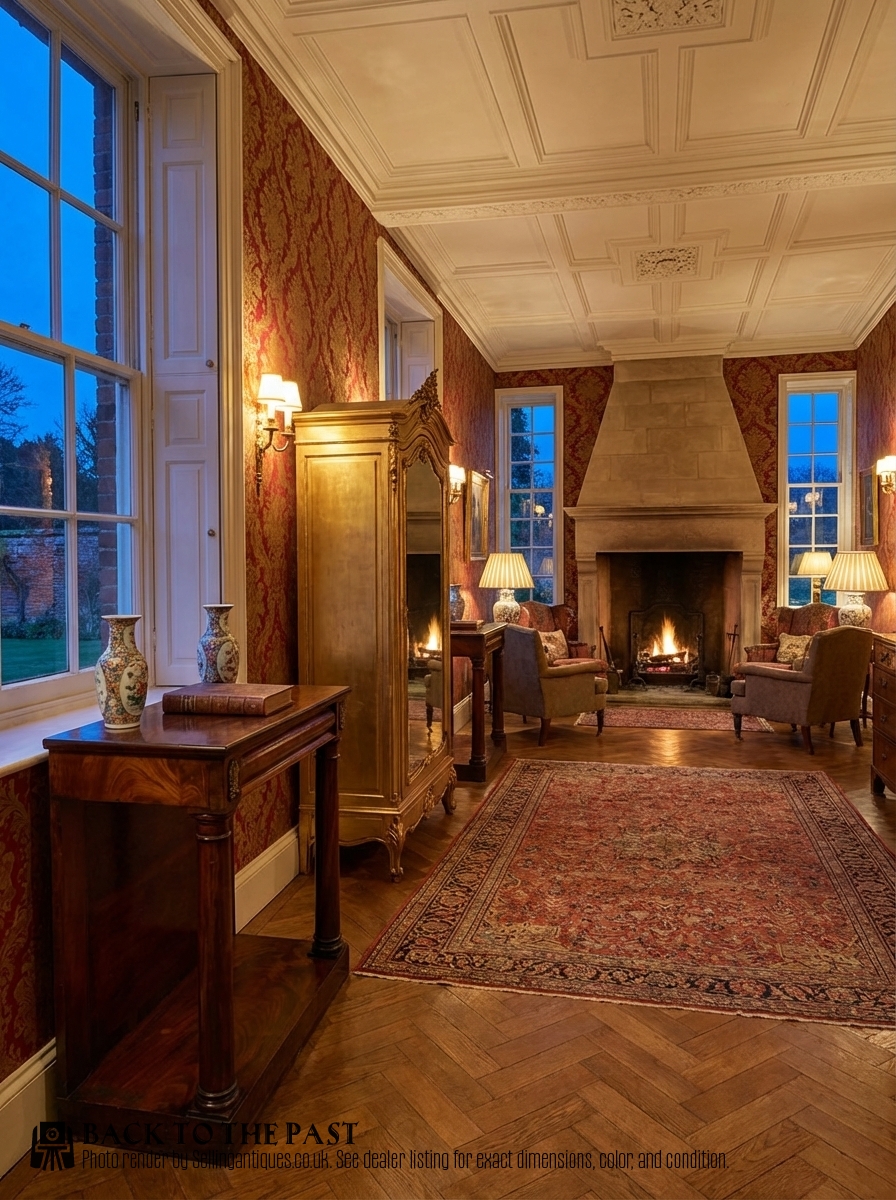
Flame Mahogany Pier Table
Makers shaped these items into semi-elliptical or rectangular forms, often pairing the timber with marble tops or incorporating mirror backs to reflect light into a room. The timber displays the characteristic undulating figure known as flame mahogany, applied as veneer over a secondary wood structure.
Materials and construction
Cabinet makers utilised flame mahogany veneer, slicing the richly figured timber to lay across structural carcases in symmetrical patterns. This surface work was frequently combined with heavy marble tops, which provided a cool, durable working or display surface.
Metal ornament appears in the form of ormolu and gilt bronze mounts, particularly on French Empire examples, while glass was integrated into mirror backs to amplify the sense of space. Brass details also feature on certain Regency and Victorian pieces to accent the dark timber.
Flame Mahogany Pier Table Retail Price Guide 2026
Typical asking prices for flame mahogany pier table among the pieces listed under this phrase on Sellingantiques today, from the lower quarter to the upper quarter. They describe what is for sale here now, not the wider market.
Certain nineteenth-century makers incorporated carved wooden dolphins into the support structure, bringing a maritime flourish to the drawing room.
Assessing quality and execution
The distinction between tiers of quality rests in the selection of the mahogany veneer and the symmetry of its grain pattern. Finer examples display continuous, highly figured flame patterns that wrap cleanly across the architectural form without interruption.
Structural integrity and the quality of secondary mounts, such as ormolu or carved giltwood, separate standard production from superior workshops. The integration of high-grade marble slabs and original mirror glass further elevates the status of an individual table.
The Flame Mahogany Pier Table Glossary
- Flame mahogany
- A veneer cut from the branch junctions of the mahogany tree, producing a distinctive flickering flame-like grain pattern. This timber was favoured by cabinet makers for its decorative impact on prominent furniture surfaces.
- Pier table
- A side or console table designed specifically to stand against the wall space between two windows. These tables often sat beneath a matching wall mirror.
- Ormolu
- Gilt bronze ornamentation applied to furniture, particularly prevalent on French Empire designs. The technique involves fusing gold to a bronze base through mercury amalgamation.
- Console table
- A table supported against a wall by wall brackets or legs, functioning primarily for display. They share close similarities in form with traditional pier tables.
- Biedermeier
- A Central European style dating from the nineteenth century characterised by utilitarian comfort and clean lines. Pieces in this aesthetic often highlight domestic timbers such as mahogany without excessive ornamentation.
Flame Mahogany Pier Table: Frequently Asked Questions
What is a pier table?
A pier table is a form of console or side table built to stand against the architectural wall space between windows. These pieces traditionally anchored the layout of a formal reception room.
They frequently carried heavy marble tops or stood beneath matching wall mirrors to enhance light and proportion within the interior.
How do I date a mahogany table?
Dating relies on examining the prevailing style, construction techniques, and secondary woods used within the carcase. Pieces range from George III and Regency designs to later Victorian and continental interpretations.
Changes in leg profiles, mount styles, and veneer thickness help narrow the period of manufacture.
Where should I place it?
These tables suit hallways, drawing rooms, or dining spaces where floor space against a wall is available. Their shallow depth allows them to sit comfortably without obstructing thoroughfares.
Pparing them with a wall mirror replicates their historic placement between architectural windows.
Are marble tops original?
Many console and pier tables were manufactured specifically to receive heavy marble slabs, particularly French Empire and mid-nineteenth-century examples. The weight of the stone helped anchor the freestanding or wall-mounted frame.
Inspecting the rebate and seating of the stone reveals whether the top corresponds to the period of the base.