
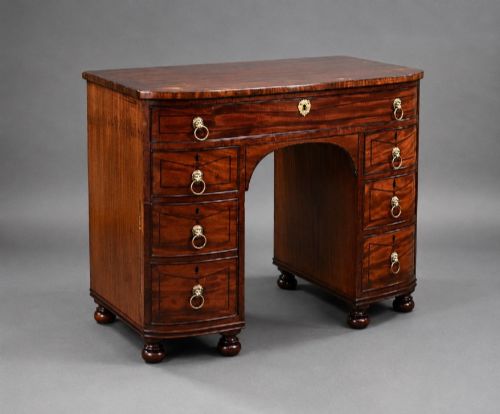
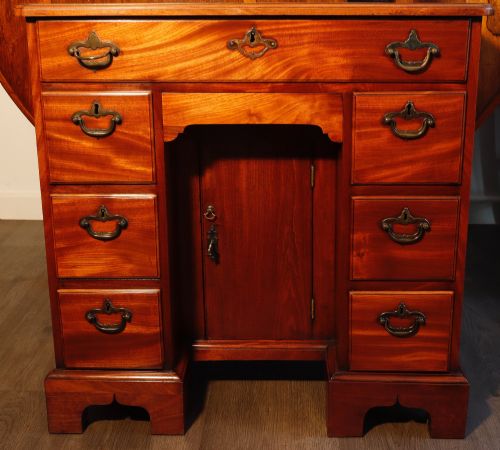
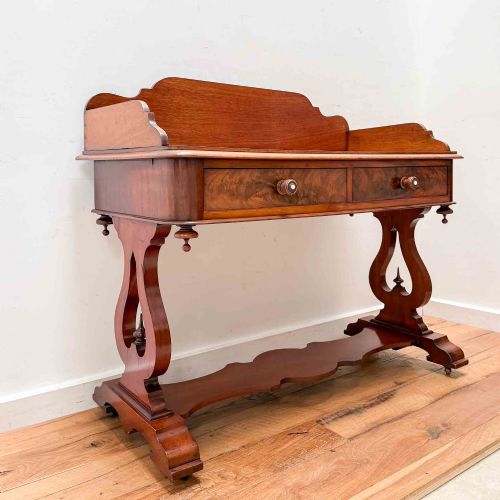

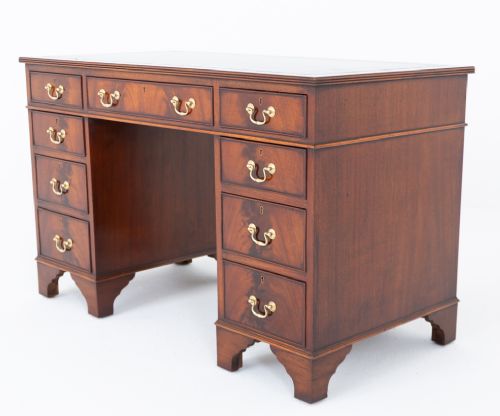

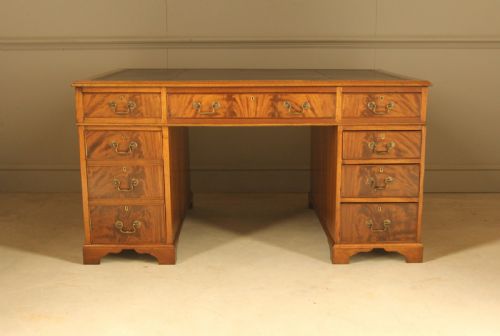


Flame Mahogany Pedestal Desk
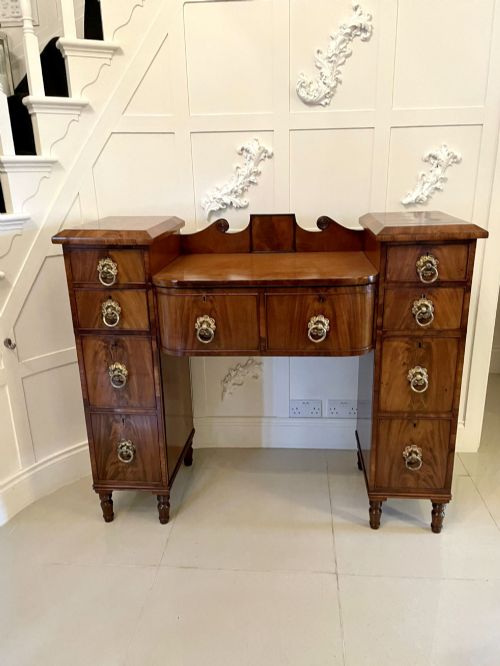
A flame mahogany pedestal desk commands a room with its swirling, fiery grain and sturdy twin pedestals, offering a serious workspace grounded in history.
Flame Mahogany Pedestal Desk
A flame mahogany pedestal desk is a substantial writing table built with two banks of drawers supporting a shared top, frequently surfaced in leather. The search for a flame mahogany pedestal desk leads directly to stately Victorian and Georgian examples, alongside later revivals.
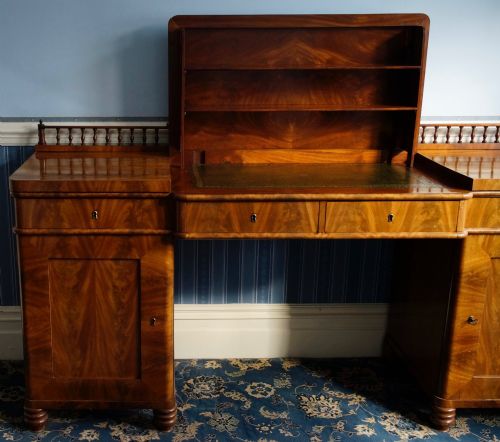
These pieces range from standard single-sided writing tables to expansive partners desks designed for two users facing each other. Makers utilised rich timber variants, including curl and figural mahogany, to create striking visual depth on the writing surfaces and drawer fronts.
How They Were Made
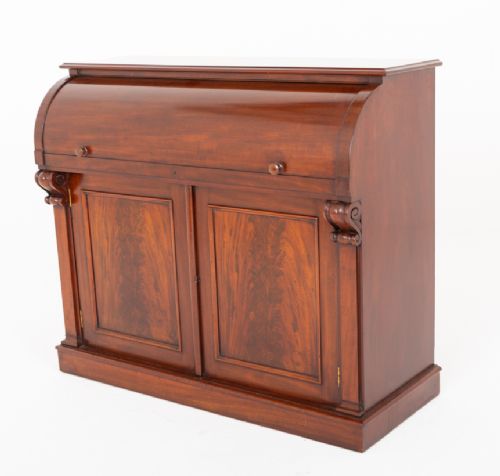
Cabinet makers applied carefully cut flame mahogany veneer over solid secondary timbers, aligning the dramatic grain patterns to create symmetrical, mirrored effects across drawers and cupboards. Details such as boxwood and satinwood inlay or brass mounts frequently accent the primary mahogany construction.
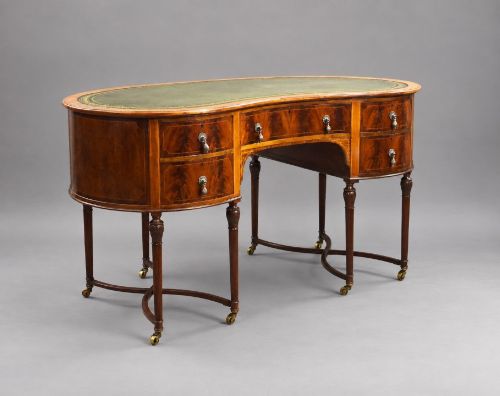
The working surfaces commonly feature inset tooled leather panels framed by decorative border tooling. Structural integrity relies on traditional joinery within the twin pedestals and plinth bases, supporting the heavy loaded drawers.
Some nineteenth-century partners desks include hidden secret drawers tucked away behind the main pedestal banks for private documents.
What Varies in Quality
The visual impact of the timber grain separates standard examples from exceptional pieces, with intense, highly figured flame veneer commanding greater attention. The crispness of inlaid borders, hand-cut dovetails, and the retention of original brass hardware and fitted leather surfaces indicate superior workshop output.
Waring and Gillows·Holland and Sons·Thomas Myers of Gillows·Maple and Co
The Flame Mahogany Pedestal Desk Glossary
- Flame mahogany
- A veneer cut from the branch junctions of the mahogany tree, producing a distinctive rippled, flame-like grain pattern. This highly decorative timber was favoured for the primary display surfaces of high-end furniture.
- Pedestal desk
- A freestanding office table comprising two independent drawer pedestals that support a wide writing surface. It originates in the eighteenth century and remains a staple of formal libraries.
- Partners desk
- A large pedestal desk built with drawers and cupboards on both sides to accommodate two people working opposite one another. These pieces often feature generous proportions and finished backs.
- Crossbanding
- A decorative border technique where thin strips of veneer are laid perpendicular to the primary grain of the panel. This frames the central wood and provides a clean visual boundary.
Flame Mahogany Pedestal Desk: Frequently Asked Questions
What is a partners desk?
A partners desk is a large pedestal desk featuring drawers and cupboards on both long sides, allowing two people to sit and work opposite each other. These pieces were traditionally used in libraries, studies, and professional offices.
They generally offer significantly more surface area and storage than standard single-sided writing desks. The construction is finished on all four sides so the piece can stand freely in the centre of a room.
How do I care for leather desk tops?
Leather writing surfaces require gentle cleaning with a soft, dry cloth and occasional treatment with specialist leather balms to prevent drying and cracking. Avoiding direct sunlight and excessive moisture helps preserve the tooling and gold leaf.
Many antique desks retain their original tooled leather inserts, which benefit from minimal intervention and careful daily use. Using blotters or writing pads protects the historic hide from ink stains and deep scratches.
How can I date a mahogany desk?
Dating relies on examining construction methods, timber selection, handle styles, and secondary woods such as oak or pine used inside the drawers. Georgian and Regency pieces typically show hand-cut dovetails and specific cabinet-making traits distinct from later Victorian or Edwardian revivals.
Stylistic cues, including brass inlay, bracket feet, or plinth bases, align with the design periods prevalent during their manufacture. Comparing the secondary timbers and internal framing provides further clarity on the age of the piece.
Are these desks suitable for daily computer work?
These desks provide ample space and sturdy surfaces for modern office equipment while maintaining a traditional aesthetic. The generous proportions of twin pedestals easily accommodate contemporary seating arrangements and peripheral devices.
Care should be taken with chair arms and heavy equipment to protect the historic timber edges and leather writing surfaces. Many owners use protective mats beneath modern monitors or keyboards to safeguard the antique finish.