

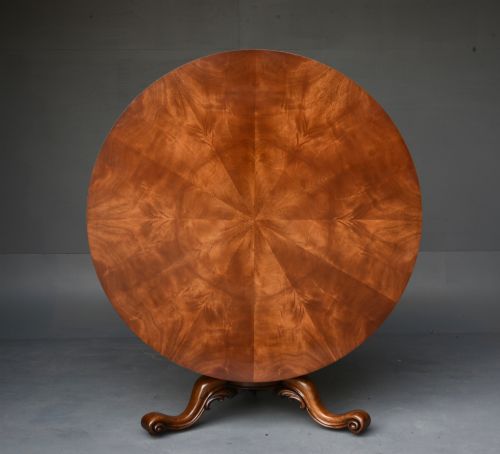
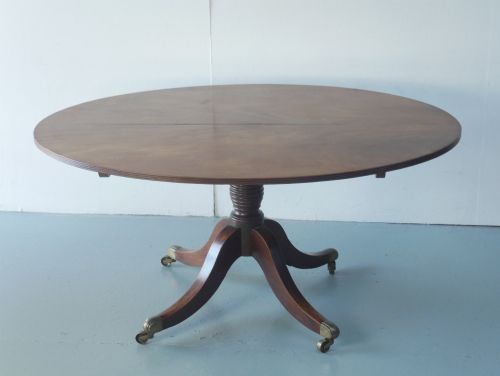
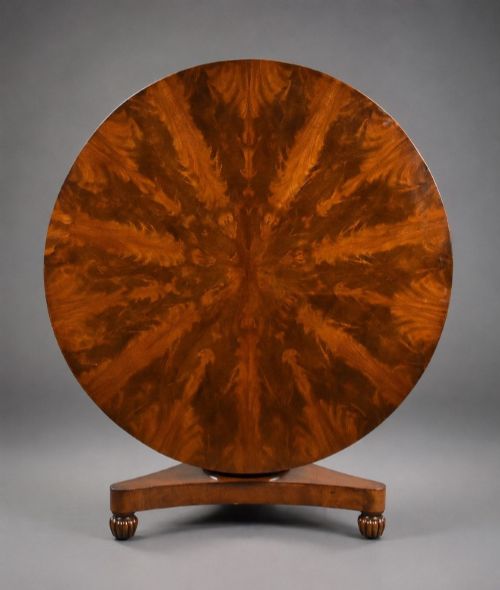
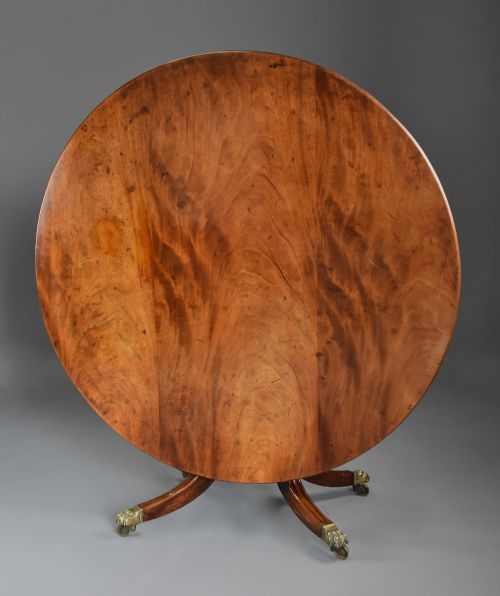




Flame Mahogany Loo Table
A flame mahogany loo table brings rich timber grain and central presence into a room, serving as both a working surface and a statement piece.
Flame Mahogany Loo Table
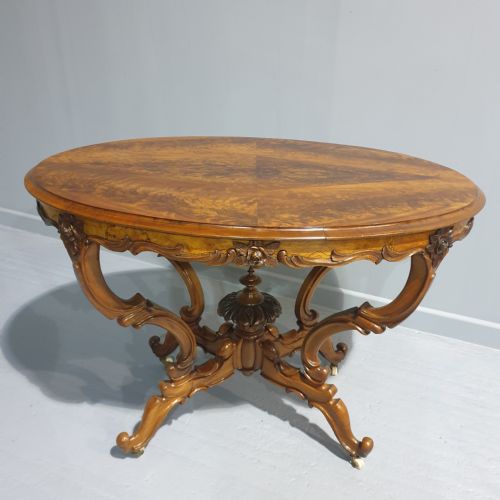
When you search for a flame mahogany loo table, you are looking at large circular or oval tables designed to sit in the middle of a room, often with a tilt-top mechanism. The examples you meet on this page span the Regency, Victorian, and William IV periods, alongside Georgian pieces dating back to eighteen hundred.
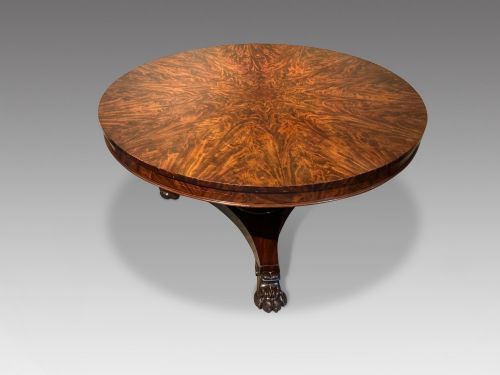
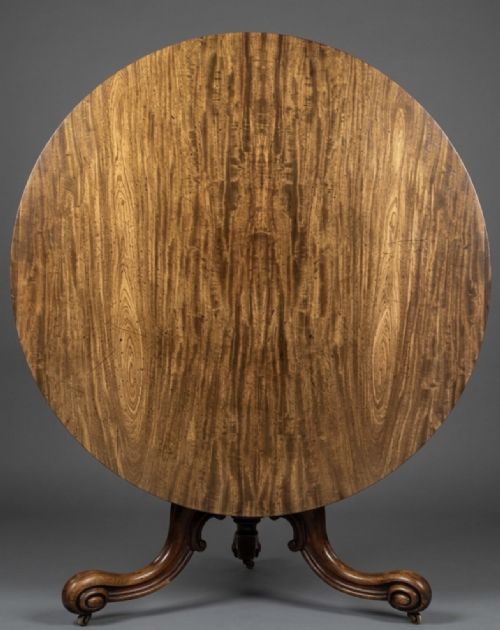
These pieces frequently appear under alternative descriptions such as breakfast tables or centre tables, reflecting their versatile historical uses. The timber displays the distinctive rippled figuring of flame mahogany veneer, often laid out in striking segmented patterns across the top.
Origins stretch across the nineteenth century, including specific decades like eighteen fifty, eighteen sixty, and eighteen eighty. They function primarily as centre tables, bringing substantial presence and rich brown timber tones to traditional interiors.
Construction and materials
Cabinet makers utilised flame mahogany veneer carefully applied over stable secondary woods such as oak and solid mahogany. The distinctive figuring comes from wood taken from the fork of the mahogany tree, cut to create flame-like patterns across the surface.
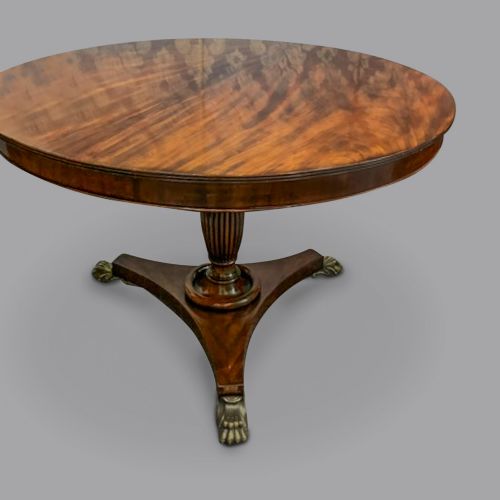
Structural elements incorporate brass fixtures and ceramic components, particularly within the hardware and castors that support the heavy central pillars. Secondary framing timbers provide the robust skeleton necessary to support large circular and oval table tops.
Surface finishing relied on traditional polishing techniques that deepened the natural reddish-brown colour of the timber. Artisans matched veneer segments symmetrically to create geometric visual effects across the circular expanse of the top.
Flame Mahogany Loo Table Retail Price Guide 2026
Typical asking prices for flame mahogany loo table among the pieces listed under this phrase on Sellingantiques today, from the lower quarter to the upper quarter. They describe what is for sale here now, not the wider market.
Some tables include built-in writing slopes, proving that nineteenth-century card players also needed to handle their correspondence.
Distinguishing quality
The sophistication of the veneer matching largely separates ordinary examples from exceptional ones. Premium pieces display symmetrical, book-matched flame figures that radiate harmoniously from the centre of the top.
The execution of the pedestal base and the crispness of any carved wooden details indicate the skill of the workshop. Heavier casting on brass components and solid construction in the supporting frame further distinguish the standard of manufacture.
Walker-Lancaster·Gillows
The Flame Mahogany Loo Table Glossary
- Flame mahogany veneer
- A thin slice of wood with a distinctive flame-like grain pattern derived from the fork of the mahogany tree. This material provides the primary decorative visual impact on the surface of the table.
- Tilt-top
- A hinged mechanism allowing the circular or oval top to pivot vertically into a storage position. This engineering solution enabled large tables to be pushed against walls when not in use.
- Centre table
- A freestanding piece designed to be viewed from all sides rather than pushed against a wall. These occupy the middle of a room and often double as breakfast or loo tables.
- Regency
- A style period spanning the early nineteenth century characterised by classical restraint and polished timber surfaces. Pieces from this era often exhibit clean architectural lines combined with rich mahogany grains.
Flame Mahogany Loo Table: Frequently Asked Questions
What is a loo table?
A loo table is a large circular or oval table designed for nineteenth-century card games such as loo, as well as general parlor use. Their tilt-top design made them practical for clearing floor space between gatherings.
Over time, these versatile pieces transitioned from gaming tables to central breakfast and display surfaces in large homes.
How do I date these tables?
Dating relies on identifying stylistic markers from periods like Regency, William IV, or Victorian. Cabinet-making techniques, timber choices, and base designs all help narrow down the decade of production.
Earlier pieces from around eighteen hundred tend to show leaner proportions, while later Victorian examples often feature heavier pedestals and richer mouldings.
Where should I place one?
These tables are designed to anchor the middle of a spacious room as a centrepiece. Their generous circular or oval tops make them ideal for displaying objects or gathering around.
Ensure you leave enough clearance around the perimeter for movement, particularly if the top tilts or the base has substantial carved legs.
How do I care for flame mahogany?
Maintain the timber by keeping it away from direct sunlight and steady heat sources that can dry out the polished surface. Regular dusting with a soft, dry cloth preserves the depth of the grain.
Apply traditional wax sparingly when the wood appears dry, avoiding modern silicon-based polishes that can damage antique finishes.