



Flame Mahogany Drop Front
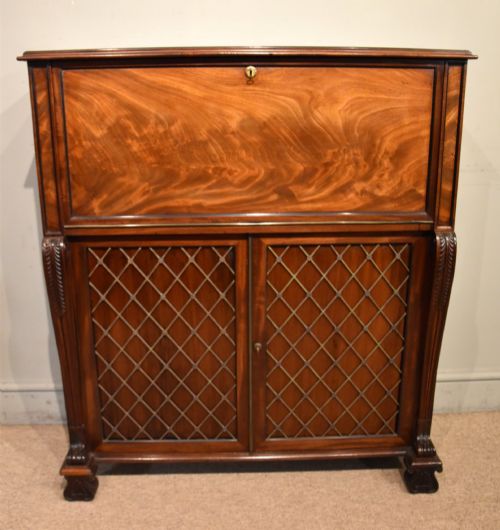
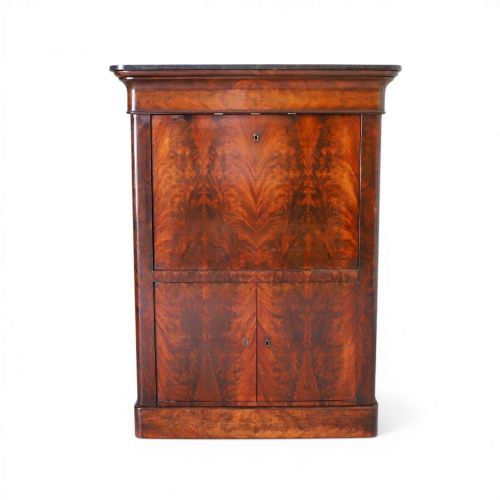
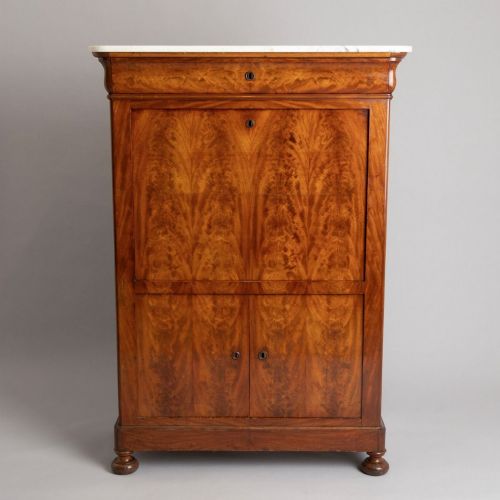
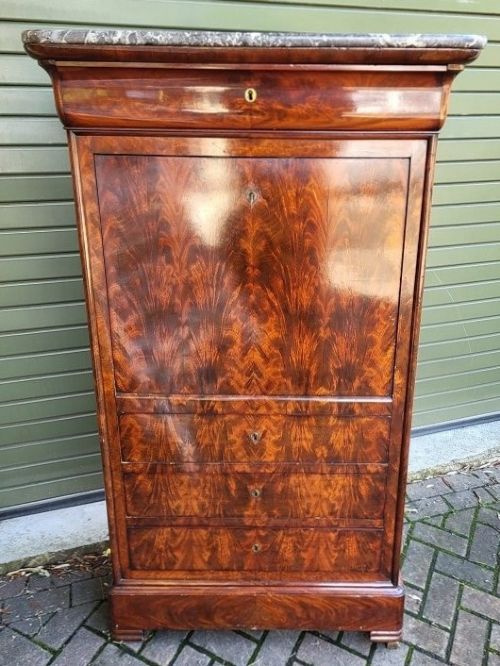
Flame mahogany drop front pieces are writing cabinets and bureaux with a richly figured grain that brings warmth to any room.
Flame Mahogany Drop Front
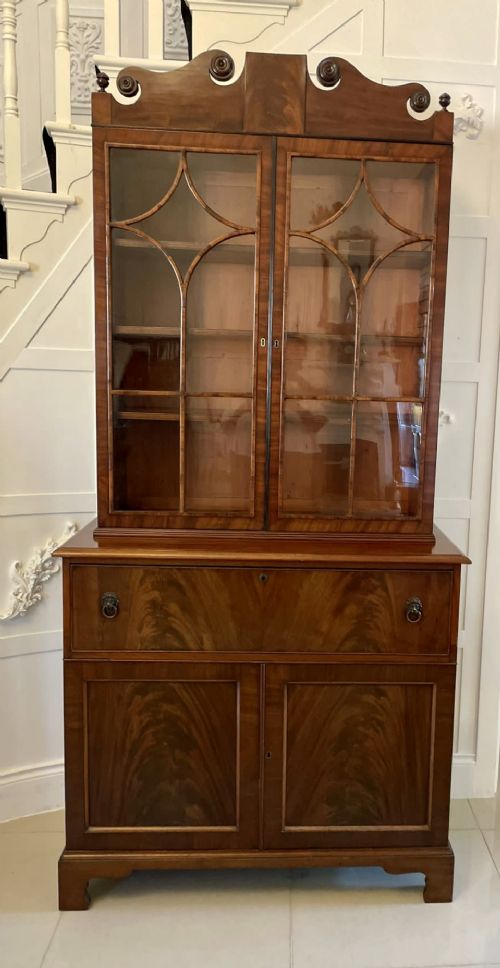
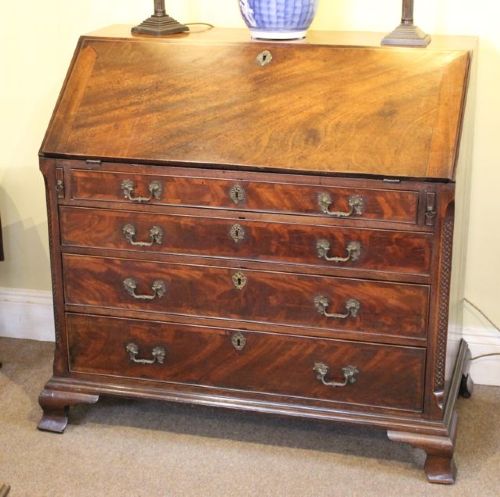
When searching for flame mahogany drop front, you encounter secretaire bookcases, bureaux, and escritoires dating from the 18th century through the Victorian period. These items combine practical storage with a fold-down writing surface that conceals fitted interior compartments.
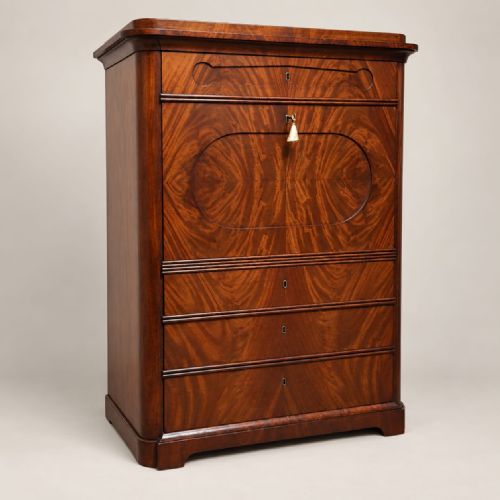
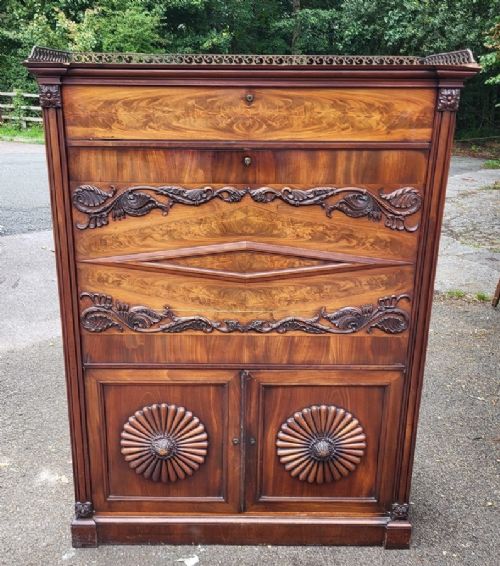
The most common forms on this page include tall secretaire bookcases and upright cabinets known as secrétaires à abattant. Pieces originate from English workshops like Gillows, as well as French and continental makers spanning the Georgian, Regency, and Biedermeier styles.
The drop front mechanism lowers to reveal small drawers and pigeonholes designed for correspondence and paperwork. Below this writing flap, most examples provide further storage through graduated drawers or enclosed cupboard doors.
Materials and construction methods
Cabinet makers constructed these pieces using solid mahogany carcases overlaid with finely sliced flame mahogany veneer on the primary surfaces. This distinctive veneer figure is achieved by cutting across the branch forks where the grain swirls into dramatic flame-like patterns.
Secondary timbers such as oak frequently form the drawer linings and internal dividers for structural stability. Brass hardware, including drop handles and escutcheons, provides functional contrast against the deep reddish-brown tones of the polished wood.
On continental and later English examples, marble tops sometimes surmount the cabinet structure, offering a durable and cool contrasting surface. Secret drawers and internal compartments utilise precise dovetail joinery hidden behind sliding panels or dummy book spines.
Secret drawers wait behind false book spines and sliding panels, keeping private letters safe from prying eyes.
Distinctions in construction and design
The visual impact of a flame mahogany drop front depends heavily on the symmetry and book-matching of the veneer panels across the fall front and drawer faces. Master craftsmen selected timber slices with care to ensure the flame patterns mirrored each other harmoniously.
Structural refinement separates standard production items from pieces attributed to notable makers like Gillows or fine workshops. Precision in the internal pigeonhole arrangement, secret compartment mechanisms, and original brass fittings indicate a higher tier of workmanship.
The overall proportion and scale of the cabinet dictate its architectural harmony within a room. Slender proportions, balanced fenestration on upper bookcases, and well-preserved original patination elevate the standing of any desk.
Gillows of Lancaster·Gillows
The Flame Mahogany Drop Front Glossary
- Secrétaire à abattant
- An upright cabinet featuring a vertical drop front panel that opens to form a writing desk. This continental form often includes a marble top and fitted interior drawers.
- Escritoire
- A small writing cabinet or desk used for personal correspondence. These pieces usually incorporate a fall front writing flap and internal pigeonholes.
- Veneer
- A thin layer of finely figured wood adhered to a secondary timber base. Flame veneer creates the characteristic swirling patterns seen on the best cabinet fronts.
- Pigeonhole
- A small open compartment within the desk interior designed for sorting letters and documents. These are often framed by miniature drawers.
- Dovetail
- An interlocking joint used in drawer construction. Hand-cut dovetails indicate traditional craftsmanship and earlier manufacturing periods.
Flame Mahogany Drop Front: Frequently Asked Questions
What is a flame mahogany drop front?
A flame mahogany drop front refers to cabinets and desks with a hinged writing flap made from highly figured wood veneer. The grain displays characteristic flickering patterns that resemble tongues of flame.
These pieces function primarily as writing desks while providing concealed storage for stationery and books behind the lowered flap.
How do I date a drop front desk?
Dating relies on observing the secondary woods, construction methods, and prevailing stylistic influences. Georgian and Regency examples display different proportions compared to later Victorian or Biedermeier pieces.
Cabinet hardware, dovetailing techniques, and veneer thickness also offer clear indicators of the period of manufacture.
Where were these cabinets placed?
These versatile pieces served as functional writing stations and display units within principal rooms of a home, such as studies, drawing rooms, and libraries.
Tall secretaire bookcases combined a working desk with upper shelving for book collections, while smaller abattants suited intimate drawing spaces.
What is inside the drop front?
Lowering the fall front reveals an architectural arrangement of small drawers, open pigeonholes, and occasionally concealed compartments known as secret drawers.
This fitted interior was designed to organise personal correspondence, account books, and writing implements securely.