


Antique Tall Escritoire
An antique tall escritoire is a vertical writing cabinet offering concealed drawers behind a fall front, combining workspace with upright storage.
Antique Tall Escritoire
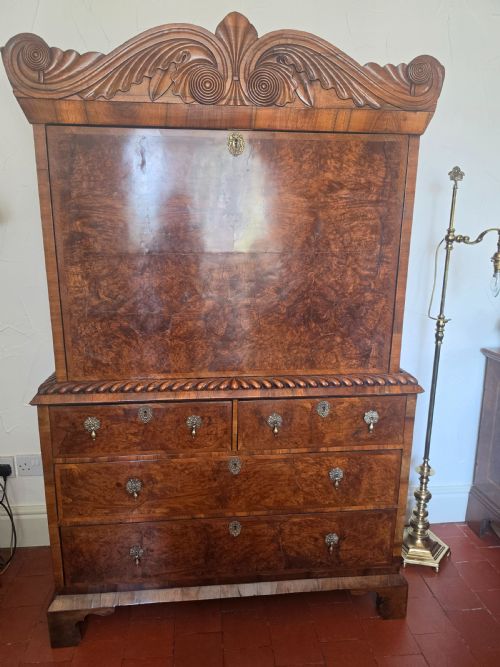
An antique tall escritoire provides a vertical writing cabinet solution, combining a drop-down writing surface with concealed internal drawers and compartments. Buyers searching for an antique tall escritoire encounter forms ranging from early walnut examples dated around seventeen hundred to nineteenth-century Biedermeier, Victorian, and French pieces.
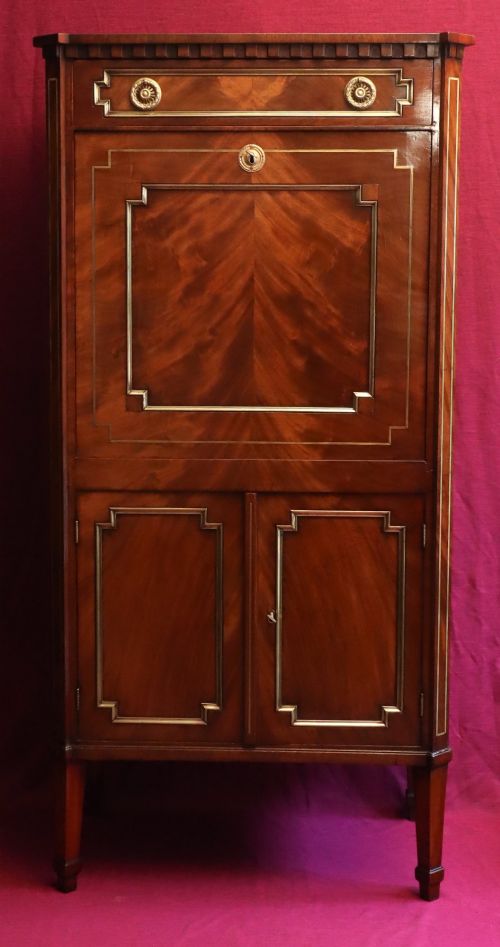
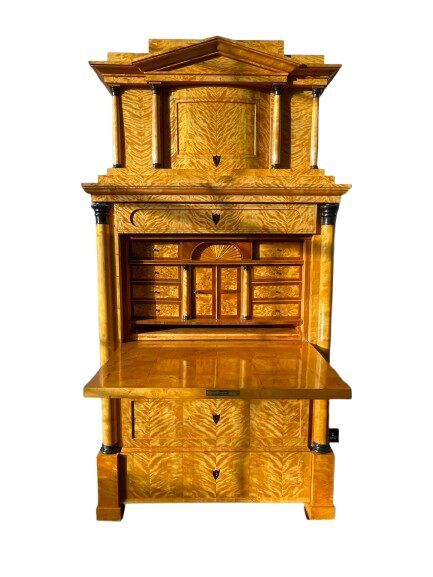
The selection on this page includes styles such as Queen Anne, Regency, French Empire, French Rococo Revival, and Biedermeier. These tall writing desks utilise upright proportions to save floor space while providing substantial compartmentalised storage.
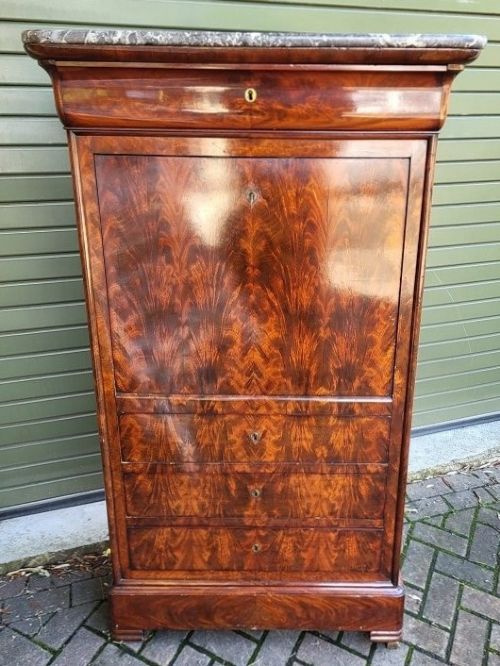
Common forms span flame mahogany veneer, burr walnut, rosewood, and kingwood models, often featuring marble tops or marquetry inlay. The writing surface drops forward on hinges, revealing fitted interior nests designed for correspondence and papers.
Construction and materials
Cabinetmakers constructed these vertical desks using solid timbers and figured veneers over supportive secondary woods such as oak. Mahogany, walnut, and kingwood appear frequently, chosen for both structural integrity and decorative grain patterns like flame mahogany veneer and burr walnut.
Surface decoration incorporates intricate techniques including French marquetry inlay and contrasting wood veneers. Heavier variants integrate heavy marble tops onto mahogany carcasses, particularly within nineteenth-century French and Biedermeier traditions.
Listings feature woods including mahogany, walnut, burr walnut, rosewood, kingwood, oak, and birch veneer alongside marble and brass.
Assessing quality
Quality in these vertical writing cabinets rests upon the selection and matching of wood veneers across the fall front and drawer facades. Superior examples exhibit continuous grain patterns and precise marquetry inlay that demonstrates advanced cabinetmaking skill.
Internal construction of the hidden pigeonholes and small drawers reveals the maker's attention to detail, utilising tidy dovetail joints and well-fitted compartments. The stability of the drop-down writing flap and the precision of the brass hardware further separate standard production from finer craftsmanship.
The Antique Tall Escritoire Glossary
- Escritoire
- A vertical writing cabinet featuring a fall-front desk flap that conceals internal drawers and pigeonholes. It provides both workspace and storage in a tall footprint.
- Secretaire à abattant
- A French term for a tall drop-front desk where the writing flap pulls down vertically from the cabinet face. These often feature marble tops and decorative veneer panels.
- Flame mahogany veneer
- A sliced wood layer displaying a distinct flickering, flame-like grain pattern. Cabinetmakers applied this across drawer fronts and primary panels for visual depth.
- Burr walnut
- A figured wood harvested from walnut tree growths, producing dense and swirling circular patterns. It was favoured for high-status cabinet furniture.
- Biedermeier
- A Central European stylistic period spanning the nineteenth century characterised by clean lines, restrained ornamentation, and figured wood grains. It prioritised domestic comfort and functional elegance.
Antique Tall Escritoire: Frequently Asked Questions
What is an escritoire?
An escritoire is a vertical writing cabinet featuring a hinged fall front that lowers to create a writing surface. Inside, it houses a collection of small drawers and pigeonholes for organising correspondence.
This form allows owners to conceal their writing materials and papers upright when not in use, making it a space-efficient alternative to traditional horizontal desks.
How do I use a tall escritoire?
You release the fall-front flap, which is often supported by internal wooden arms or locking mechanisms, to create a flat writing desk. The interior compartments organise letters, stationery, and small personal items.
When you finish writing, you simply lift the flap back into its vertical position and secure it, hiding the workspace and any papers left inside.
What woods were used?
Cabinetmakers utilised a variety of dense hardwoods and decorative veneers, including mahogany, walnut, burr walnut, kingwood, and rosewood. Oak and birch often served as secondary woods for internal framing and drawer linings.
Many examples apply flame mahogany or burr walnut veneers to the exterior surfaces to create striking geometric grain patterns across the front.
How do I identify a Biedermeier piece?
Biedermeier pieces originate from Central Europe during the nineteenth century and are distinguished by minimal ornamentation and smooth, unbroken expanses of wood veneer. They focus on the natural beauty of materials like mahogany and walnut rather than carved decoration.
These cabinets often feature architectural proportions, clean rectilinear forms, and subtle brass mounts that emphasise structural simplicity.
Are marble tops common?
Marble tops appear frequently on nineteenth-century French and continental examples, particularly those described as secretaire à abattant. The heavy stone slab sits atop the cabinet body, providing a durable and decorative surface.
This detail adds substantial weight to the upper section and creates a distinct contrast against woods like flame mahogany and kingwood.