


French Style Escritoire
A french style escritoire brings continental elegance and clever compartments to any room, offering a private place to write letters and manage correspondence.
French Style Escritoire
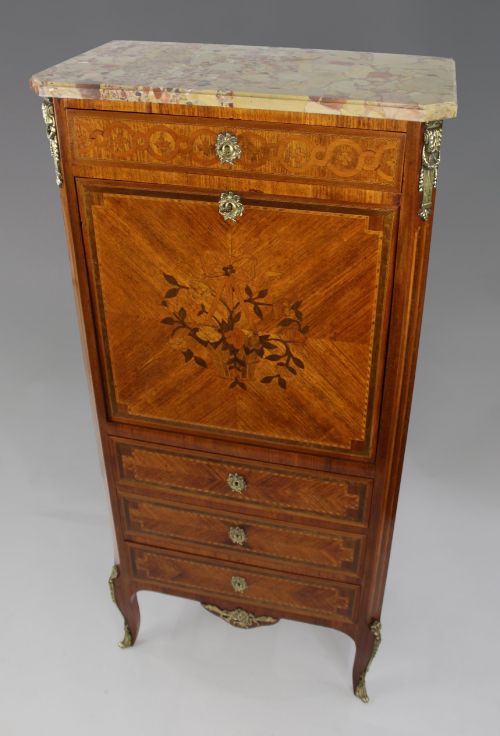
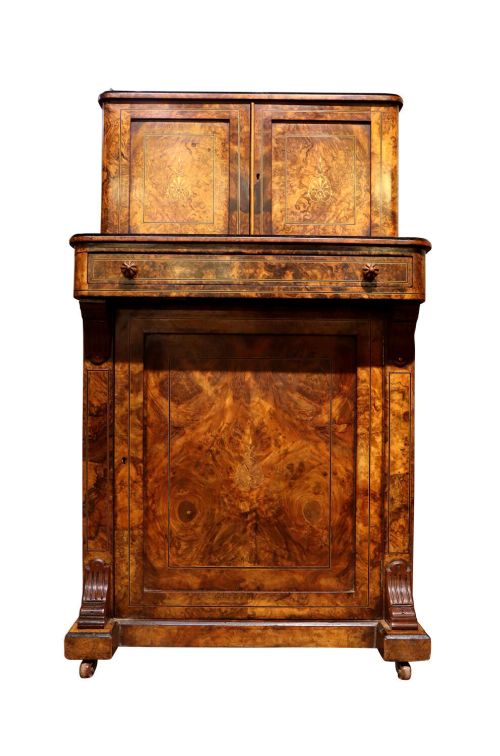
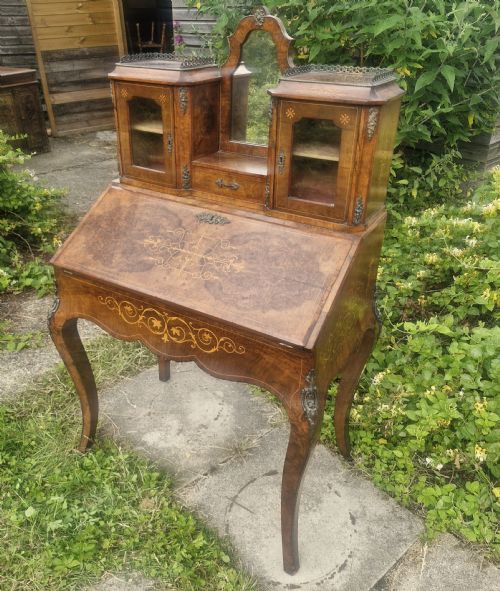
When you search for a french style escritoire, you encounter refined writing furniture designed for the parlour or boudoir, often taking the form of a bonheur du jour, a secretaire-à-abattant, or a ladies writing desk. These pieces originate predominantly from the nineteenth century, encompassing Victorian interpretations alongside continental revivals.
The most common variations on this page include walnut and kingwood writing cabinets featuring sloping lids or drop-front writing surfaces, frequently decorated with marquetry inlay. Many incorporate superstructure tiers with small drawers and shelves, designed specifically for holding stationery and letters.
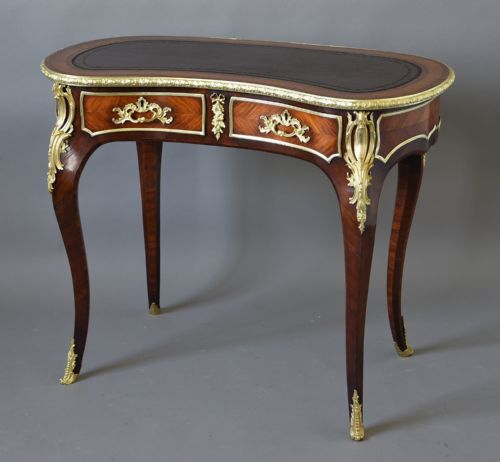
Makers drew heavily on earlier continental aesthetics, resulting in plentiful examples of French Louis XV revival, French rococo revival, and neoclassical designs. Alongside full-sized escritoires, you will find kidney-shaped writing desks and compact bureaux tailored for lighter domestic use.
How they were made
Cabinet makers built these pieces using structural timbers such as walnut, mahogany, and burr walnut, applying fine veneers of kingwood and exotic woods to create decorative patterned surfaces. Marquetry work introduced floral or geometric motifs through contrasting wood veneers carefully fitted together.
Gilded bronze or ormolu mounts typically accent the corners, handles, and sabots, providing structural protection and visual contrast against the dark wood. Original marble tops feature on several selections, adding weight and a cool, smooth writing surface to the upper cabinet.
Writing surfaces frequently incorporate fitted panels of tooled leather to provide a durable and tactile base for penmanship. Brass inlay and stringing often highlight the contours of drawers and writing flaps, demonstrating meticulous attention to detail.
Materials recorded across the selection include walnut, kingwood, mahogany, burr walnut, ormolu, brass, leather, and marble.
What varies in quality
The sophistication of the timber selection dictates much of the visual appeal, with richly figured burr walnut and carefully matched kingwood veneers marking out superior pieces. Inferior examples rely on plain timber surfaces with minimal decorative enhancement.
The execution of the ormolu mounts and marquetry defines the upper tier of craftsmanship, where chased bronze details and intricate wood-in-wood inlay remain crisp and secure. Poorer quality pieces feature cast metal mounts with blurred definition and simpler painted or printed decoration rather than true marquetry.
Structural integrity and the survival of original elements, such as marble tops and fitted interior compartments, separate standard cabinet work from exceptional furniture. Pieces that retain their original leather writing inserts and working locks demonstrate greater preservation.
The French Style Escritoire Glossary
- Escritoire
- A writing cabinet featuring a sloping lid or a drop-down writing flap that conceals small drawers and pigeonholes. It serves as a private desk for correspondence.
- Bonheur du jour
- A light ladies writing desk with a small set of drawers and shelves built upon the desktop. The name translates from French as happiness of the day.
- Ormolu
- Gilded bronze mounts and decorative hardware applied to furniture, popular in French revival pieces. The technique involves coating metal in a gold amalgam.
- Marquetry
- The art of applying small pieces of veneer to a structure to form decorative patterns and pictures. Craftsmen use contrasting woods to achieve tonal depth.
- Secretaire-à-abattant
- A tall upright writing cabinet with a hinged vertical fall-front writing surface. When closed, it presents the tidy appearance of a standard chest or cabinet.
French Style Escritoire: Frequently Asked Questions
What is a bonheur du jour?
A bonheur du jour is a light, elegant ladies writing desk featuring a tiered superstructure with small drawers and compartments above the main writing surface.
First appearing in France during the eighteenth century, these desks became hugely popular in Victorian variations designed for lighter correspondence and display in drawing rooms.
How do I use an escritoire?
An escritoire provides a dedicated, enclosed space for writing letters, storing stationery, and keeping personal documents private behind a drop-down flap or sloping lid.
When opened, the writing surface reveals small pigeonholes and miniature drawers, while closing the flap conceals any unfinished paperwork and keeps the room tidy.
Are these desks strictly French?
While the design vocabulary draws heavily upon French aesthetic movements like the Louis XV and rococo revivals, many pieces were manufactured in England during the Victorian era.
English cabinet makers eagerly adopted continental styling, producing French-revival writing furniture that catered to fashionable British interior tastes of the nineteenth century.
What woods are typical for these pieces?
Walnut and mahogany form the sturdy structural base for the majority of these desks, often enhanced by highly figured burr walnut veneers.
Exotic timbers like kingwood appear frequently on refined cabinets, complemented by contrasting marquetry inlay and decorative brass or ormolu mounts.