


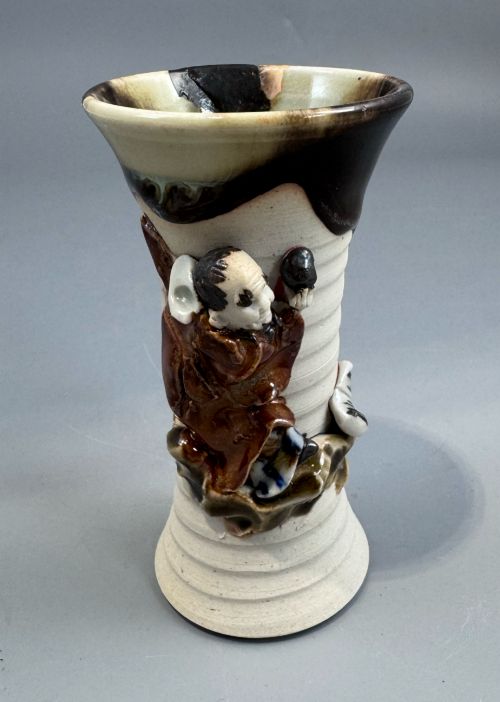


Flambe Pottery Vase
These flambe pottery vase pieces combine striking copper-infused glazes with sculptural forms, offering collectors a rich piece of ceramic history.
Flambe Pottery Vase
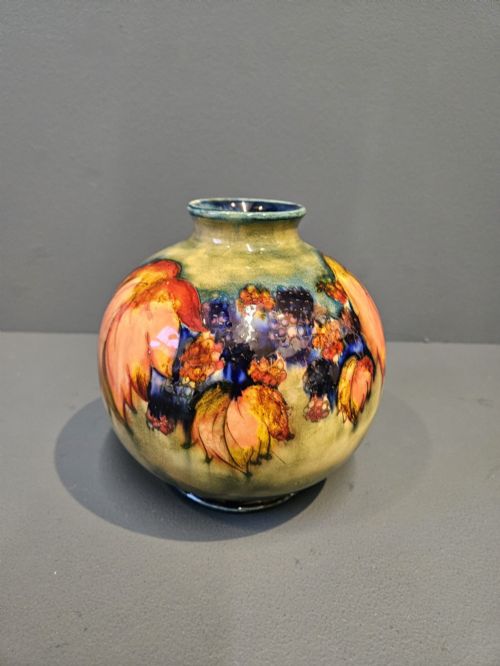
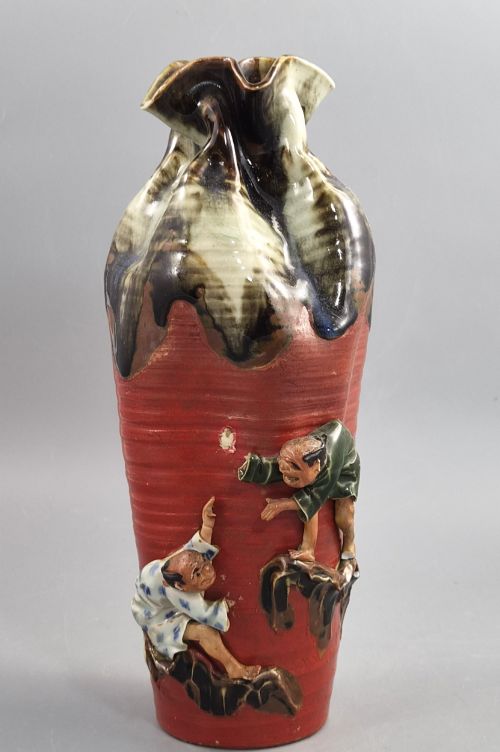
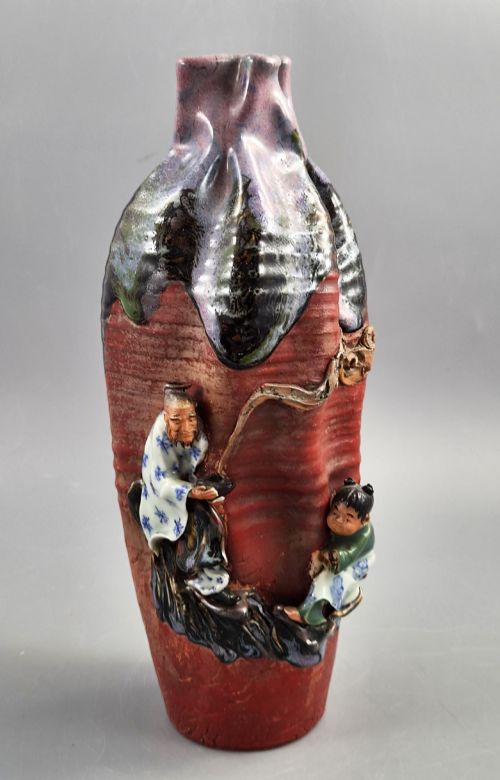
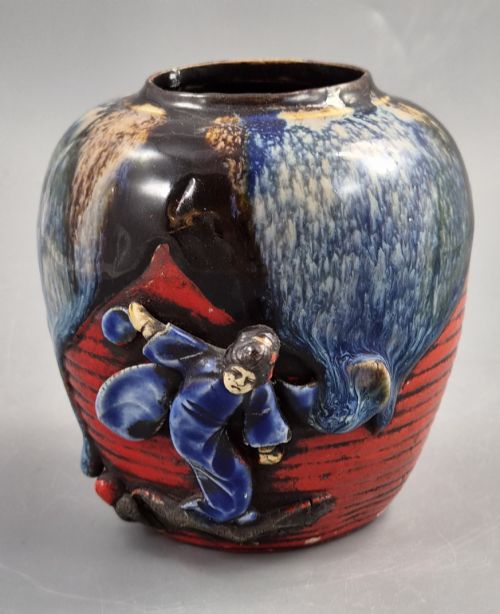
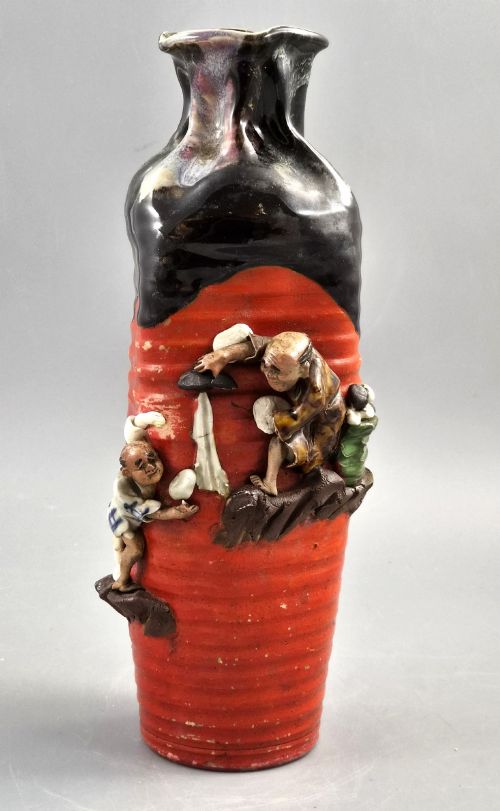
When you search for a flambe pottery vase, you encounter works defined by streaky, mottled, and metallic glaze effects across various global traditions. The most frequent examples on this page hail from the Meiji and Taisho periods of Japan, often created in the Sumida Gawa style with applied figures.
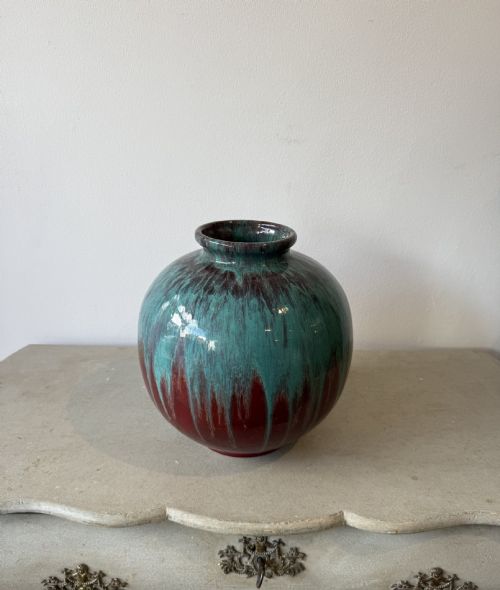
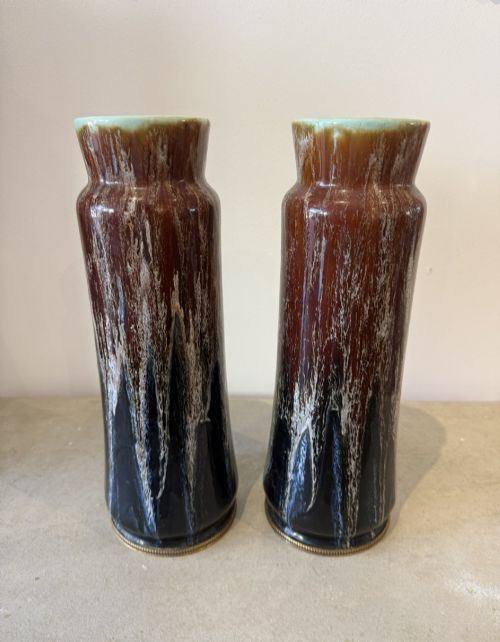
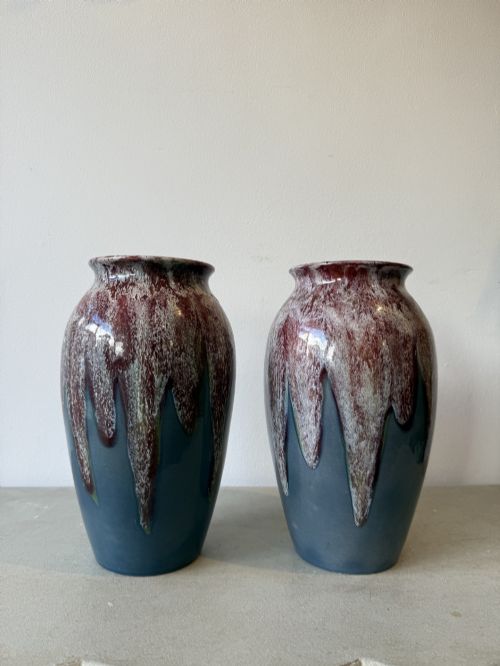
The selection also spans European workshops from the early twentieth century, including French ceramic pieces and English art pottery. Forms range from tall baluster vessels to jars and converted table lamps, produced across the decades from nineteen hundred to nineteen thirty.
Collectors seek these items for their dynamic visual surfaces, where reduction-fired metallic oxides yield unpredictable shifts in colour. Each vessel presents a distinct textural character influenced by its specific regional school and period.
How they were made
Potters constructed these bodies using earthenware, stoneware, or terracotta, shaping them on the wheel or modelling them by hand. Japanese pieces often incorporate heavy, textured clay applied directly to the exterior wall beneath the glaze layer.
The signature flambe effect relies on copper-bearing glazes fired in a reduction kiln atmosphere, which restricts oxygen to draw out deep reds, purples, and blues. Artisans sometimes applied auxiliary enamels or brass mounts to complete the decorative scheme.
Flambe Pottery Vase Retail Price Guide 2026
Typical asking prices for flambe pottery vase among the pieces listed under this phrase on Sellingantiques today, from the lower quarter to the upper quarter. They describe what is for sale here now, not the wider market.
Several vases feature small applied children and sages climbing the exterior walls, permanently frozen in ceramic clay.
What varies in quality
Quality rests in the control and depth of the glaze chemistry, separating muddy colour transitions from vibrant, luminous copper reductions. The interaction between the molten surface and the underlying clay body determines the visual success of the piece.
Sculptural execution defines the tier of figural vessels, where hand-modelled characters show crisp detail and expressive posture rather than sluggish contours. Signatures from recognised makers and well-preserved surface integrity elevate the standing of an individual piece.
Inoue Ryosai·Ban-ni·Hiroshi·Moorcroft·Boch Freres
The Flambe Pottery Vase Glossary
- Flambe glaze
- A streaky, lustrous ceramic coating achieved through copper reduction firing. This technique produces unpredictable, mottled pools of crimson, violet, and turquoise across the vessel.
- Sumida Gawa
- A Japanese ceramic tradition originating near Tokyo, recognised by heavily textured clay bodies and applied figural scenes. These pieces frequently utilise drippy flambe glazes over a rugged ground.
- Reduction firing
- A kiln atmosphere starved of oxygen, which alters metallic oxides in the glaze. This chemical shift draws out rich reds and purples from copper compounds.
- Baluster vase
- A tall vessel form with a rounded body that tapers toward a narrow neck and flares at the rim. This shape provides an expansive canvas for flowing glaze effects.
- Earthenware
- Porous ceramic pottery fired at lower temperatures, often finished with an opaque or translucent glaze layer. It serves as the structural base for many decorative art pottery pieces.
Flambe Pottery Vase: Frequently Asked Questions
What is a flambe pottery vase?
A flambe pottery vase is a ceramic vessel finished with a metallic glaze fired under reduced oxygen conditions. This process creates mottled, streaked patterns in shades of red, blue, and purple.
Such pieces appear in various forms from European and Japanese studios active in the early twentieth century. Each vessel offers a distinct surface resulting from chemical reactions in the kiln.
How do I date a Sumida Gawa vase?
Dating a Sumida Gawa vase involves examining the clay body, the style of the applied figures, and signature marks. Most examples on record date from the Meiji and Taisho periods around nineteen hundred to nineteen thirty.
The character of the glaze and the specific modelling of figures like sages or children help place the piece within this transitional era. Comparing signed examples assists in narrowing the production window.
How should I display a flambe vase?
Displaying a flambe vase requires placement in a well-lit area where natural light can catch the iridescent shifts in the glaze. Shelving should offer stable support, as these ceramic and stoneware bodies can be heavy.
Keeping the piece away from direct, harsh heat sources helps protect the exterior glaze over time. Pairing the vessel with neutral backgrounds allows the complex colour variations to stand out.
Are flambe vases waterproof?
Most flambe vases feature vitrified stoneware or glazed earthenware bodies that hold water safely. However, antique pieces with applied figural elements or older repairs warrant careful handling when used for fresh flowers.
Checking the interior for hairline fissures ensures the vessel remains suitable for liquid use. Many collectors prefer to display these items dry to preserve their historical integrity.