





Flambe Ceramic Vase
These flambe ceramic vase examples combine striking metallic glazes with sculptural forms from the eighteenth to the twentieth centuries.
Flambe Ceramic Vase
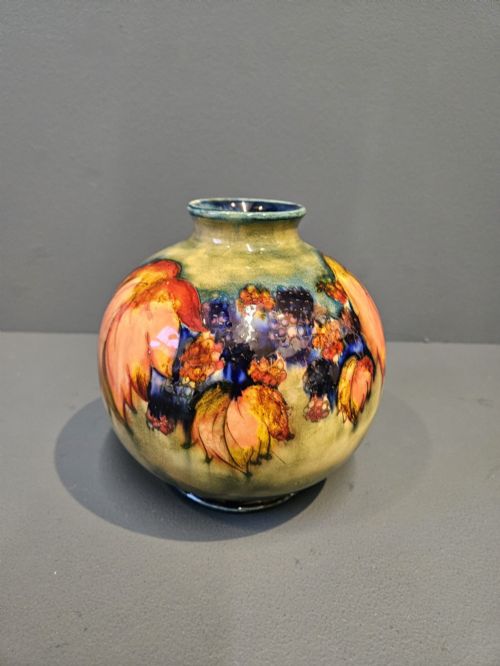
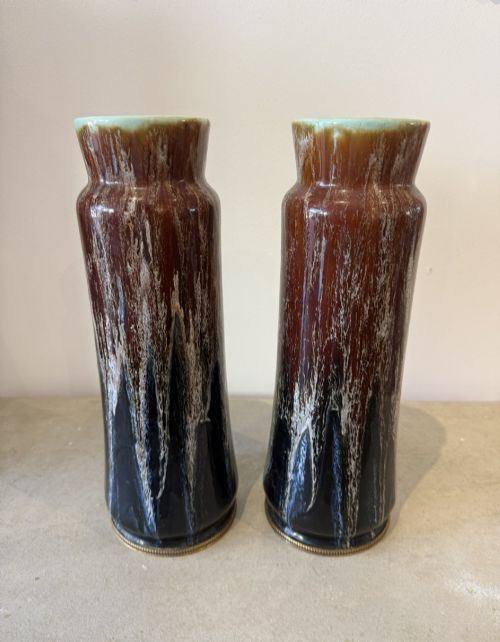
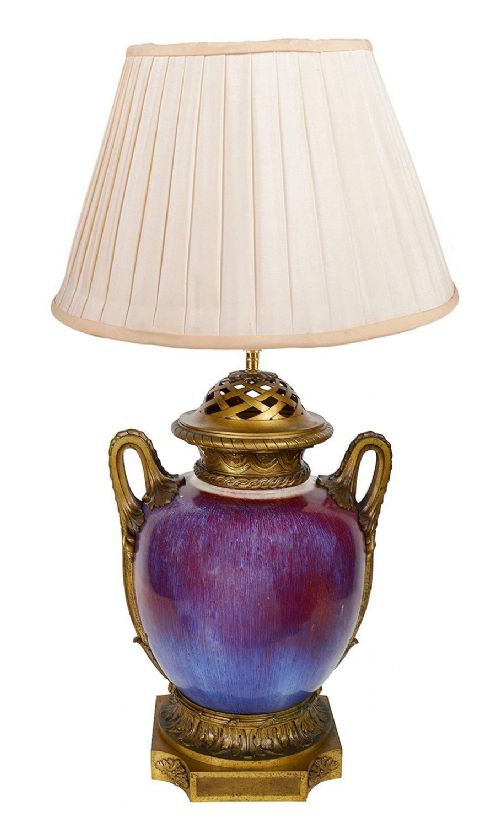
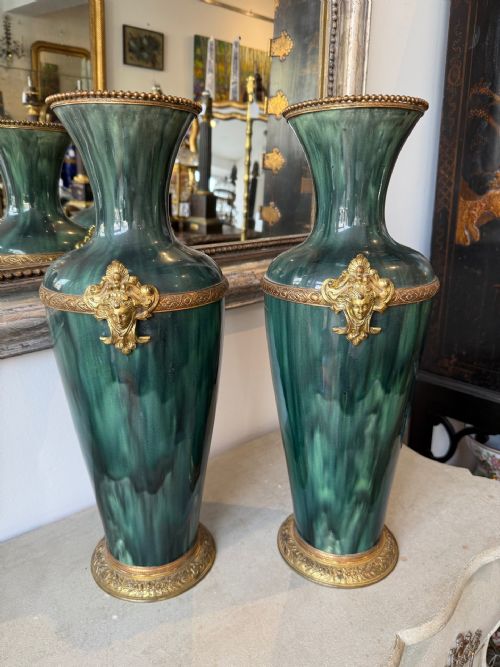
When you search for a flambe ceramic vase, you are looking at vessels finished in unpredictable, variegated high-fired glazes derived from metallic oxides. The selection here spans eighteenth-century Chinese pieces, nineteenth-century oriental wares, and early twentieth-century European studio pottery.
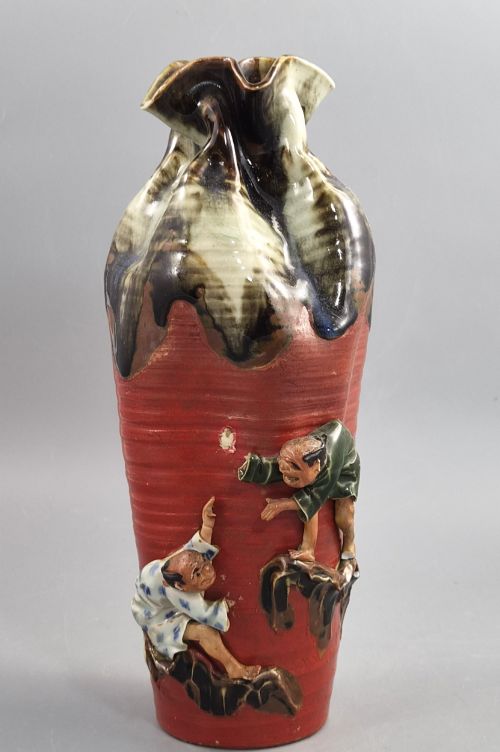
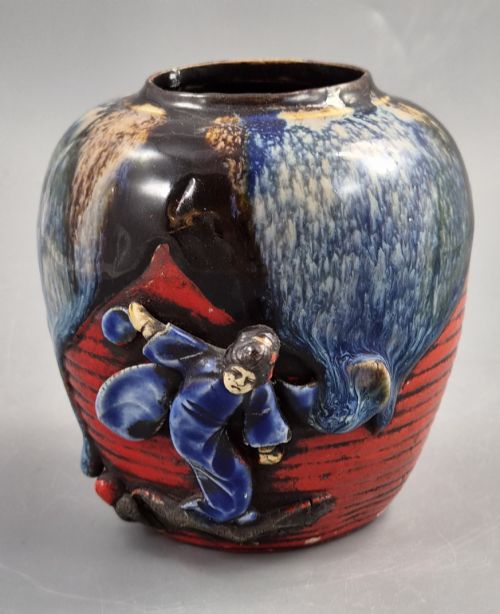
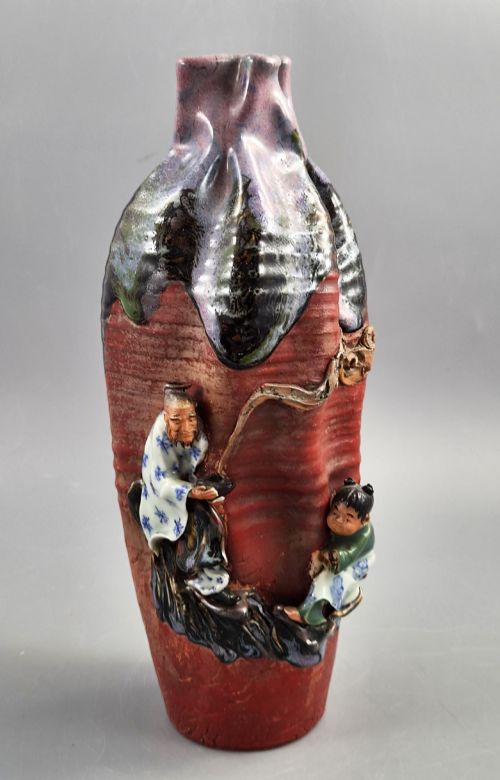
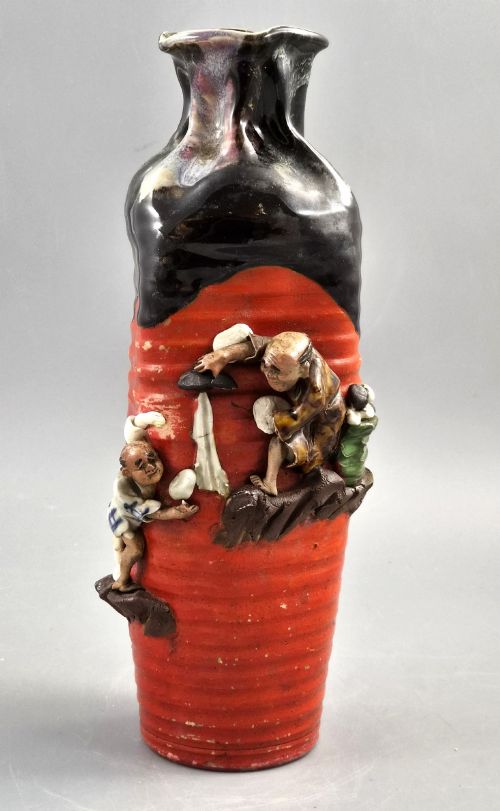
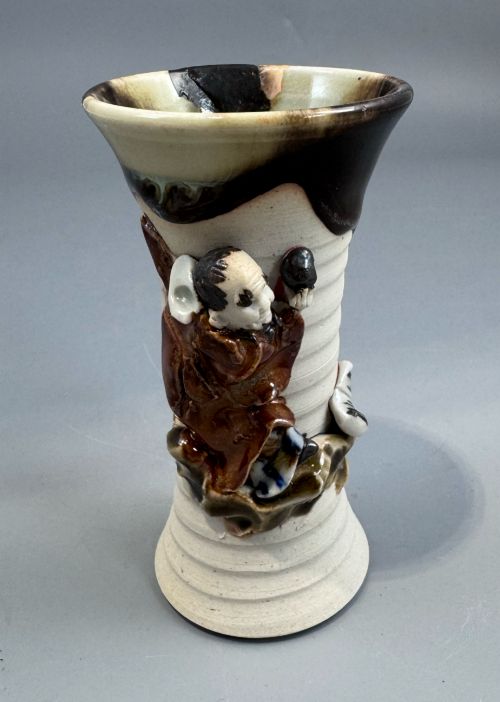
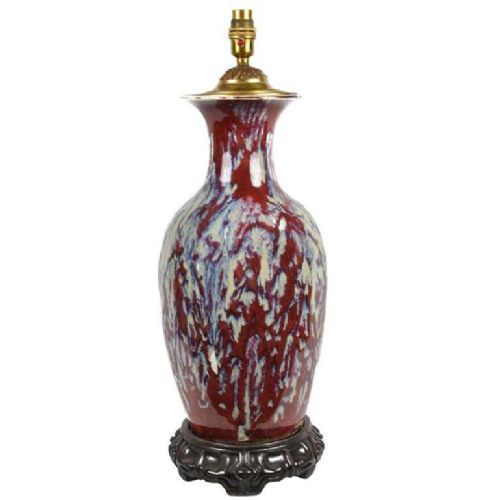
Japanese Sumida Gawa earthenware and stoneware pieces form a prominent part of the selection, often featuring applied figures climbing the exterior alongside blue, lavender or oxblood flambé glazes. Alongside these sit Chinese Sang de Boeuf porcelain and stoneware lamps and vessels, plus French art pottery examples.
Forms range from tall baluster vases and lidded jar shapes to converted lamp bases and pinched sack rims. They cross multiple aesthetic movements, including Meiji and Taisho Japanese periods, Art Nouveau, and Arts and Crafts traditions.
How they were made
Potters built these vessels using earthenware, stoneware, terracotta, and porcelain bodies, sometimes adding hand-modelled sculptural figures in high relief directly to the exterior wall before firing. The pieces rely on complex kiln chemistry where copper and other metallic oxide glazes react dynamically under reduction flames.
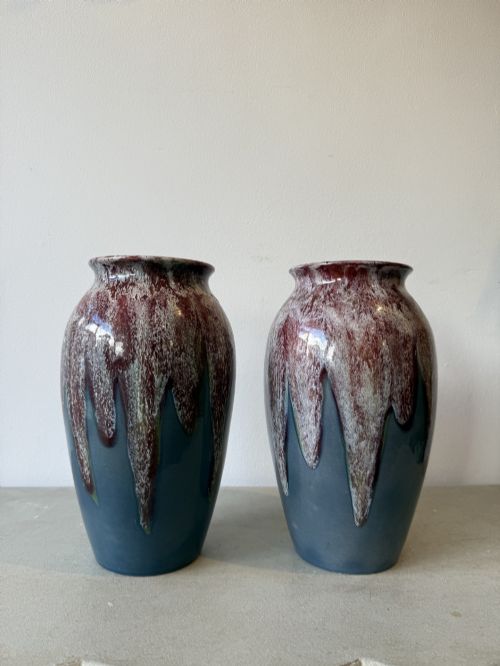
The characteristic streaked, mottled, and pooled finishes occur naturally as the glaze moves during high-temperature firing, creating fluid transitions between oxblood red, deep lavender, and variegated green tones.
Flambe Ceramic Vase Retail Price Guide 2026
Typical asking prices for flambe ceramic vase among the pieces listed under this phrase on Sellingantiques today, from the lower quarter to the upper quarter. They describe what is for sale here now, not the wider market.
Listings feature items from the eighteenth, nineteenth, and early twentieth centuries, spanning Chinese export porcelain, Japanese earthenware, and French studio pottery.
What varies in quality
Quality rests in the control and depth of the glaze reaction across the body, where successful pieces display rich, luminous pools of colour rather than flat or muddy tones. The crispness of modelled figures and the harmony between the glaze movement and the underlying form dictate the strength of the piece.
Signatures by recognised makers add distinction, particularly on Japanese art pottery where artist cachets identify individual studio work from the Meiji and Taisho periods.
Inoue Ryosai·Ban-ni·Hiroshi·Boch Freres
The Flambe Ceramic Vase Glossary
- Flambé
- A kiln-fired glaze containing metallic oxides, typically copper, that produces mottled, streaked, or splashed colour effects. The finish is known for its unpredictable and dramatic interplay of reds, blues, and purples.
- Sang de Boeuf
- A French term translating to oxblood, describing a rich, deep red Chinese glaze derived from copper. It appeared on high-fired wares from the eighteenth and nineteenth centuries.
- Sumida Gawa
- A type of Japanese pottery originating from the banks of the Sumida River near Tokyo, characterised by heavily textured drip glazes and applied figures. Pieces frequently date from the Meiji and Taisho periods.
- Stoneware
- A robust ceramic body fired at high temperatures until vitrified and non-porous. It provides a sturdy foundation for heavy, textured glazes.
- Earthenware
- Porous pottery fired at lower temperatures than stoneware or porcelain. It is often finished with opaque or coloured glazes.
Flambe Ceramic Vase: Frequently Asked Questions
What is a flambe glaze?
A flambe glaze is a high-fired ceramic finish created using metallic oxides, most commonly copper, which reacts in the kiln to produce streaked, mottled, and variegated colour effects. The resulting surface often shifts between deep reds, purples, and blues.
Because the chemical reactions occur organically within the heat of the kiln, no two glazed surfaces turn out identical, giving each vessel a distinct appearance.
How do I identify Sumida Gawa pottery?
Sumida Gawa pottery is readily identified by its textured, dripping flambé glazes and the presence of hand-modelled figures, such as sages or children, applied directly to the exterior walls in high relief. These pieces originate from Japan.
Many examples from the Meiji and Taisho periods also feature impressed or painted signatures from specific studio artists working along the riverbanks near Tokyo.
Are these vases watertight?
Most pieces made from stoneware or porcelain are traditionally fired to vitrification, making the clay body itself impermeable to water. However, older earthenware pieces and those with complex applied figures require careful handling.
It is wise to inspect the interior and base of antique vessels before using them to hold water directly, as some function better with a hidden liner.
How should I display a ceramic lamp?
Displaying a ceramic lamp involves placing it on a stable surface where its form and glaze can catch natural light, which highlights the mottled variations in the oxblood or lavender finish. Ensure the wiring is checked by a qualified professional.
Keep the piece away from high-traffic edges where clumsy knocks could damage applied figures or historic ceramic bodies.
What does Sang de Boeuf mean?
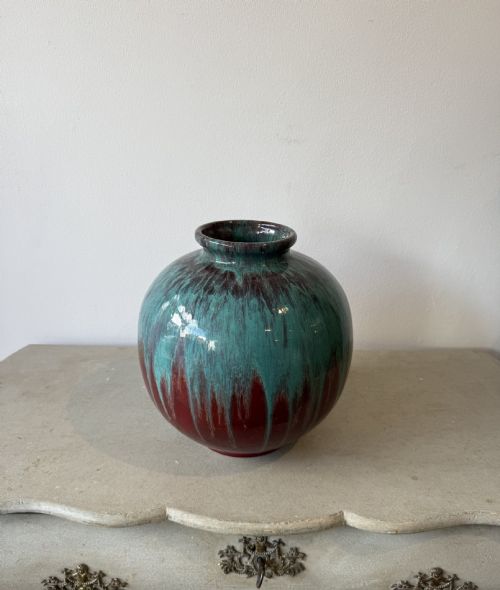
Sang de Boeuf is French for oxblood, describing a deep, glossy red copper-oxide glaze developed in China and emulated by later European potters. It creates rich tonal variations across the curve of a vase.
This classic monochrome glaze highlights the silhouette of traditional baluster and lidded forms without distracting surface patterns.