
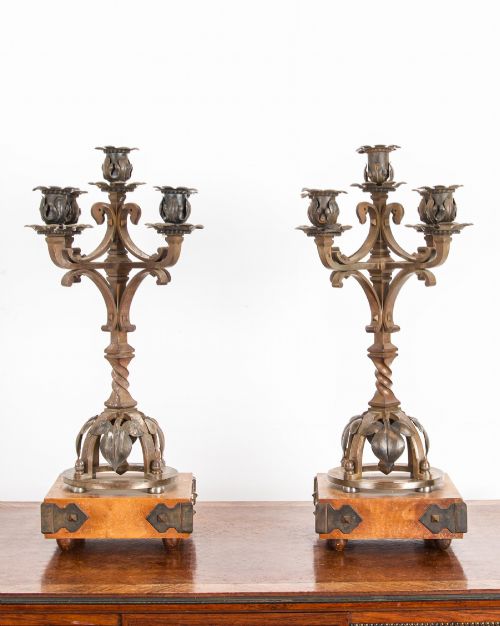


Five Light Candle Holder
A five light candle holder illuminates a dining table or mantelpiece with multiple branching arms, combining practicality with sculptural presence.
Five Light Candle Holder
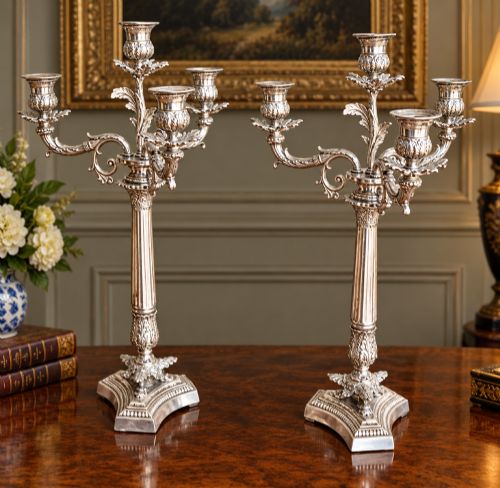
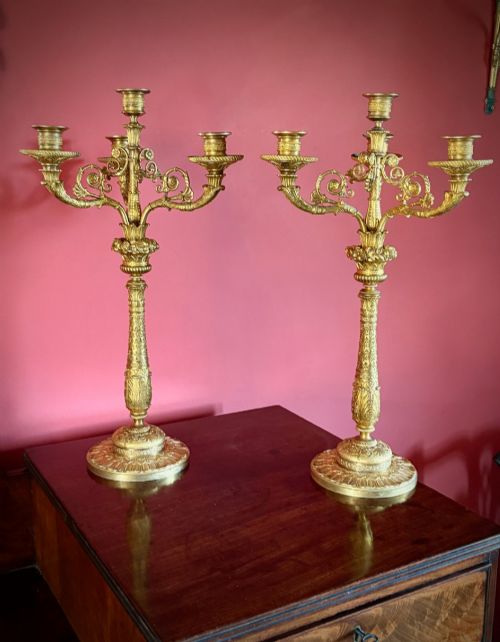
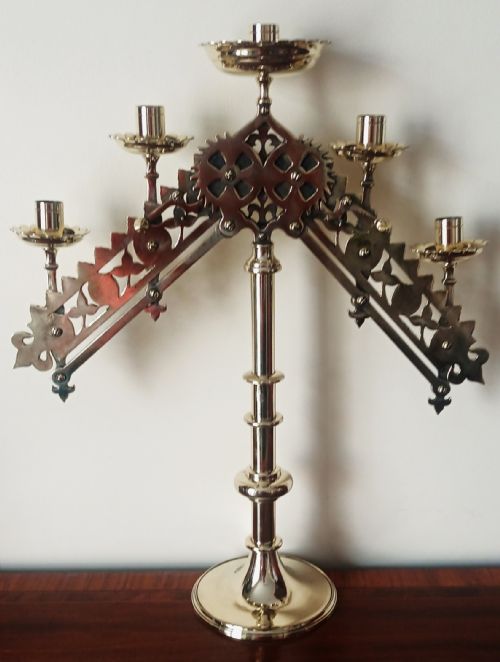
A five light candle holder takes the form of a candelabrum, chandelier, or wall sconce, designed to support five distinct candles simultaneously. These pieces appear most frequently as matched pairs dating from the nineteenth century, produced in styles ranging from Victorian and Gothic Revival to French Empire and Rococo Revival.
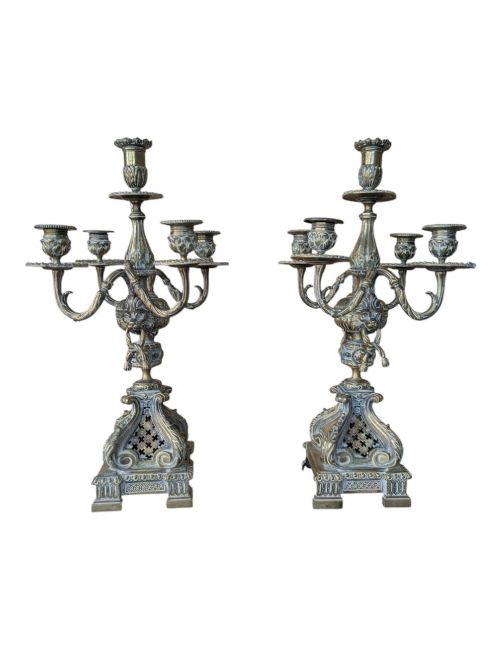
The objects serve primarily as substantial table centrepieces or decorative wall light fittings, utilising branching arms that radiate from a central stem or bracket. Examples span materials from polished brass and gilt bronze to silver plate and wrought iron, reflecting the diverse domestic interiors of their period of origin.
Materials and construction methods
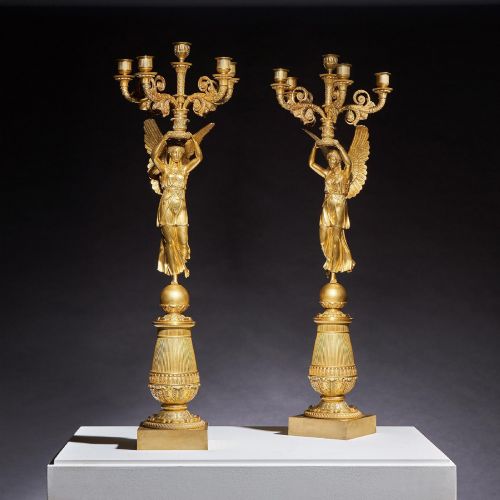
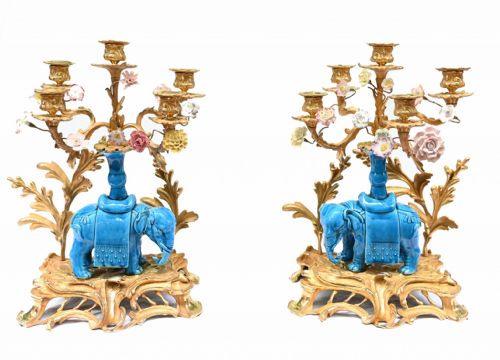
Metalwork forms the core of these objects, utilising cast bronze, brass, and gilt ormolu often paired with marble bases, porcelain elements, or hand-cut crystal drops. Founders employed lost-wax and sand casting techniques to create intricate figural details, cherubs, and acanthus scrollwork before chasing the metal surfaces by hand.
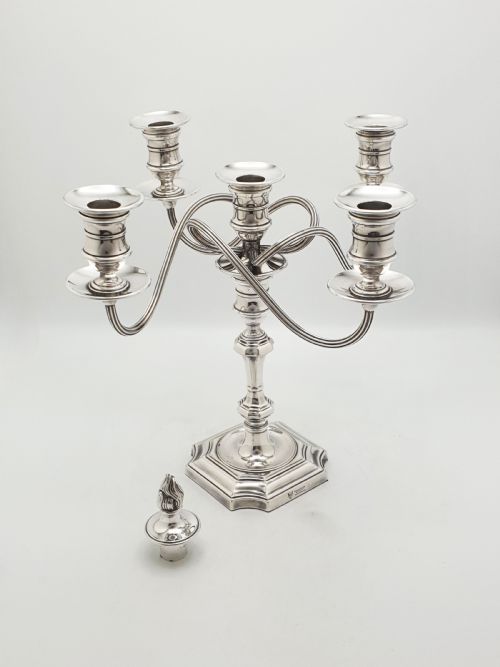
Silver plating and electroplating deposition methods were applied to base metals like copper and brass during the Victorian era, creating durable reflective finishes. Articulated joints and detachable sconces required precise engineering, allowing sections of the branching arms to move or dismantle for cleaning.
Judging the quality of manufacture
Quality reveals itself in the crispness of the chasing and the weight of the cast metal, where finer pieces display deep, sharp relief on acanthus leaves and figural drapery without surface pitting. The integrity of the joins between the central stem and branching arms dictates structural stability, separating robust studio work from weaker mass production.
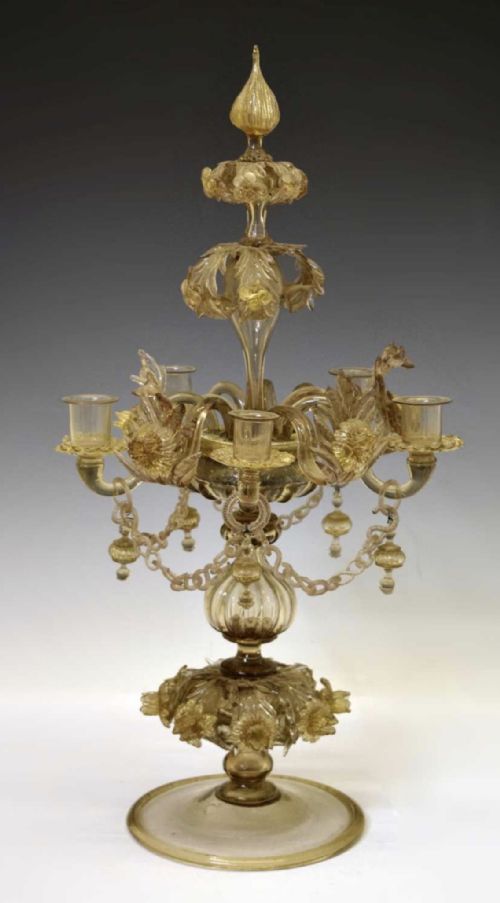
The application of mercury gilding or high-grade ormolu retains a rich, matte golden tone over centuries, whereas inferior plating wears through to reveal dull base metals. Integration of secondary materials, such as fitted marble plinths or genuine Murano glass components, indicates higher production standards.
Pierre Philippe Thomire
The Five Light Candle Holder Glossary
- Candelabrum
- A large branched candlestick designed to hold multiple candles simultaneously. These fixtures often feature a central light flanked by symmetrical arms.
- Ormolu
- Finely ground high-carat gold mercury-gilded onto a bronze base. This technique produces a durable, warm metallic lustre characteristic of French decorative arts.
- Sconce
- A wall-mounted lighting fixture supporting one or more candles. In multi-branch formats, these direct illumination outward into a room.
- EPNS
- Electroplated nickel silver, a common base metal composition used for silver-plated domestic wares from the mid-nineteenth century onwards.
- Chasing
- The manual finishing of a cast metal object using small punches and hammers to sharpen surface details and textures.
Five Light Candle Holder: Frequently Asked Questions
Were all five light candle holders originally made in pairs?
Many grand dining table centrepieces and mantel ornaments were manufactured as symmetrical pairs to balance formal nineteenth-century interior schemes. However, single large candelabras, chandeliers, and wall sconces were also produced independently.
Examining the base markings and casting numbers helps determine whether a surviving piece belonged to an original matched set.
How can I tell a French empire piece from a Victorian one?
French Empire and Neoclassical examples typically display strict geometric symmetry, classical architectural motifs, and finely chased ormolu finishes. Victorian and Gothic Revival pieces often incorporate heavier proportions, ornate foliage, ecclesiastical tracery, or silver-plated finishes.
Material choices also offer clues, with French makers frequently favouring high-grade bronze and ormolu alongside marble plinths.
Can these candelabras be used with modern candles?
Most antique candelabras accommodate standard taper candles, though standard widths can vary slightly depending on the age and origin of the sockets. Using dripless candles helps protect delicate bronze, silver plate, or marble surfaces from wax accumulation.
Detachable drip pans or sconces, where present, lift away easily to simplify the removal of hardened wax.