

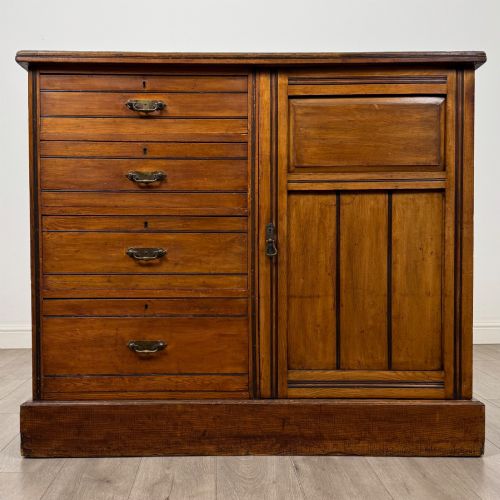

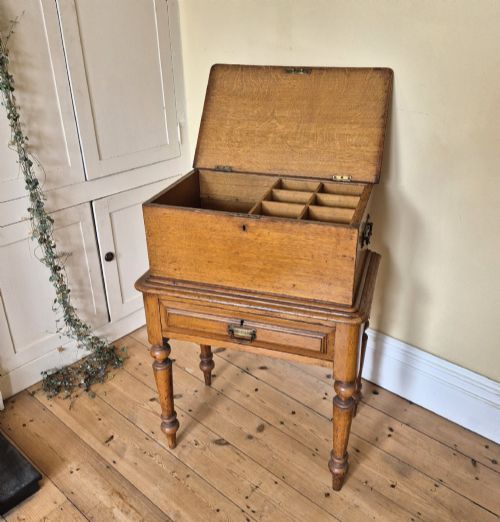

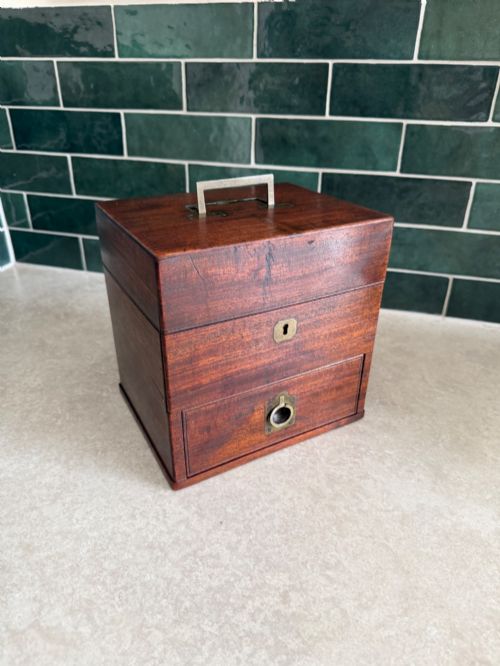


Fitted Wooden Collector Chest
These fitted wooden collector chest examples are specialised multi-drawer units built for methodical sorting and display, offering immediate architectural character to any room.
Fitted Wooden Collector Chest
A fitted wooden collector chest serves as a compact storage unit designed with numerous small compartments or drawers to organise specific items. When searching for a fitted wooden collector chest, you encounter diverse forms ranging from microscope slide cabinets and apothecary boxes to larger haberdashery banks of drawers.
The pieces appearing on this page span the nineteenth century, the nineteen-twenties, and the nineteen-thirties, reflecting both domestic country house furniture and utilitarian commercial shop fittings. Styles include Victorian, early Victorian, Regency revival, and industrial workshop designs.
Most examples function as table cabinets, storage cabinets, or freestanding banks of drawers, constructed to house everything from railway tickets and napkins to delicate scientific specimens.
Materials and construction methods
Cabinet makers utilised robust timbers such as oak, walnut, ash, pine, and mixed woods to build the primary carcass and internal framework of each fitted wooden collector chest. These woods were chosen for their structural stability, ensuring the numerous small drawers slide smoothly without jamming over time.
Metal elements including brass handles, pulls, and hinges provide both functional support and subtle decorative contrast against the dark or polished wood surfaces. Glass appears in specific viewing doors or panels, allowing contents to be inspected without opening the individual compartments.
Fitted Wooden Collector Chest Retail Price Guide 2026
Typical asking prices for fitted wooden collector chest among the pieces listed under this phrase on Sellingantiques today, from the lower quarter to the upper quarter. They describe what is for sale here now, not the wider market.
Storage forms range from portable apothecary boxes and table cabinets to large-scale railway ticket dispensing units and shop banks of drawers.
Assessing quality and craftsmanship
Quality in these pieces rests on the precision of the internal joinery and the intended original purpose of the cabinet. Finer examples made for scientific collections or high-end retail displays exhibit meticulous attention to drawer fitting and superior timber selection.
Commercial or utilitarian pieces built for railway offices or drapery shops lean towards robust durability, employing simpler joins designed to withstand heavy daily use rather than delicate aesthetic flourish.
G. Bartholomew & Co·Luxmore's of Ilfracombe·North Eastern Railway
The Fitted Wooden Collector Chest Glossary
- Haberdashery cabinet
- A multi-drawer storage unit originally utilised in retail shops for organising small clothing accessories, ribbons, and buttons. These units typically feature numerous shallow drawers with glass fronts or brass label holders.
- Apothecary box
- A compact wooden chest fitted with internal compartments designed to store medical phials, powders, and scales. They often feature secure locking mechanisms and small brass carrying handles.
- Table cabinet
- A small-scale storage piece designed to sit upon a desk, counter, or table rather than stand on the floor. These cabinets maintain multiple internal drawers while retaining a portable footprint.
- Microscope slide cabinet
- A specialised storage chest engineered specifically to hold thin glass slides in tiered slots. These pieces represent exceptional precision in miniature woodworking.
- Bank of drawers
- A modular configuration of numerous small drawers stacked vertically or horizontally within a single housing. They provide high-density organisation for documents, tickets, or small artefacts.
Fitted Wooden Collector Chest: Frequently Asked Questions
What were fitted wooden collector chests originally used for?
These cabinets served commercial, scientific, and domestic purposes, housing everything from medical phials and microscope slides to railway tickets and shop inventory.
Their modular multi-drawer layouts allowed merchants, doctors, and amateur naturalists to keep vast quantities of small items systematically sorted and protected.
How do I date a Victorian collector chest?
Dating relies on examining the construction methods of the drawers, the timber selection, and any integrated brass hardware. Victorian examples often feature hand-cut dovetail joints and dense native hardwoods like oak and walnut.
Cabinet labels, railway stamps, or retailer plaques attached to the carcass also provide direct historical markers.
Are these chests suitable for modern home storage?
Their numerous small compartments make them exceptionally practical for organising contemporary items such as jewellery, stationery, or craft supplies.
Placing a table cabinet on a desk or positioning a larger bank of drawers in a hallway brings historic character and functional organisation into everyday living spaces.
What is the difference between an apothecary box and a haberdashery cabinet?
An apothecary box is typically a portable chest designed for medical ingredients, featuring secure locks and internal bottle dividers. A haberdashery cabinet is a larger shop fitting meant for retail display and textile storage.
While both utilise multiple drawers, haberdashery units often incorporate glass fronts for merchandise visibility, whereas apothecary boxes prioritise concealed, secure storage.