




Antique Wooden Map Cabinet
An antique wooden map cabinet offers deep, multiple drawers designed to organise large sheets safely while anchoring a room with honest period presence.
Antique Wooden Map Cabinet
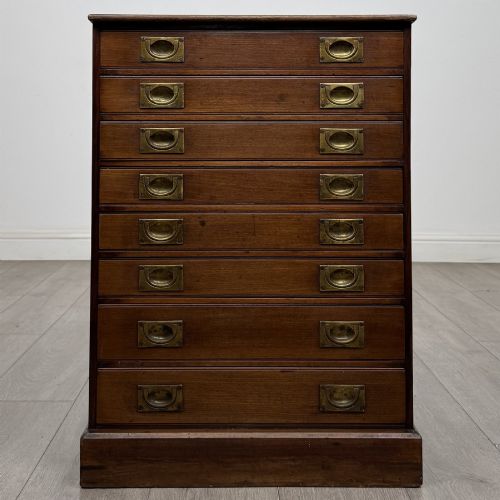
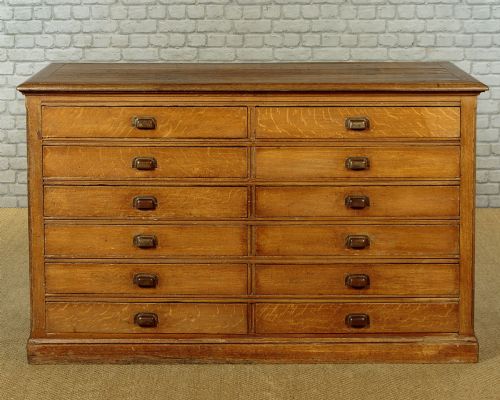
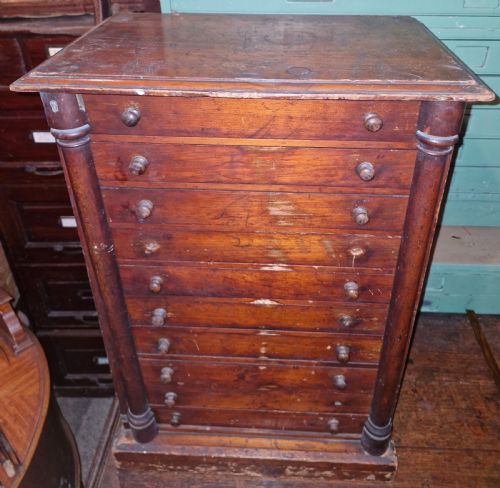
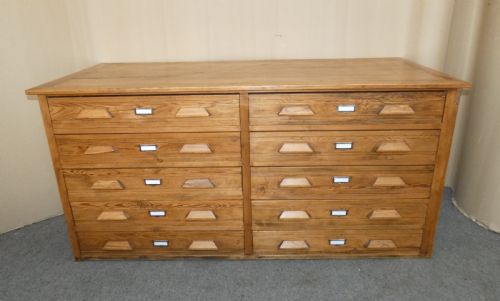
The examples seen here span the Victorian era, the Edwardian period, and the mid twentieth century, drawing on industrial utility, Arts and Crafts, and Edwardian Chippendale revival styles. These pieces range from substantial forty drawer collectors cabinets to simpler pine filing drawers and folio cabinets.
Makers utilised practical woods such as oak, mahogany, deal, pine, and red walnut, often complemented by brass handles and velvet linings. Such storage units served offices, studies, and artists studios, functioning today as versatile credenzas or statement chests of drawers.
How they were made
Carpenters constructed these cabinets using durable timbers like oak, mahogany, deal, and pine, selecting woods based on the intended weight and setting of the piece. Frame and panel construction kept large drawer carcases stable across decades of daily pulling and pushing.
Makers fitted many drawers with brass handles, label holders, and occasionally velvet linings to protect delicate contents from friction. Exterior finishes involved staining and polishing the wood to enhance grain patterns while protecting the surface from wear in busy workspaces.
Antique Wooden Map Cabinet Retail Price Guide 2026
Typical asking prices for wooden map cabinet among the pieces listed under this phrase on Sellingantiques today, from the lower quarter to the upper quarter. They describe what is for sale here now, not the wider market.
The listings span from the nineteenth century through the Edwardian era to nineteen fifty, recording woods such as mahogany, oak, deal, and red walnut.
What varies in quality
Quality in these cabinets depends on the choice of timber and the precision of the drawer joinery. Cabinets built from dense hardwoods like mahogany or figured red walnut show finer grain selection than utility deal carcases.
The integrity of the internal runners and the smoothness of the drawer action separate standard workshop storage from finer commissioned pieces. Original brass hardware and untouched polished surfaces elevate the standing of a cabinet.
Whytock and Reid·Brady
The Antique Wooden Map Cabinet Glossary
- Deal
- A soft timber cut from fir or pine, frequently stained and polished in nineteenth century workshops. It provided an economical yet sturdy material for carcases and internal partitions.
- Folio cabinet
- A piece of furniture designed specifically to store large art folios, prints, and paper sheets. These cabinets often feature shallow compartments or wide, low drawers.
- Collectors cabinet
- A multi drawer unit intended for specimens, coins, or natural history objects, sharing similar drawer configurations with map and plan storage. They frequently incorporate numerous small, shallow drawers within a locking door frame.
- Arts and Crafts
- A design movement prioritising honest construction, visible hand craftsmanship, and simple material qualities. Pieces from this tradition avoid excessive ornamentation in favour of utility.
Antique Wooden Map Cabinet: Frequently Asked Questions
What were map cabinets used for?
These cabinets held large paper maps, charts, and architectural drawings flat to prevent curling and creases. Their wide, shallow drawers kept delicate documents sorted and accessible in offices and studios.
Over time, owners adapted them to store prints, fabrics, and everyday household items while keeping their original organizational layout intact.
How do I date an old cabinet?
Dating relies on observing timber choices, construction techniques, and stylistic clues such as Victorian proportions or Edwardian revival details. Hardware styles and secondary woods inside the drawers also point to specific periods.
Comparing the build quality with dated examples from the nineteenth and twentieth centuries helps narrow down the decade of manufacture.
Are the drawers interchangeable?
Many multi drawer cabinets feature hand fitted drawers that settled into specific slots over decades of use. Swapping them around can cause sticking due to slight variations in the timber channels.
Keeping each drawer in its original position ensures smooth operation and preserves the internal fit established by the maker.
How do I care for the wood?
Maintain the finish by dusting regularly with a dry cloth and avoiding placement near direct heat sources or strong sunlight. Excessive temperature changes can cause timber to warp and drawers to bind.
Applying a traditional beeswax polish occasionally helps nourish polished hardwood and deal surfaces without building up heavy residues.