
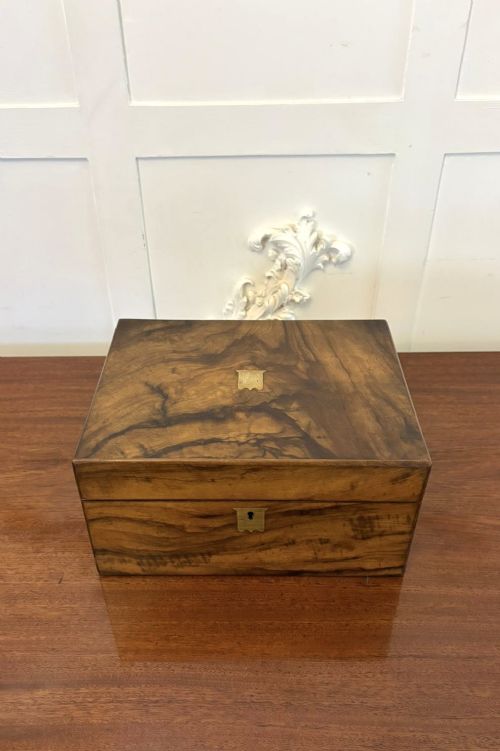


Fitted Stationery Desk
A fitted stationery desk organises correspondence through clever compartments, folding slides and secret drawers.
Fitted Stationery Desk
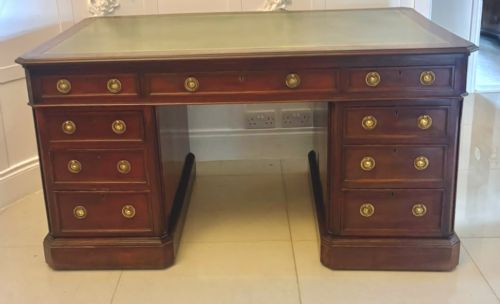
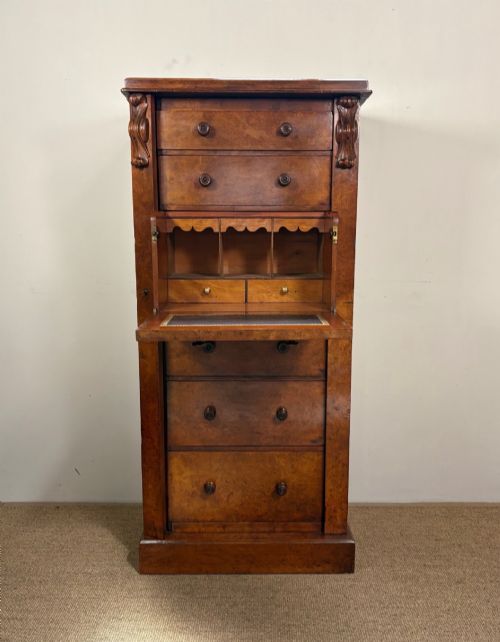
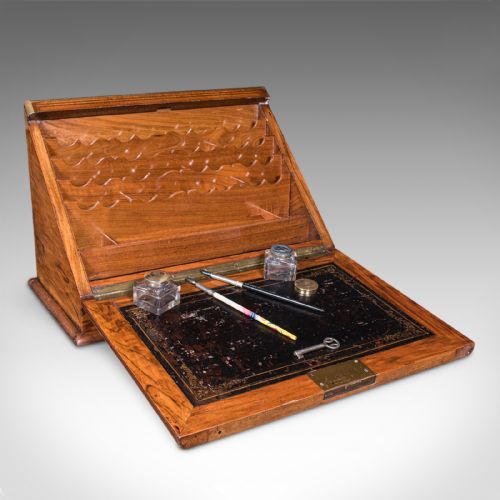
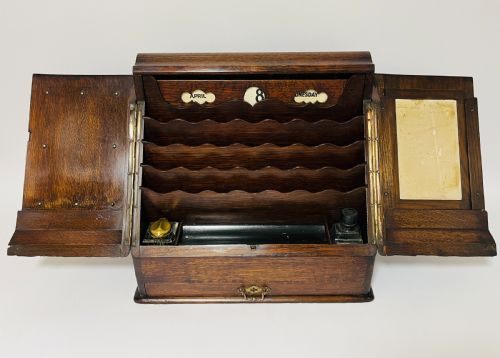
A fitted stationery desk encompasses everything from compact Victorian writing slopes and lap desks to large pedestal kneehole desks and walnut stationery cabinets. When you search for a fitted stationery desk, you meet practical writing boxes, correspondence chests, and oak stationery boxes designed to keep paper, pens and ink in order.
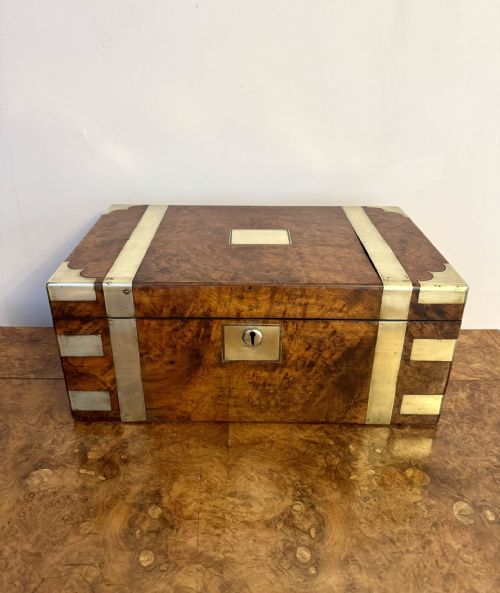
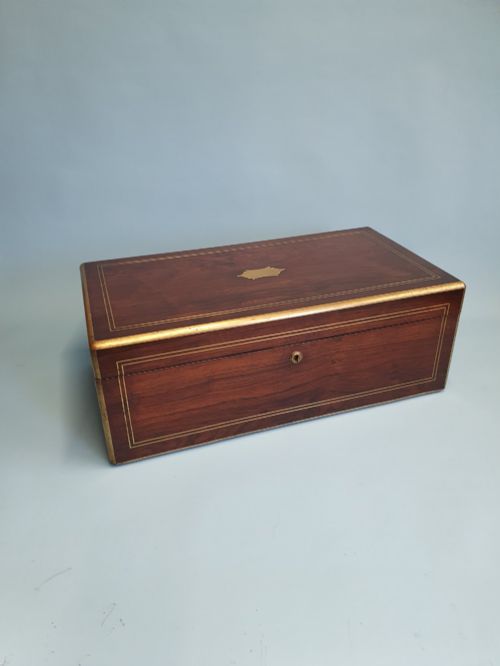
The pieces on this page span the Georgian, Regency, Victorian, and Edwardian periods, stretching from eighteen hundred into the early twentieth century. Makers of these items worked in mahogany, walnut, rosewood, oak, and olivewood, often incorporating brass mounts, leather panels, and glass ink bottles.
Forms vary from portable campaign correspondence boxes and Japanese lacquer writing boxes to large freestanding desks with fitted stationery drawers and writing slides. Many examples include secret drawers, Bramah locks, and drop-front stationery compartments.
How they were made
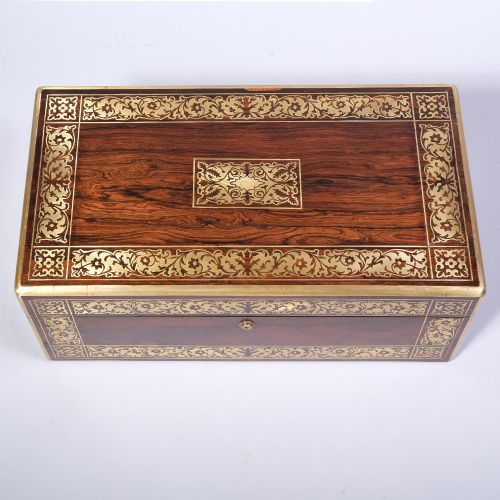
Cabinet makers constructed these desks and boxes using solid timbers and veneers of mahogany, walnut, burr walnut, rosewood, and oak. Surfaces often feature brass banding, brass inlays, and corner mounts to protect the wood during travel or daily use.
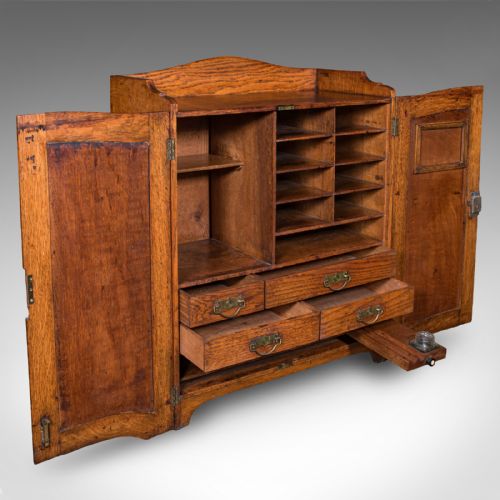
Interiors rely on precision carpentry to create fitted letter racks, pen trays, and secret compartments hidden behind false panels or sliding partitions. Leather writing surfaces, glass inkwells, and specialised locks complete the construction of these storage pieces.
Some nineteenth-century correspondence boxes contain secret spring-loaded panels that pop open only when you press a hidden wooden peg.
What varies in quality
Quality shows in the choice of timber figure, such as richly grained burr walnut, figured mahogany, or exotic rosewood. Superior pieces display precise joinery in the internal stationery compartments and tightly fitted secret drawers.
Hardware and mechanisms separate standard boxes from exceptional ones. Heavy brass fittings, flush campaign handles, working Bramah locks, and clever metamorphic actions distinguish the finer works on this page.
The Fitted Stationery Desk Glossary
- Writing slope
- A portable box with a hinged sloping lid designed for writing letters. Inside, it houses fitted compartments for paper, pens, and ink.
- Stationery cabinet
- A desktop or freestanding piece featuring tiered compartments, pigeonholes, and doors to hold letters and writing paper. It keeps correspondence organised upright.
- Bramah lock
- A high-security barrel lock invented by Joseph Bramah, commonly found on better quality nineteenth-century writing boxes and desks.
- Secret drawers
- Concealed small drawers hidden behind removable partitions or false backs within a desk or writing slope.
- Campaign box
- A sturdy portable box fitted with brass corners and recessed handles, built for travel and military use.
Fitted Stationery Desk: Frequently Asked Questions
What is a fitted stationery desk?
A fitted stationery desk is a writing surface, slope, or cabinet equipped with dedicated internal compartments for paper, envelopes, and writing implements.
These pieces organise correspondence and desk accessories using pigeonholes, drawers, letter racks, and built-in ink bottles.
How do I date a writing box?
Dating a writing box involves examining the timber, construction methods, brass hardware, and lock types. Victorian pieces often use walnut and mahogany with brass binding, while Georgian items favour simpler mahogany or rosewood forms.
Internal fittings and secondary woods also help narrow down the period from the eighteenth century into the early twentieth century.
What are secret drawers used for?
Secret drawers provide a secure space within a desk or writing slope for valuables, money, or private papers.
Cabinet makers hid these small compartments behind sliding panels, false bottoms, or removable letter dividers.
Where were stationery boxes placed?
Stationery boxes sat on top of library tables, bureau desks, or dedicated writing furniture in studies and drawing rooms.
Larger versions stood independently on the floor as pedestal desks, stationery cabinets, or clerk's cupboards.