



Fitted Stationery Cabinet
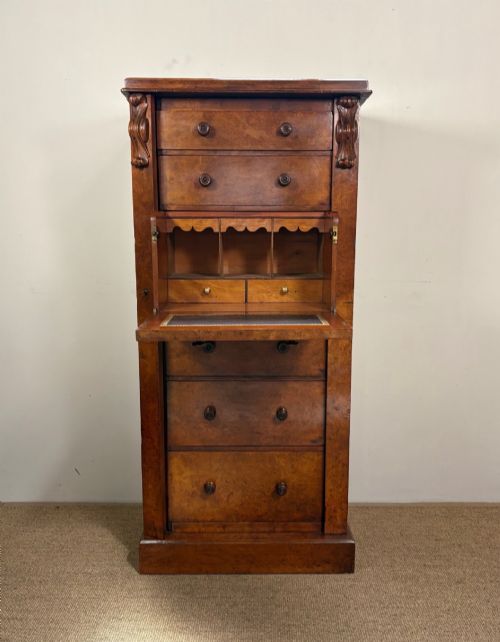
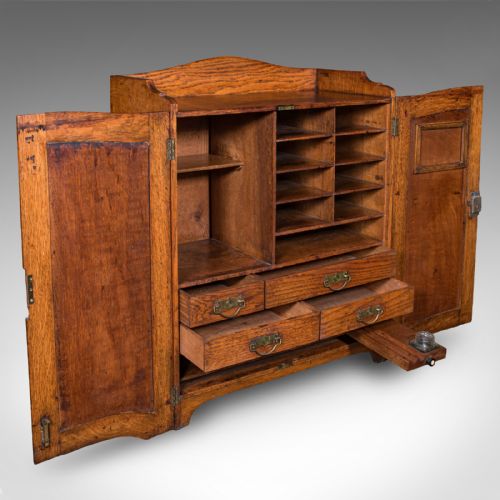
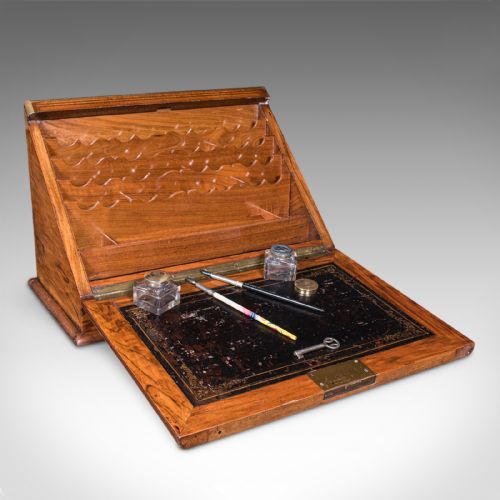
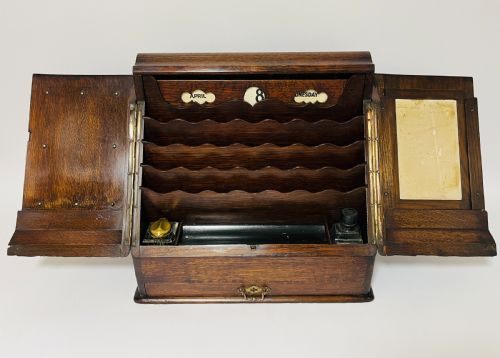
A fitted stationery cabinet keeps your desk tidy, housing paper, pens and ink in dedicated compartments behind panelled doors or drop fronts.
Fitted Stationery Cabinet
When you search for a fitted stationery cabinet, you are looking at practical desktop storage designed to organise correspondence and writing materials in home studies or offices. The pieces found here span the Victorian, Edwardian and Regency periods, alongside earlier nineteenth-century examples and twentieth-century designs.
You are most likely to meet oak and walnut variants on this page, often built as compact desk cabinets, correspondence chests or stationery boxes with internal dividers. Some examples arrive as larger campaign pieces bound in brass, whilst others take the form of drop-front cabinets or writing boxes.
The origins stretch across English workshops, Scottish estates and occasional Japanese lacquer production, reflecting the global reach of nineteenth-century writing furniture. Each form provides dedicated slots for envelopes, ledgers and inkwells, making them as useful for modern study desks as they were for historic writing rooms.
How they were made
Cabinet makers relied primarily on timbers like oak, walnut, mahogany and olivewood, often applying veneers or satinwood inlays to decorative surfaces. Brass fittings such as campaign corners, carrying handles and escutcheons reinforced the corners and edges of travelling or estate pieces.
Internal arrangements incorporated leather panels, glass ink bottles and precisely jointed dividers to secure papers and writing instruments safely. Drop fronts and tambour doors required careful joinery to operate smoothly within the compact frames of these desktop organisers.
Fitted Stationery Cabinet Retail Price Guide 2026
Typical asking prices for fitted stationery cabinet among the pieces listed under this phrase on Sellingantiques today, from the lower quarter to the upper quarter. They describe what is for sale here now, not the wider market.
Some nineteenth-century writing chests arrived complete with secret drawers hidden behind false stationery partitions for private letters.
What varies in quality
Quality reveals itself in the complexity of the internal arrangement and the precision of the joinery within the fitted compartments. Pieces with numerous pigeonholes, secret drawers and original glass ink bottles demonstrate a higher grade of craftsmanship from the maker.
The choice of timber and secondary woods dictates the calibre of the exterior, with figured walnut, olivewood and satinwood inlay marking out more ambitious commissions. Robust brass hardware and well-fitted locking mechanisms further distinguish utilitarian office furniture from finer drawing-room pieces.
The Fitted Stationery Cabinet Glossary
- Stationery cabinet
- A desktop or freestanding box designed specifically to hold writing paper, envelopes and correspondence supplies. They usually feature hinged doors or fall fronts opening to reveal fitted interiors.
- Campaign
- A style of portable furniture made for travel, typically featuring recessed brass handles, reinforced corners and durable timbers like mahogany. These pieces were built to withstand the rigours of military or colonial movement.
- Drop front
- A hinged writing surface or cabinet door that folds downward to provide access to internal compartments and pigeonholes. It creates a stable horizontal platform when open.
- Satinwood
- A lustrous, yellowish timber native to Ceylon and India, frequently utilised for fine cabinet-making veneers and contrasting stringing lines during the Edwardian period.
Fitted Stationery Cabinet: Frequently Asked Questions
What is a fitted stationery cabinet?
A fitted stationery cabinet is a wooden desktop box or small cupboard designed to organise writing paper, envelopes and ink bottles. They contain internal shelves, pigeonholes and racks tailored for correspondence.
These pieces appeared on nineteenth and early twentieth-century desks to keep personal and business papers orderly and secure behind closed doors or drop fronts.
How were stationery cabinets used?
Owners used them to store everyday writing materials, sealing wax and correspondence neatly out of sight in studies, libraries and offices. The internal compartments kept different sizes of paper separated.
Many examples included glass ink bottles and small drawers for stamps, turning a desk corner into a complete writing station.
Where should I place one?
They sit comfortably on top of writing desks, sideboards or bookcases where their fitted interiors remain easily accessible for daily use. Their compact footprints suit modern home workspaces.
Keep them away from direct heat sources and strong sunlight to protect historic wood finishes, leather panels and brass fittings.
How do I date an antique cabinet?
Dating relies on identifying the primary timbers, construction methods, hardware styles and decorative motifs present in the piece. Regency and Victorian examples often display heavier brass work and robust mahogany or oak construction.
Edwardian items frequently introduce lighter satinwood inlays or altered proportions, reflecting changing interior tastes at the turn of the twentieth century.