

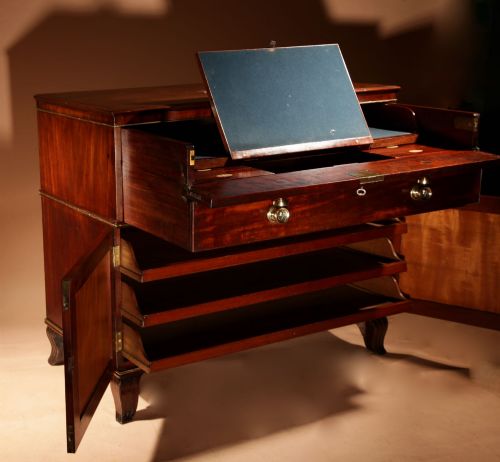
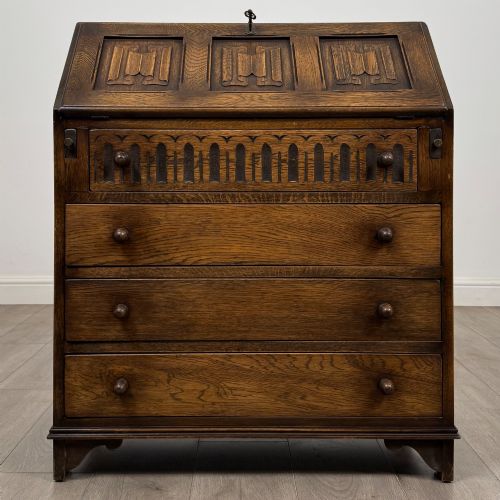
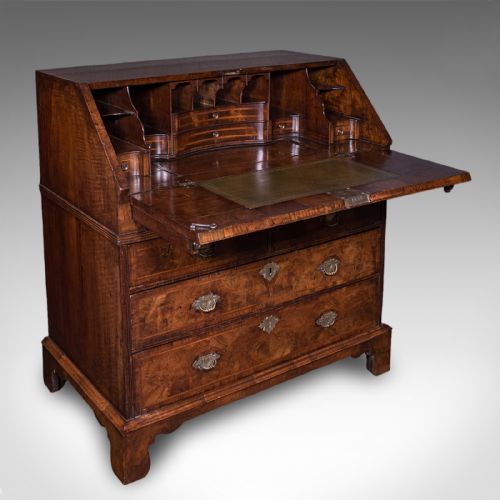


Fitted Secretary Drawer Chest
These fitted secretary drawer chests combine ample storage with a clever pull-out writing surface, offering practical elegance for everyday study or correspondence.
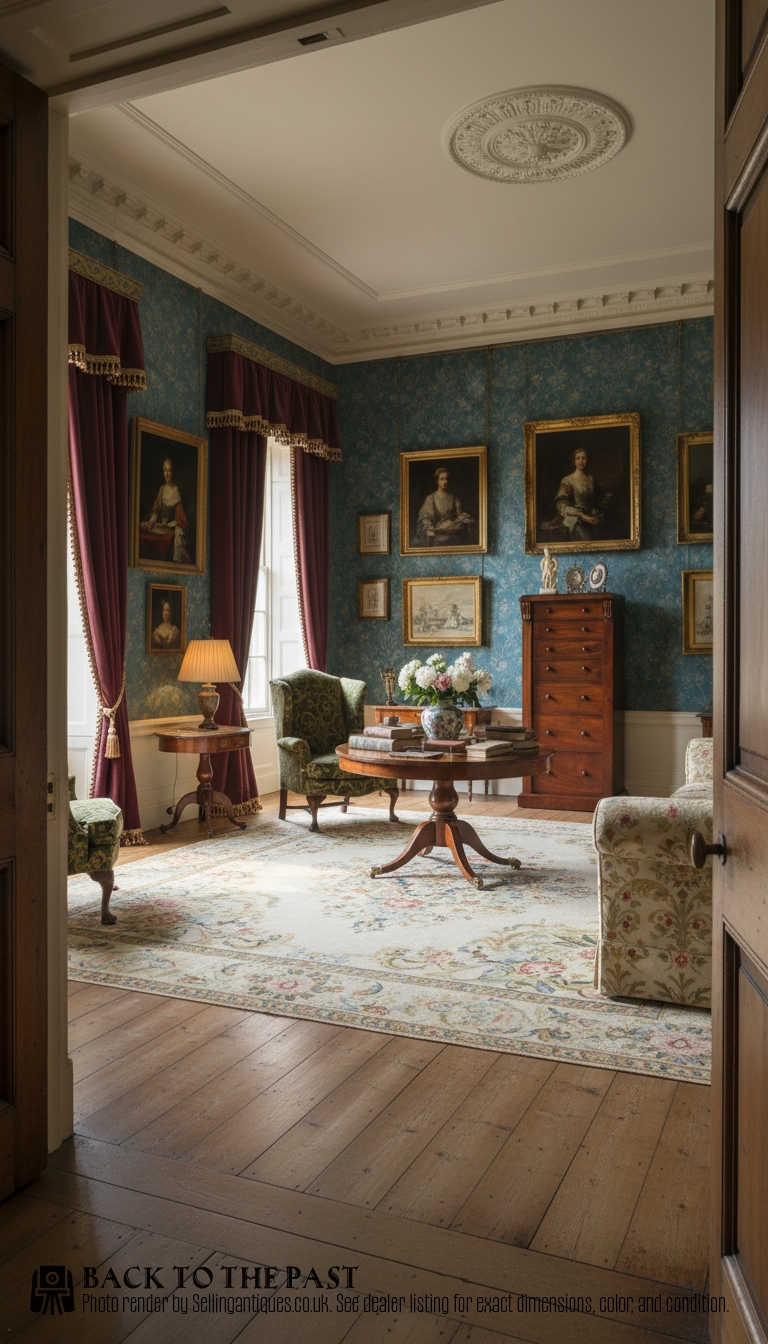
Fitted Secretary Drawer Chest
A fitted secretary drawer chest is a versatile hybrid combining a chest of drawers with a concealed writing compartment, often taking the form of a bureau, secretaire chest, or writing cabinet. These pieces bridge the gap between public reception spaces and private studies by keeping correspondence and papers neatly tucked away behind a drawer front or fall front.
The versions most frequently encountered on this page date from the Georgian, Regency, and Victorian eras, with earlier examples stretching back through the eighteenth and seventeenth centuries. They appear in forms ranging from tallboys and chest-on-chests to press cupboards and Wellington chests, reflecting changing domestic needs over centuries of British and European woodworking.
Origins vary from English workshops to Scottish centres and Spanish studios, yielding diverse regional interpretations of form and proportion. Whether expressed through the restrained lines of a George III piece or the bolder grain of a Scottish Regency library desk, each object serves as a testament to period craftsmanship.
Materials and construction
Cabinetmakers relied heavily on timbers like mahogany, walnut, and oak to build the robust carcasses of these desks, frequently pairing them with secondary woods like pine for internal partitions. Solid construction methods ensured the heavy stresses of daily use, drawer sliding, and fall-front deployment would not warp the frame.
Decorative surfaces often incorporated figured veneers, satinwood banding, or polished paint finishes to catch the light in panelled rooms. Internal writing compartments frequently featured baize or leather writing surfaces alongside miniature drawers and pigeonholes designed to organise letters and quills.
Fitted Secretary Drawer Chest Retail Price Guide 2026
Typical asking prices for fitted secretary drawer chest among the pieces listed under this phrase on Sellingantiques today, from the lower quarter to the upper quarter. They describe what is for sale here now, not the wider market.
Secret drawers within these desks sometimes demand pressing hidden wooden springs or tilting the entire cabinet to release.
Measures of quality
The distinction between ordinary and exceptional pieces lies in the choice of timber and the precision of the internal cabinetwork. Superior examples display carefully matched veneer grains across drawer fronts and flawless secret compartments that operate smoothly without binding.
Hardware selection and secondary wood choices also signal a higher grade of manufacture. Original brass handles, locks, and robust oak drawer linings indicate a workshop that prioritised longevity alongside visual harmony.
Gillows·William Trotter
The Fitted Secretary Drawer Chest Glossary
- Secretaire
- A piece of furniture containing a concealed writing drawer or drop-front desk compartment. This term is often used interchangeably with bureau or writing cabinet.
- Fall Front
- A hinged writing flap that pulls down or folds forward to create a horizontal desk surface. It conceals pigeonholes and small drawers when closed.
- Tallboy
- A tall chest of drawers consisting of one chest stacked on top of another. They occasionally incorporate a secretaire drawer within the upper section.
- Veneer
- A thin layer of finely figured wood applied over a secondary timber base. This technique allowed cabinetmakers to showcase dramatic grain patterns without wasting scarce materials.
Fitted Secretary Drawer Chest: Frequently Asked Questions
How do I use a secretaire chest daily?
Lower the fall front or pull out the secretaire drawer to reveal the writing surface and pigeonholes. Ensure you clear taller items from the desk before closing the front again.
Keep the leather or baize lining clean using a dry cloth and avoid placing liquids directly on the antique wood surface.
Where were these pieces originally placed?
These pieces typically stood in private studies, libraries, or bedrooms where personal correspondence took place. They offered a secure place to store letters and financial ledgers away from public view.
In larger country houses, they functioned as portable offices for masters of the estate before dedicated desk rooms became common.
How can I tell a Georgian piece apart?
Georgian examples often feature solid mahogany or figured walnut timbers with hand-cut dovetails on the drawer sides. The internal fittings tend to use smaller pigeonholes and concealed spring catches.
Proportions lean towards classical symmetry, frequently paired with bracket feet or shaped aprons characteristic of eighteenth-century design.
What maintenance do the writing surfaces need?
Leather or baize writing inserts benefit from occasional dusting with a soft brush rather than moisture. Conditioning the surrounding wood with appropriate wax helps maintain the lustre of the antique finish.
Protect the fold-down flaps from heavy pressure or direct sunlight to prevent warping and fading over time.