


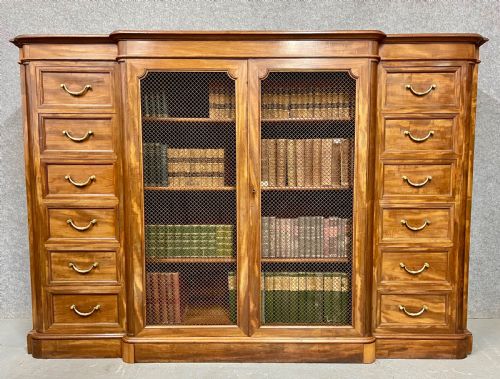
Fitted Library Cabinet
When you search for a fitted library cabinet, you are looking at substantial timber storage built to house books and papers.
Fitted Library Cabinet
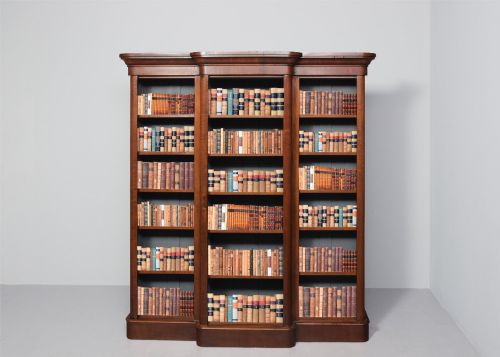
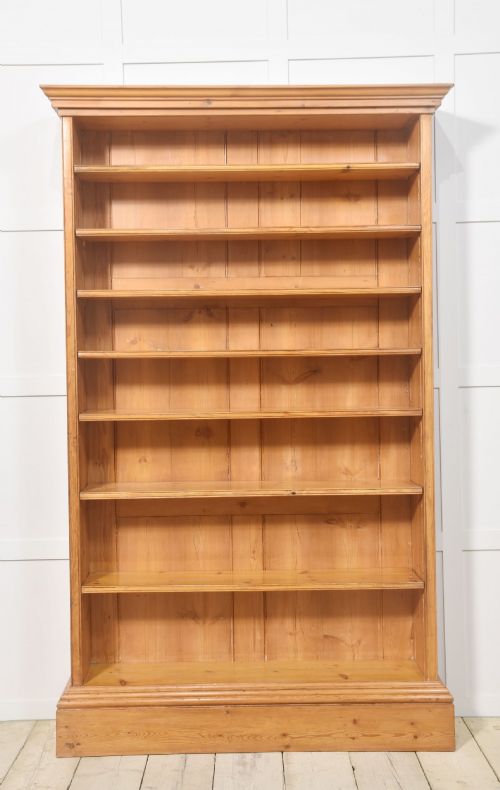
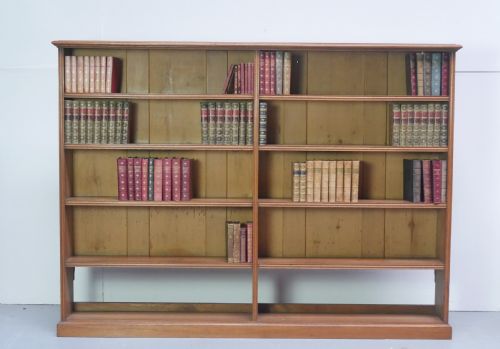
A fitted library cabinet is a substantial piece of architectural furniture designed for the organisation of books, manuscripts, and papers. The search phrase covers breakfront bookcases, secretaire desks, and large glazed storage units intended for domestic libraries.
The pieces appearing on this page span the Georgian, Regency, William IV, and Victorian periods, alongside later nineteenth century workshops. Mahogany, oak, and walnut predominate, often constructed with adjustable shelves and fitted writing sections.
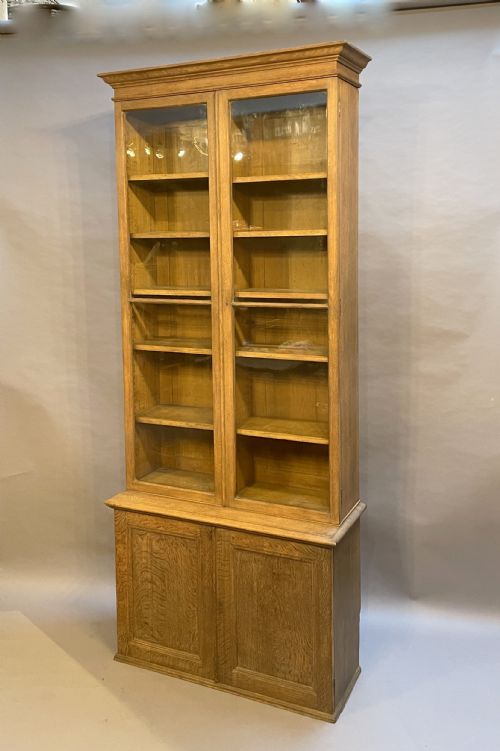
Larger breakfront designs sit alongside diminutive collectors cabinets and corner units. Many incorporate glazed upper doors above panelled cupboards or drawers, while secretaire variants include drop-front desks with internal pigeon holes.
How they were made
Cabinet makers utilised dense hardwoods such as mahogany, oak, and walnut, frequently selecting figured veneers for principal surfaces. Flame mahogany veneer and red walnut appear across nineteenth-century examples to provide visual depth.
Glazing bars hold individual panes of glass within large upper doors, while internal fittings incorporate brass hardware, adjustable shelf racks, and embossed leather writing surfaces. Carved details and plinth bases anchor the proportions of breakfront forms.
One exceptional cabinet stands large enough to dominate a modern dining space, built during an era when personal libraries required architectural scale.
What varies in quality
The distinction between standard commercial production and exceptional cabinet work lies in timber selection and structural joinery. Breakfront bookcases by named makers demonstrate superior proportion, balanced grain patterns, and refined carving.
Internal arrangements reflect the original commission, ranging from simple fixed shelving to sophisticated secretaire drawers with secret compartments and fitted pigeon holes. The weight of timber and the precision of the glazing bars separate utilitarian storage from fine library furniture.
Gillows of Lancaster·Howard & Sons·Maple & Co.·Goodhall, Lamb and Heighway of Manchester·William Trotter
The Fitted Library Cabinet Glossary
- Breakfront
- A cabinet design where the central section projects forward from the flanking wings. This configuration breaks the linear monotony of long walls and creates depth.
- Secretaire
- A desk form featuring a hinged writing flap or a pull-out drawer front that drops down to reveal a fitted interior of small drawers and pigeon holes. It combines writing utility with bookshelf storage.
- Flame mahogany veneer
- A thin slice of mahogany timber cut from the fork of the tree where the branch meets the trunk, producing a rippling, flame-like grain pattern. Cabinet makers applied this over secondary woods for decorative impact.
- Glazing bar
- A narrow wooden strip holding individual panes of glass within a cabinet door. Fine astragal bars divide large windows into smaller geometric lights.
- Adjustable shelving
- A system of rack strips or wooden slots allowing shelf heights to be altered. This flexibility accommodates books of varying sizes.
Fitted Library Cabinet: Frequently Asked Questions
How do I date a fitted library cabinet?
Dating relies upon timber choices, construction methods, and stylistic cues such as pediments and bracket feet. Georgian and Regency pieces tend to show lighter mahogany grains and restrained classical ornament.
Victorian examples often present heavier proportions, breakfront configurations, and darker walnut or oak finishes. Drawer linings and backboards further indicate the period of construction.
What is the difference between a bookcase and a secretaire bookcase?
A standard bookcase provides open shelving or glazed doors dedicated solely to the display and storage of books. A secretaire bookcase incorporates a dedicated writing drawer with a drop front.
This middle section conceals small drawers and pigeon holes, allowing the piece to function as both a desk and a library unit.
Can shelves be adjusted in antique bookcases?
Many nineteenth-century library cabinets feature adjustable shelves supported by wooden bearers or brass rack strips. This mechanism allowed owners to reconfigure the interior space for different folio sizes.
Earlier Georgian pieces sometimes relied on fixed shelving set into dado grooves.
Where were breakfront library cabinets placed?
These large pieces were designed for the principal rooms of country houses and town residences, usually positioned against the longest wall of a library or study. Their architectural scale required substantial ceiling height and floor space.
Corner variations served smaller rooms by utilising neglected angles.