


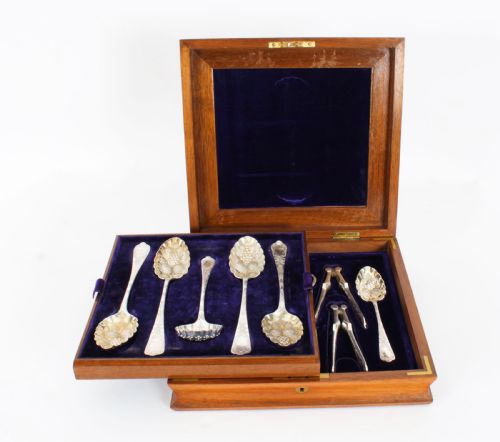


Fitted Case Silver Service
These fitted case silver service sets combine matched tableware with purpose-built protective housing, offering an organised and elegant way to host or travel.
Fitted Case Silver Service
When you search for a fitted case silver service, you encounter complete dining, tea, coffee, or dressing ensembles housed securely in bespoke wooden or leather containers. These sets span the Victorian, Edwardian, and Art Deco periods, originating from English and French workshops.
The most common configurations on this page include fruit and dessert sets, cruet sets, sugar bowls with sifter spoons, and full tea or coffee services. Each piece rests in a custom-shaped recess designed to prevent movement and damage during transit or storage.
Materials extend beyond the metalwork itself to the protective housings, which typically combine wood frames with velvet, silk, or leather linings. Silver and sterling silver items appear alongside silver plate and mother-of-pearl handled implements.
How they were made
Silversmiths formed the service components using traditional hammer-raising, casting, and piercing techniques, often applying hallmarks to sterling silver pieces in cities such as Sheffield, London, and Chester. Workshops utilised durable base metals or solid silver, pairing them with organic elements like mother-of-pearl for handles.
Cabinetmakers constructed the exterior cases from timber such as oak, covering them in leather or retaining polished wood finishes. Artisans then fitted the interiors with shaped wooden or cardboard armatures covered in velvet or silk to cushion every individual spoon, fork, or vessel.
Fitted Case Silver Service Retail Price Guide 2026
Typical asking prices for fitted case silver service among the pieces listed under this phrase on Sellingantiques today, from the lower quarter to the upper quarter. They describe what is for sale here now, not the wider market.
Recorded object types include cruet sets, dessert services, vanity sets, and tea or coffee collections.
What varies in quality
Quality differences lie in the completeness of the service and the precision of the case construction. Top-tier examples retain every original component, from the primary service pieces down to matching tongs, sifter spoons, or glasses, with no replacements introduced over time.
The integrity of the fitted housing distinguishes finer sets. Superior cases feature robust hinges, working locks with original keys, and precisely contoured interior linings that hold each item securely without sagging or wear to the fabric.
Bricks and Sons·Waring and Gillows·Hukin and Heath·Harry Atkin·Emile Puiforcat·Wakely and Wheeler
The Fitted Case Silver Service Glossary
- Sterling silver
- A silver alloy containing 92.5 percent pure silver and 7.5 percent other metals, usually copper, chosen for durability. British pieces bear specific assay office hallmarks indicating this standard.
- Silver plate
- A base metal such as nickel silver or copper coated with a thin layer of pure silver. This technique provided a bright finish at a lower cost than solid silver.
- Cruet set
- A collection of small bottles, jars, or shakers for condiments such as oil, vinegar, salt, and mustard. They sit together on a stand or fit directly into a designated compartment within a box.
- Sifter spoon
- A specialised spoon with a perforated bowl used for dusting sugar over fruit, desserts, or pastries. They frequently accompany sugar bowls inside fitted dessert services.
- French campaign dressing chest
- A portable furniture form designed for travel, featuring recessed handles and robust construction. These pieces housed grooming and vanity supplies for transport during military or personal journeys.
Fitted Case Silver Service: Frequently Asked Questions
What is a fitted case silver service?
A fitted case silver service is a collection of matched tableware or dressing items housed in a custom-built box with tailored interior recesses. These sets keep related utensils secure and organised for dining, tea preparation, or personal grooming.
Such services date primarily from the nineteenth and early twentieth centuries, reflecting the formal domestic habits and travel requirements of the Victorian and Edwardian eras.
How do I care for silver in a fitted case?
Keep the silver clean using appropriate polishing methods designed to remove tarnish without scratching the metal surface. Store the pieces in their designated slots within the case to prevent them from rubbing against one another.
Maintain stable humidity levels in the room where you keep the case to protect both the wooden exterior and the delicate velvet or silk interior linings from moisture damage.
Are all fitted case services made of solid silver?
Not all services utilise solid silver. Many sets incorporate silver plate over a base metal, which offers the visual appeal of silver while maintaining a different weight and composition.
Look for hallmarks on sterling silver pieces to verify their metal content, whereas silver-plated items generally feature manufacturer marks indicating the plating technique used.
How can I tell the period of a service?
Assay office hallmarks on sterling silver components provide direct evidence of the year and location of manufacture. Letter codes and maker stamps help pinpoint the exact decade of production.
Case construction styles, lock mechanisms, and interior fabric choices also offer strong clues to the period, aligning with Victorian, Edwardian, or Art Deco design trends.
Can I use these services for modern dining?
Many dessert, fruit, and tea services remain fully functional for modern entertaining. Using flatware or tea sets for special occasions connects contemporary dining with historical craftsmanship.
Hand-washing is recommended for all antique silver and mother-of-pearl handled items to preserve their finish and prevent damage to organic components.