
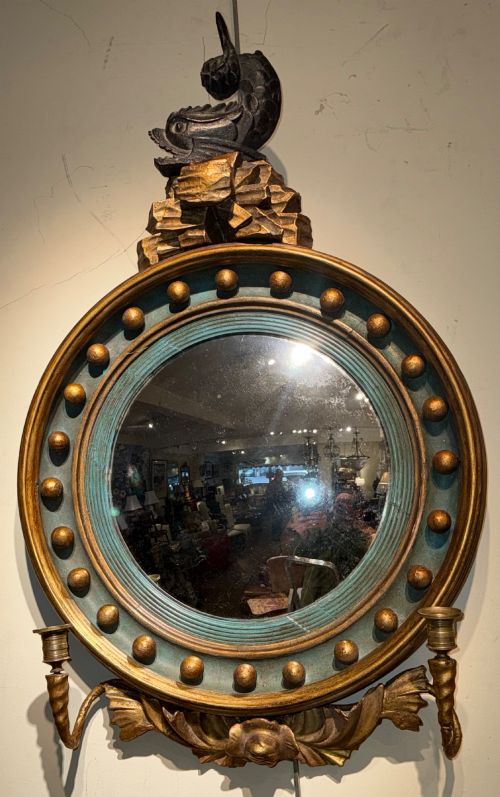


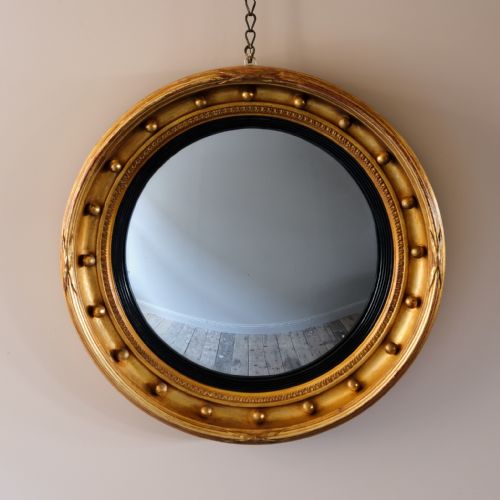
Fisheye Convex Mirror
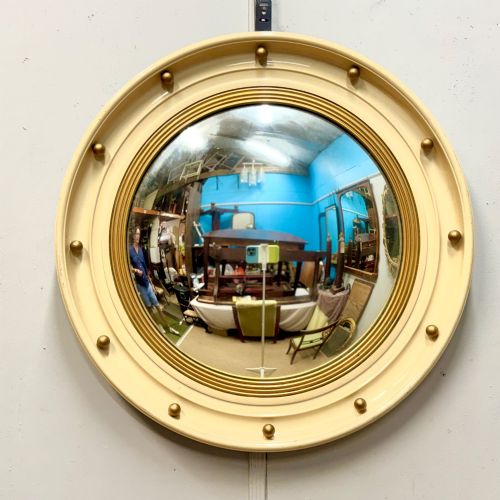
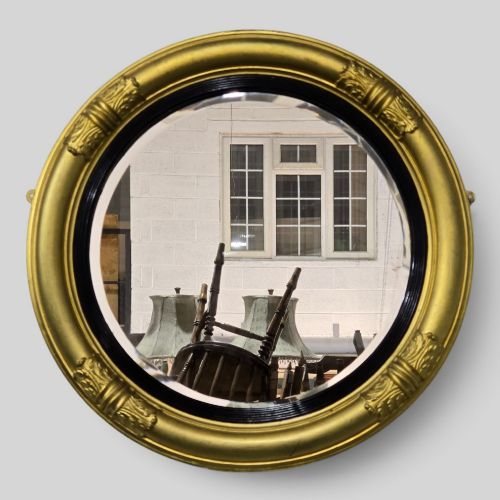
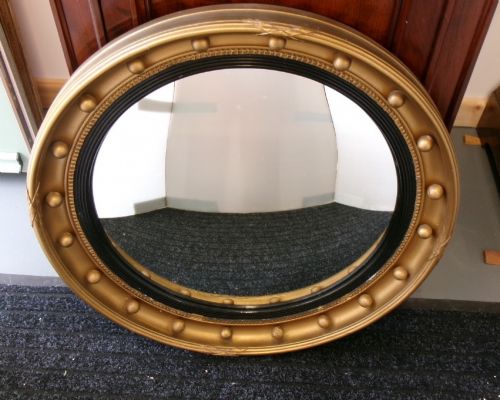
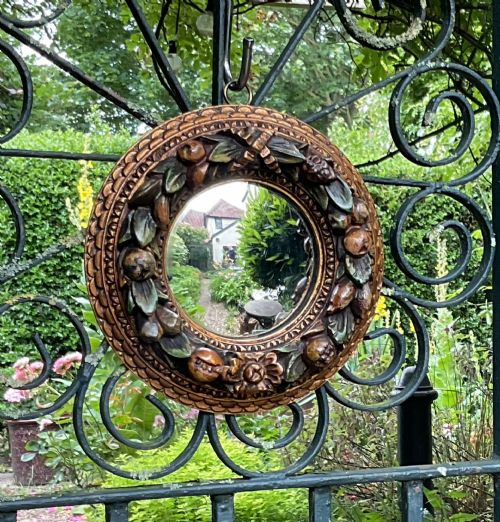
These fisheye convex mirrors bend the room into a single circular view, bringing depth and light to a wall.
Fisheye Convex Mirror
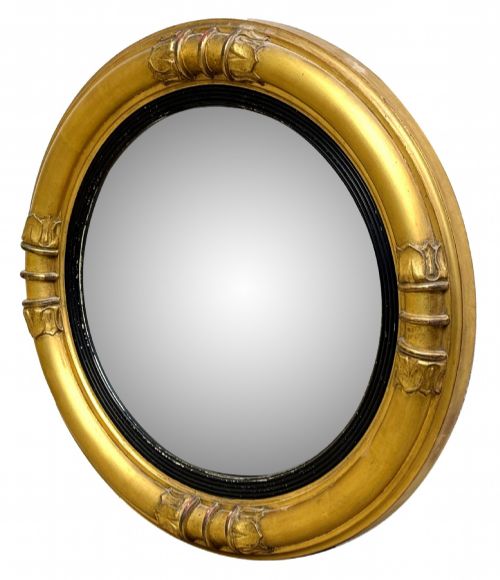
A fisheye convex mirror pulls an entire interior into its curved glass plate, distorting perspectives into a compact sphere. When you search for a fisheye convex mirror, you encounter circular wall plates set within round frames.
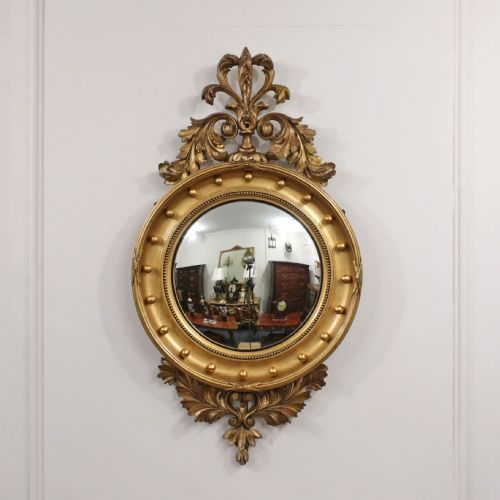
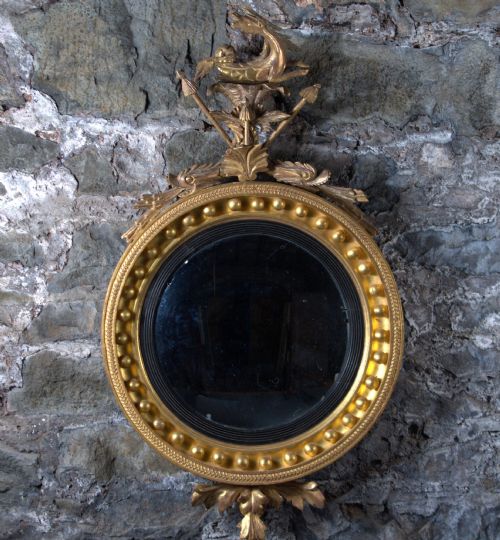
The Regency period provides the backbone of these pieces, alongside later 19th Century, 1890, 1900, and 1920 examples. You will frequently meet giltwood and gesso frames shaped as round wall mirrors and butlers mirrors.
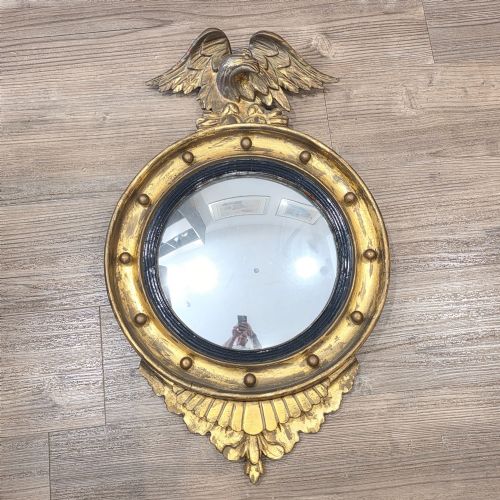
Grand Regency interpretations often incorporate carved birds or dragons at the crest. Victorian and Arts & Crafts variations strip back the ornament or employ ebonised wood, brass, and mahogany.
Materials and construction
Giltwood and gesso dominate the construction, built by applying layers of gesso over a carved wooden base before laying gold leaf. This technique creates crisp surface detail around the circular frames.
Glass blowing and silvering methods of the period produced curved plates that concentrate reflected light. Alternative frames utilise ebonised wood, brass, and mahogany for a different visual weight on the wall.
Some frames feature an eagle perched rigidly on top, glaring down at anyone checking their hair in the glass below.
Judging quality and period
The depth and clarity of the carved decoration determine the distinction between ordinary and superior frames. Crisp detailing on creatures like eagles or dragons indicates skilled hand carving rather than mechanical production.
The integrity of the original gilt surface and the preservation of the convex glass plate define the condition of the piece. Period frames display subtle signs of age across the gesso layers rather than uniform modern finishes.
The Fisheye Convex Mirror Glossary
- Convex glass
- A curved glass plate that turns outwards to project a wide-angled reflection of the room. This form creates the characteristic fish-eye view.
- Giltwood
- Timber coated with thin gold leaf over a prepared gesso ground. This material catches ambient light across the circular frame.
- Gesso
- A plaster mixture applied to wood frames to build up surfaces for carving and gilding. It allows for sharp relief work.
- Ebonised wood
- Timber stained or treated to imitate ebony. This dark finish provides sharp contrast in Victorian and later designs.
- Butlers mirror
- A round convex wall glass historically positioned to monitor activity across a dining space. The deep curve offers a panoramic field of vision.
Fisheye Convex Mirror: Frequently Asked Questions
Where should I hang a convex mirror?
These pieces suit focal points in hallways, sitting rooms, or dining spaces where they capture maximum light and movement from across the room.
Because the curved glass shrinks and gathers the entire perspective, placing one opposite a window or doorway opens up dark or narrow areas.
What is a sorcerers mirror?
This historical term describes a convex mirror, traditionally associated with divination or protection in domestic interiors.
The fish-eye reflection gathered the whole room into one glass, leading superstitious households to believe the glass could ward off misfortune.
How do I date an antique convex mirror?
Dating relies on examining the frame construction, the gesso application, and the style of carved elements like eagles or dragons. Regency examples display specific classical motifs and proportions.
Later Victorian and 1900 iterations often simplify these details or utilise materials such as brass and mahogany alongside ebonised wood.
Are these mirrors heavy?
Solid wood, thick gesso layers, and heavy glass plates give these round frames substantial weight relative to their diameter. Secure wall fixings are essential for safe hanging.
Larger Regency and 19th Century examples require proper wall anchors to support the load safely.