


Fine Knotted Isfahan Rug
A fine knotted isfahan rug brings the refined tradition of central Persian weaving into a room.
Fine Knotted Isfahan Rug
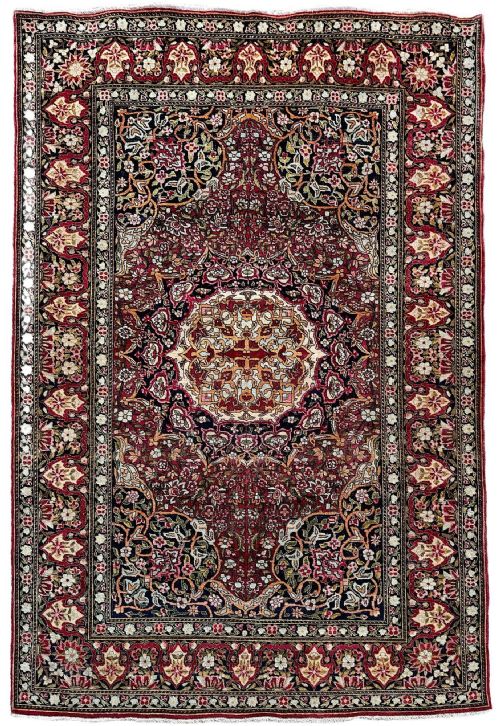
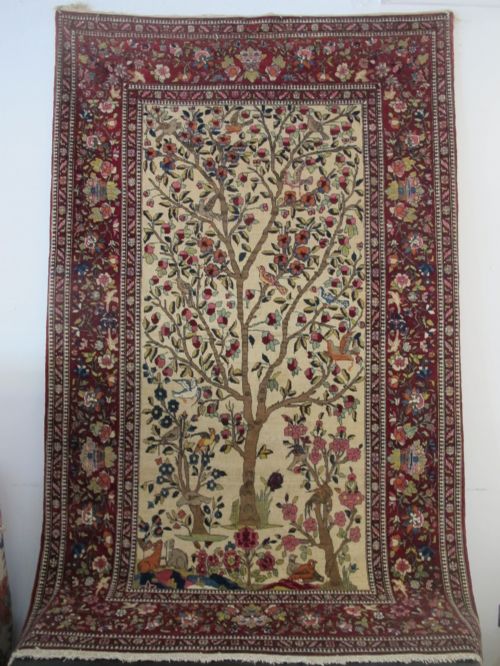
A fine knotted isfahan rug represents the sophisticated weaving tradition of central Persia. These pieces appear in formats ranging from smaller area rugs to larger carpets, often featuring classic medallion designs or pictorial compositions.
Most examples encountered here originate from the early decades of the twentieth century, spanning from nineteen hundred to nineteen thirty. They showcase traditional Persian styles associated with Isfahan craftsmanship.
How they were made
These floor coverings utilise natural fibres including wool, lambswool and cotton, while select examples employ silk foundations for enhanced structural definition. The intricate knotting technique allows for precise pattern work and dense pile construction.
Central Persian workshops executed these textiles with careful attention to proportion and symmetry. The combination of durable pile materials on sturdy foundations ensured longevity for both carpets and area rugs.
Materials recorded across the inventory include wool, lambswool, cotton and silk.
What varies in quality
The distinction between tiers rests upon the density of the knotting and the refinement of the design execution. Tighter weaves permit sharper curvilinear motifs and more intricate medallion layouts.
Material selection also dictates grade, particularly the use of lambswool and silk foundations compared to standard wool and cotton. Greater precision in central Persian pictorial and medallion rendering separates standard production from superior output.
Ahmadi
The Fine Knotted Isfahan Rug Glossary
- Foundation
- The base structure of cotton or silk upon which the pile is knotted. It provides the underlying grid that holds the textile together.
- Medallion
- A central ornamental motif set into the field of the rug. This classical design element anchors the symmetrical composition.
- Pictorial
- A style incorporating figurative imagery or narrative scenes rather than purely geometric or floral patterns. These depictions require advanced weaving skill.
- Pile
- The vertical or diagonal loops of wool, lambswool or silk that form the usable surface of the textile. Its density determines how the pattern reads.
Fine Knotted Isfahan Rug: Frequently Asked Questions
How are these rugs used?
These textiles function as floor coverings, serving as area rugs or larger carpets in residential spaces. Their detailed central medallion designs make them focal points in a room.
They also demand placement where foot traffic remains moderate to preserve the fine pile. Proper underlays help protect the structure on hard floors.
How do I date an isfahan rug?
Dating relies on stylistic indicators and structural characteristics recorded in pieces from nineteen hundred through nineteen thirty. Examining the weave density and material combination helps place the textile within this early twentieth century window.
Comparing the design layout to documented Persian examples from the same era provides further context. Each piece carries specific markers of its period of origin.
What is a foundation?
The foundation consists of the warp and weft threads that form the skeleton of the rug. Materials such as cotton or silk provide the stable grid required for intricate knotting.
A finer foundation allows for greater knot density and sharper pattern definition on the surface. It remains largely concealed beneath the pile.
Are these pieces Persian?
The evidence shows these carpets and rugs originate from central Persia, specifically associated with Isfahan traditions. They reflect regional weaving methods and design vocabularies established in Persian workshops.
Styles span traditional Persian formats, including classical medallion compositions and pictorial scenes. Their geographic origin defines their aesthetic character.