

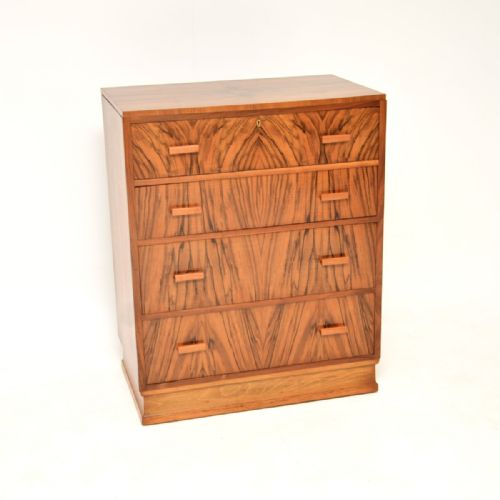
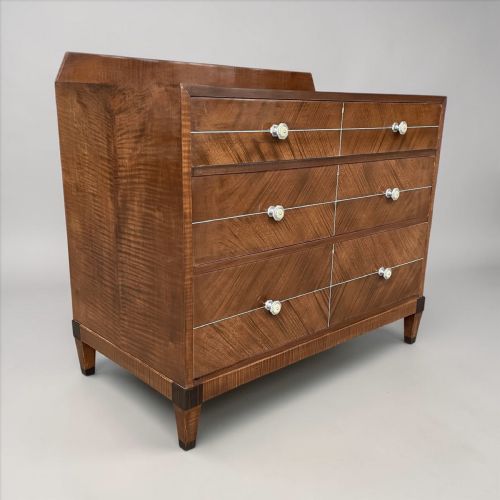
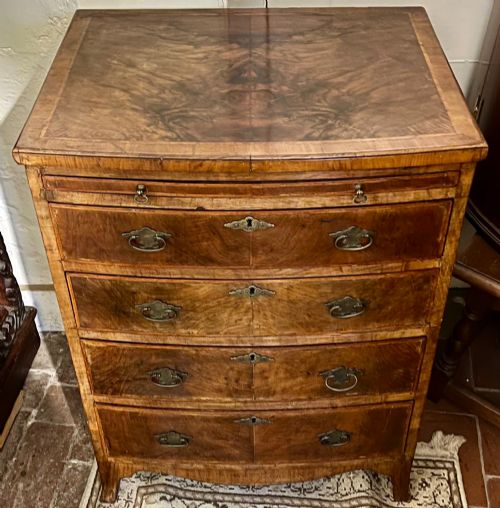
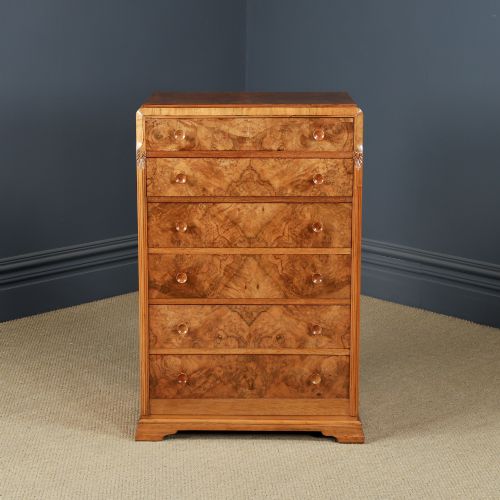
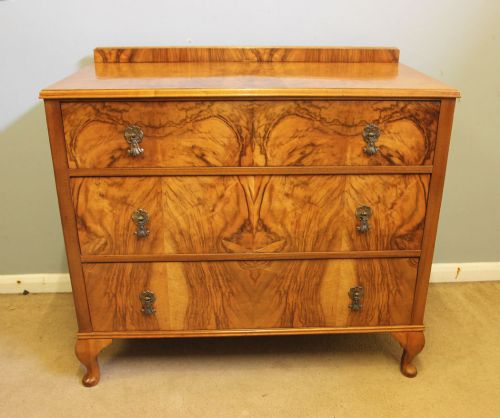
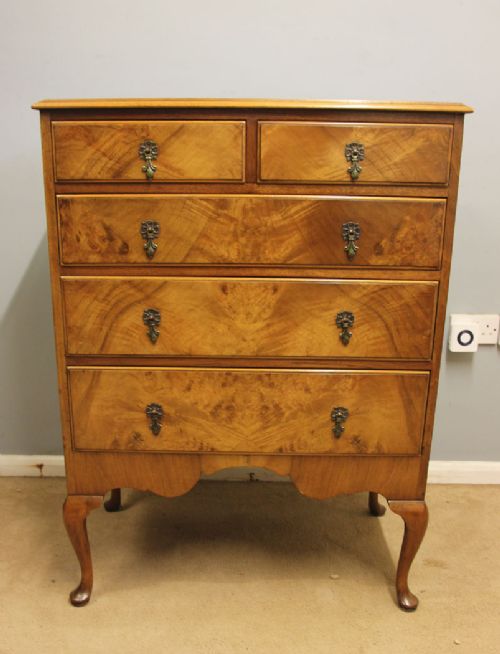
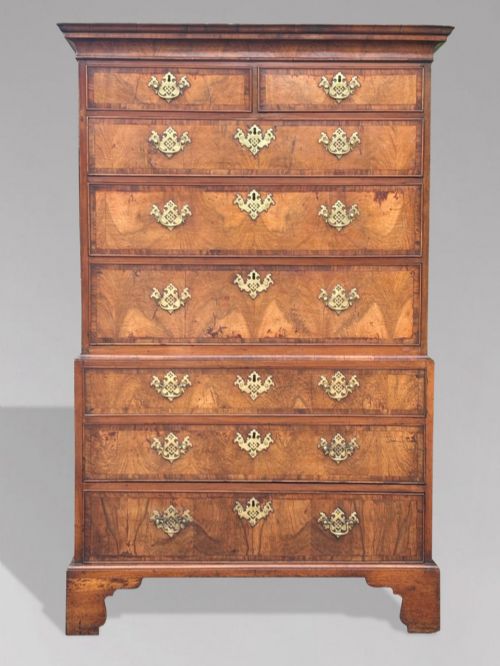
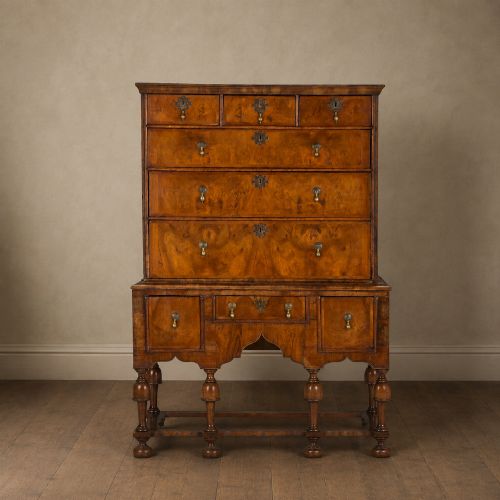
Figured Walnut Tallboy Chest
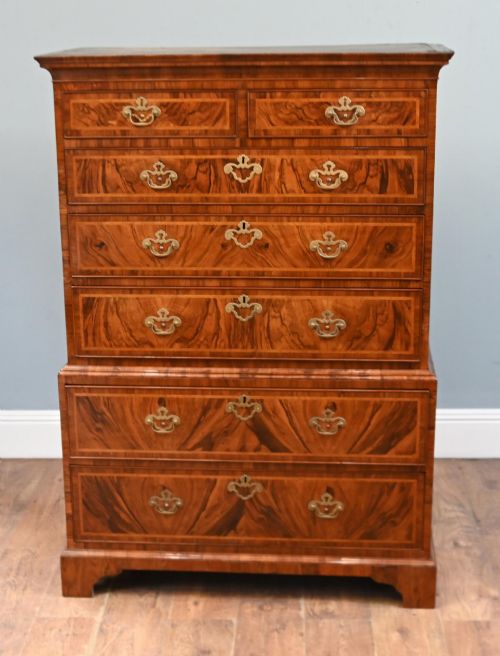
A figured walnut tallboy chest offers generous vertical storage wrapped in timber with rich, swirling grain patterns.
Figured Walnut Tallboy Chest
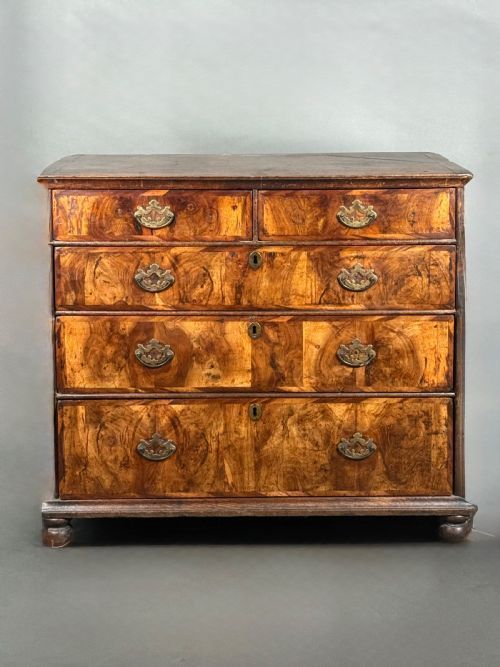
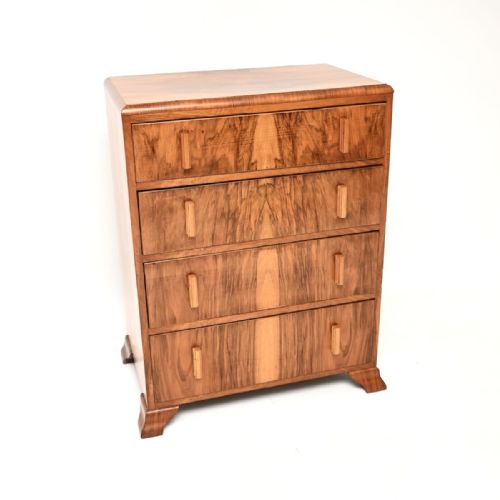
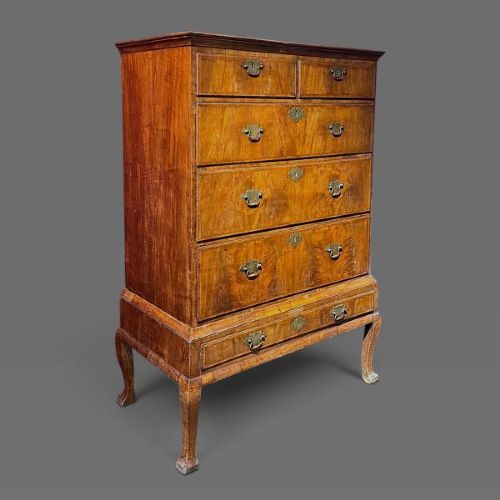
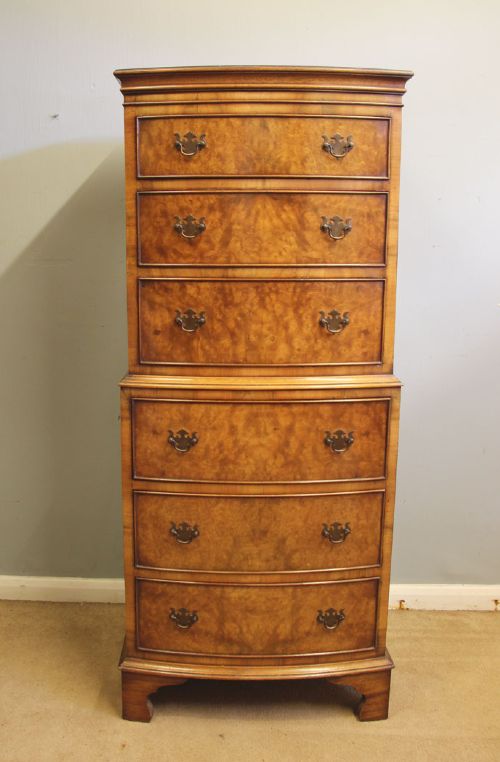
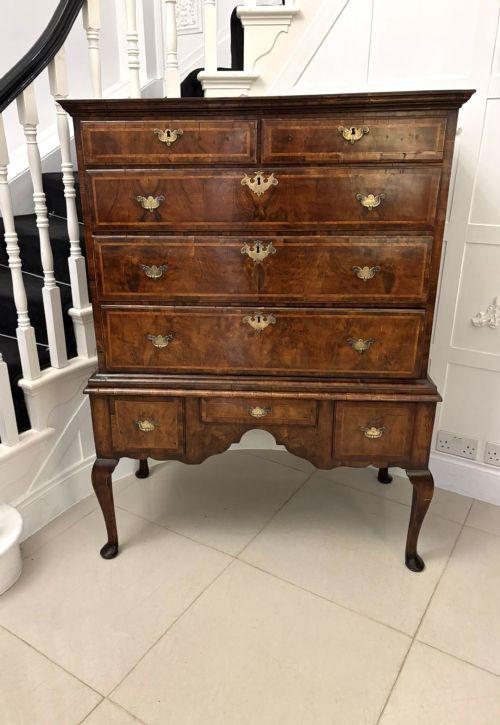
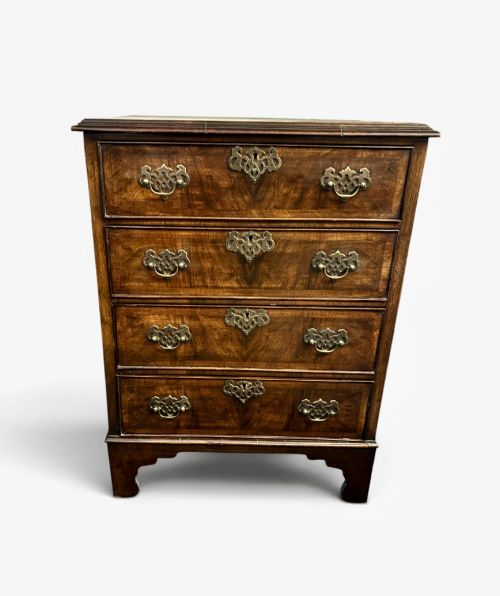
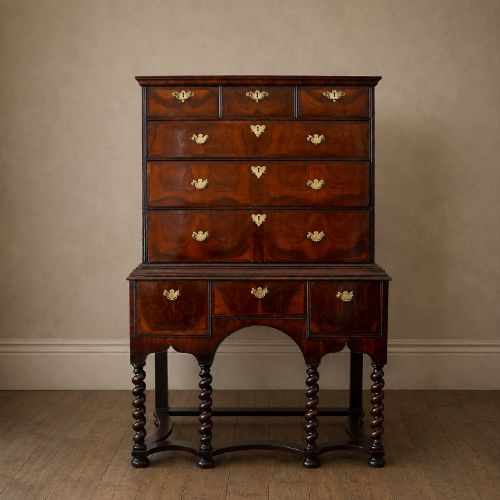
A figured walnut tallboy chest combines substantial vertical storage with the distinctive, highly decorative grain patterns of walnut timber. These pieces appear in forms such as chests on stands, chests on chests, and narrow tall filing chests.
The selection ranges from early eighteenth-century George I and Queen Anne examples to later interpretations including Edwardian, Art Deco, and revival styles. Early iterations often feature stands or twin-carcase construction, while twentieth-century pieces lean towards bow-front and tallboy configurations.
Makers and designers span traditional cabinet-makers to twentieth-century firms, yielding a diverse mix of proportions, handle configurations, and base designs while retaining walnut as the primary visual focus.
Materials and Construction
Cabinet-makers utilised solid walnut, burr walnut, and figured walnut veneers applied over secondary woods such as oak to create striking patterns across drawer fronts and top panels. Cross-banding and feather-banding frequently frame the drawer perimeters.
Brass hardware, including drop handles, plate escutcheons, and lock plates, secures the drawers and complements the warm brown tones of the wood. Wellington chests incorporate a locking side stile that secures all drawers simultaneously.
Figured Walnut Tallboy Chest Retail Price Guide 2026
Typical asking prices for figured walnut tallboy chest among the pieces listed under this phrase on Sellingantiques today, from the lower quarter to the upper quarter. They describe what is for sale here now, not the wider market.
The listings span the eighteenth, nineteenth, and twentieth centuries, incorporating periods from Queen Anne and George I to Art Deco.
Execution and Proportion
Quality rests in the selection and matching of the veneer, where symmetrical grain patterns across multiple drawers demonstrate superior craftsmanship. The crispness of internal drawer construction, dovetailing, and the retention of original brass hardware elevate certain examples.
Proportion and stance dictate the visual success of the piece, particularly on tallboys and chests on stands where leg height and base design must balance the substantial mass of the upper carcase.
Betty Joel·Heal's·Gillows of Lancaster
The Figured Walnut Tallboy Chest Glossary
- Tallboy
- A tall chest of drawers, often constructed in two stacked sections or as a single tall carcase.
- Chest on Stand
- A chest of drawers raised on a separate base fitted with legs or a low frame.
- Burr Walnut
- Timber taken from a tree growth that produces swirling, highly figured knot patterns.
- Wellington Chest
- A tall, narrow chest of drawers secured by a hinged locking side bar.
- Cross-banding
- A narrow strip of veneer laid around the border of a panel with the grain running perpendicular to the centre.
Figured Walnut Tallboy Chest: Frequently Asked Questions
What is a figured walnut tallboy chest?
A figured walnut tallboy chest is a tall storage unit made from walnut timber featuring decorative, wavy grain patterns. These pieces combine multiple drawers in a vertical format to maximise storage while occupying a small floor footprint.
They appear across various periods from the eighteenth century to the twentieth century, encompassing styles from Queen Anne to Art Deco.
How do I date a walnut tallboy?
Dating relies on examining construction methods, timber preparation, and stylistic cues such as bracket feet, cornice mouldings, and hardware. Eighteenth-century examples often employ hand-cut dovetails and solid timber carcases with specific walnut figuring.
Later revival pieces from the Edwardian and Art Deco eras incorporate twentieth-century manufacturing markers while adopting earlier aesthetic influences.
Where should I place a tallboy in a room?
A tallboy suits bedrooms, dressing rooms, or hallways where vertical storage is required without sacrificing significant floor space. Their decorative grain patterns allow them to function as focal points against neutral walls.
Keep them away from direct sunlight and strong heat sources to protect the walnut veneer and prevent timber movement.
What is the difference between a tallboy and a chest on chest?
A chest on chest consists of two separate carcases stacked together, with a smaller upper section resting on a wider lower base. A tallboy traditionally refers to a single tall chest of drawers, though the terms are often used interchangeably in trade descriptions.
Both forms provide extensive drawer storage arranged vertically.