
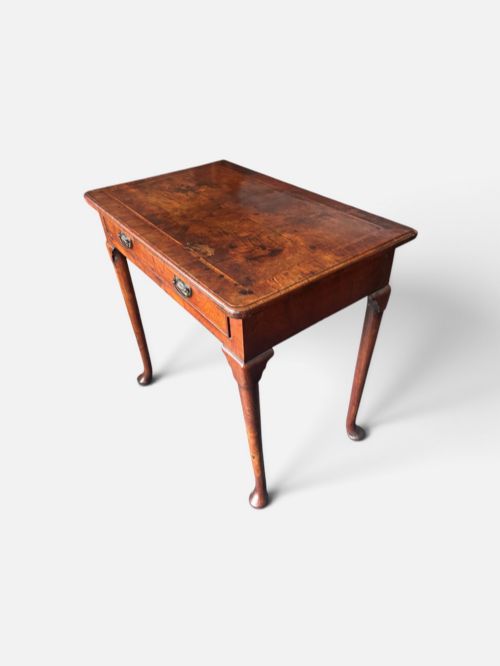
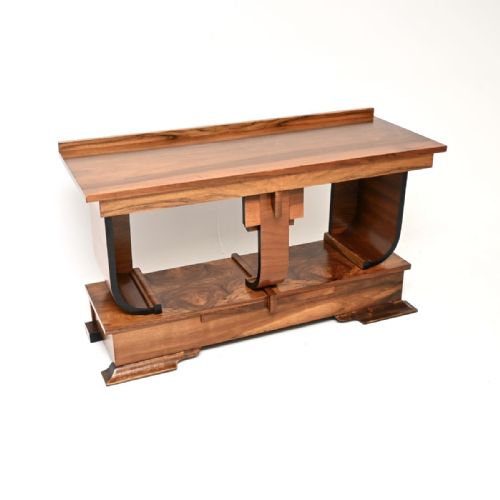
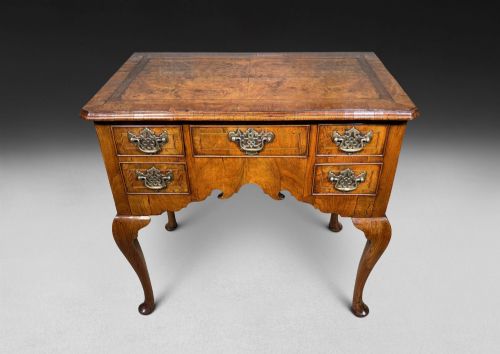
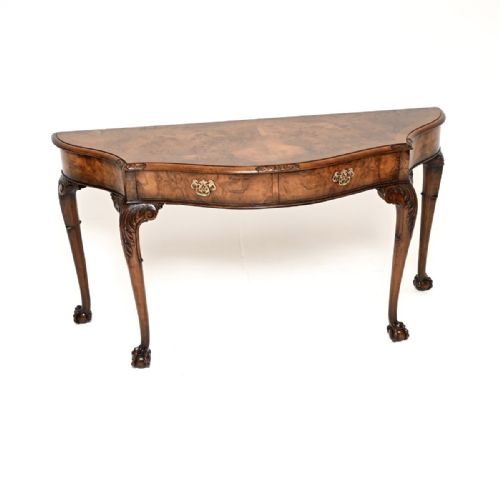



Figured Walnut Console
A figured walnut console brings warmth and pronounced grain movement to a room, offering a functional surface with distinct historical character.
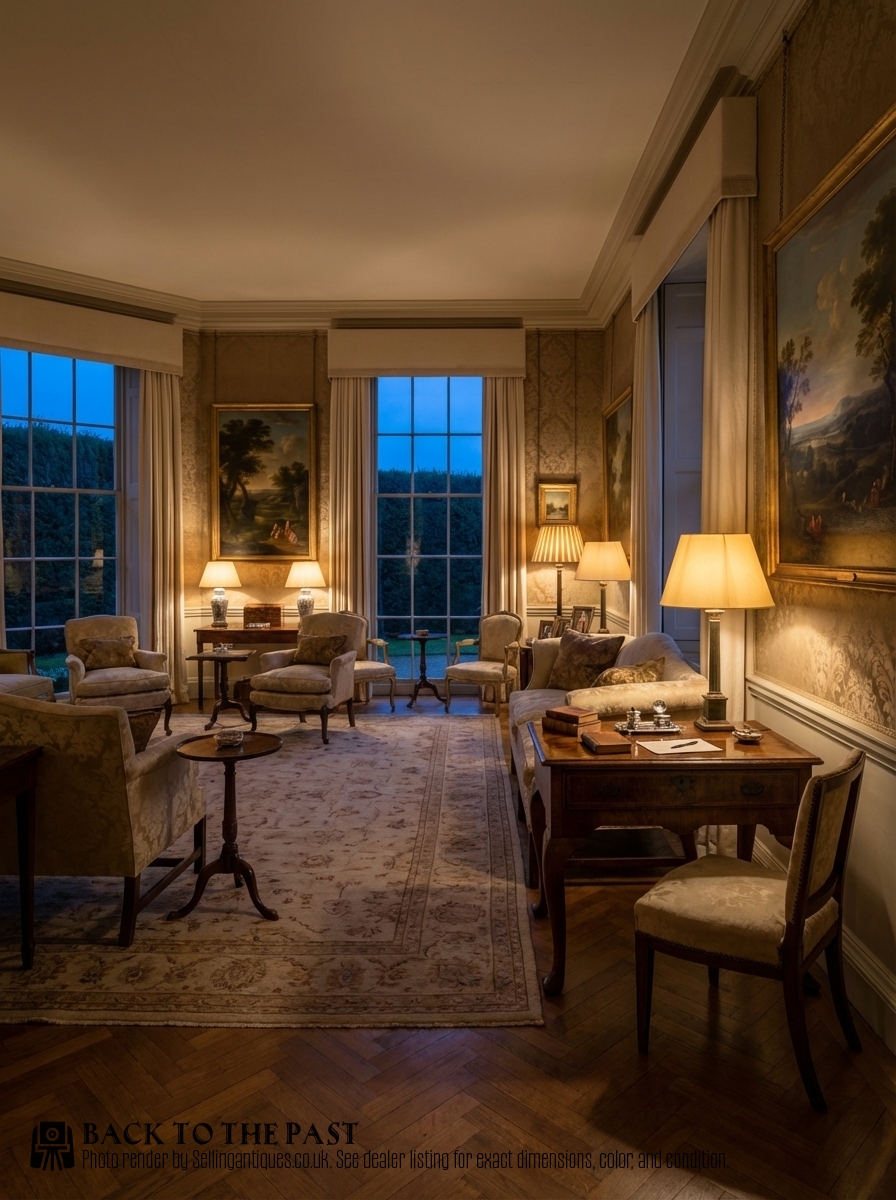
Figured Walnut Console
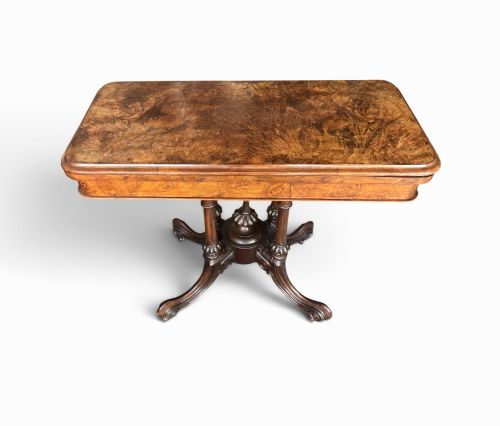
A figured walnut console spans several distinct periods, appearing in Georgian designs, Victorian iterations, and later Art Deco interpretations. These tables function primarily as side pieces or serving surfaces against a wall, often utilising clever folding mechanisms to double as card or tea tables.
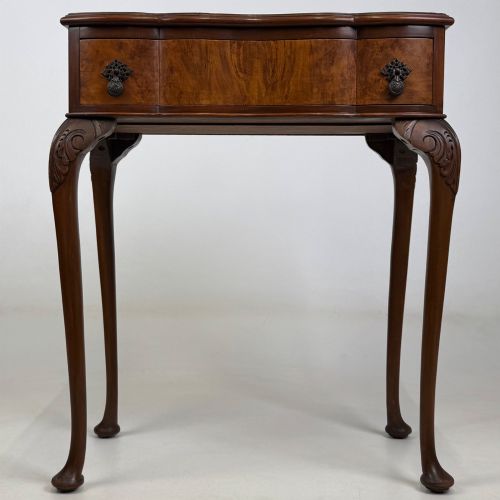
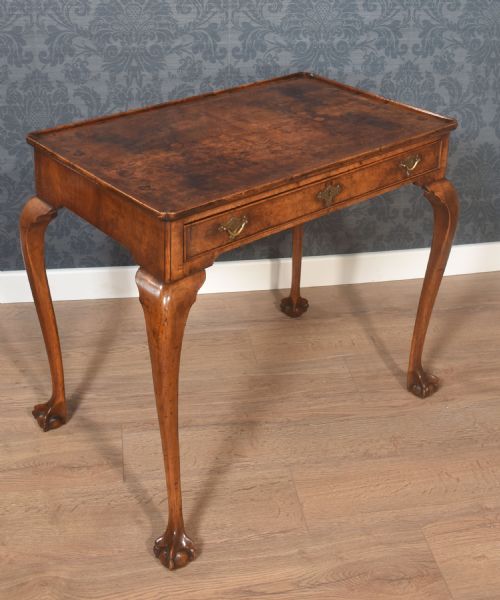
The materials recorded in the evidence combine walnut timbers with oak and brass, showcasing both solid construction and elaborate veneer work. Pieces range from early eighteenth-century lowboys to twentieth-century revivals of Queen Anne and George II styles.
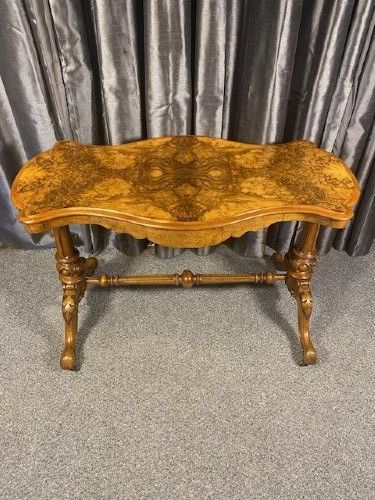
Victorian and Edwardian examples dominate the selection, frequently displaying marquetry inlay or heavily carved details alongside the characteristic grain patterns. Art Deco variations present cleaner, more streamlined silhouettes while maintaining the rich visual impact of the timber.
Materials and construction
Craftsmen built these tables using walnut and burr walnut, frequently applying figured walnut veneer over secondary woods like oak to showcase the complex grain. Crossbanding and marquetry inlay provide ornamental borders and decorative panels on many surfaces.
Secondary materials such as brass furnish hardware like hinges and handles, particularly on fold-over game and card tables. Ebonised wood occasionally appears alongside the primary walnut to create tonal contrast in detailing.
The listings span from the eighteenth century through the Victorian and Edwardian eras, culminating in 1930s Art Deco designs.
Assessing quality in walnut consoles
Quality reveals itself in the selection and matching of the veneer, where top-tier examples display symmetrical, highly figured grain patterns across the primary surfaces. The precision of crossbanding and the integration of marquetry inlay further separate standard production from superior work.
Structural integrity and timber selection also drive distinctions, particularly in how secondary woods like oak support the primary walnut shell. Pieces maintaining original surfaces and hardware command greater appreciation among collectors.
Maple & Co·W.F. Greenwood & Sons York·Epstein
The Figured Walnut Console Glossary
- Figured walnut
- A term describing timber with an exceptional, highly decorative grain pattern, caused by growth anomalies or specific branching. It provides the primary visual appeal for these tables.
- Burr walnut
- Wood taken from a tree growth or wart, yielding a swirling, tightly clustered pattern of knots and rings. It is typically sliced into thin veneers for decorative furniture faces.
- Lowboy
- A small eighteenth-century dressing or side table featuring one or more rows of drawers beneath a flat top. They often share stylistic traits with contemporary console tables.
- Crossbanding
- A narrow strip of veneer laid around the border of a panel, with the grain running perpendicular to the centre. This technique frames the primary figured wood.
- Marquetry
- The art of applying decorative pieces of veneer to a structure to form intricate designs or pictures. Victorian examples often utilise this method on tabletops.
Figured Walnut Console: Frequently Asked Questions
What is a figured walnut console?
A figured walnut console is a decorative side table featuring wood with distinctive, highly patterned grain formations. These pieces are designed to sit against a wall in hallways, living rooms, or dining areas.
They appear across multiple eras, from eighteenth-century Georgian forms to twentieth-century Art Deco interpretations. Many incorporate clever folding tops that allow them to function as games or tea tables when needed.
How do I date an antique console?
Dating relies on examining the construction methods, secondary timbers, and stylistic traits typical of specific periods. Georgian pieces often display different proportions and leg structures compared to Victorian or Edwardian revivals.
Makers' marks, brass hardware styles, and the complexity of the veneer work also offer clear chronological clues. Comparing the piece to documented examples from the same era helps confirm its age.
Where were these tables used?
These tables historically served as decorative and functional furniture in principal rooms of grand houses. They were placed against walls to hold lamps, decorative objects, or serving items.
Versions with folding tops often spent time folded against a wall until needed for card games or tea. Their versatility made them suitable for both formal reception rooms and intimate sitting spaces.
How do I care for figured walnut?
Maintenance requires keeping the wood away from direct sunlight and excessive heat sources to prevent the veneer from drying out. Regular dusting with a soft, dry cloth preserves the polished finish.
Applying a quality wax occasionally nourishes the timber and enhances the natural grain patterns. Avoid using harsh chemical cleaners or excess moisture on antique surfaces.