
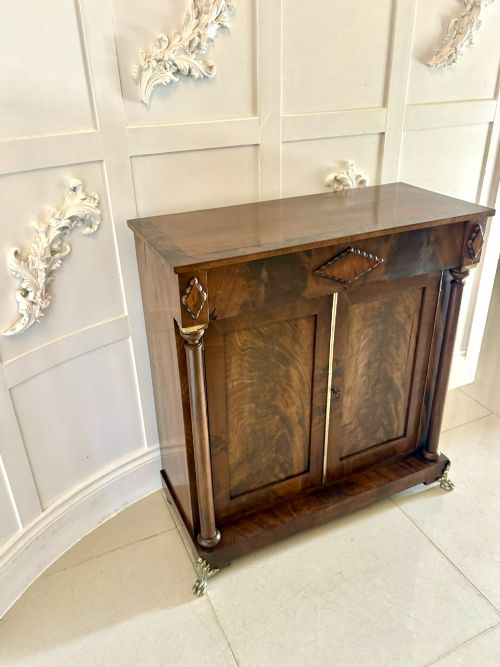
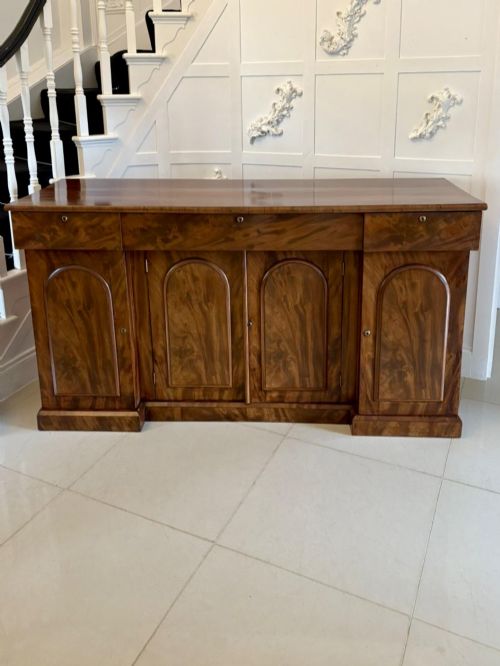
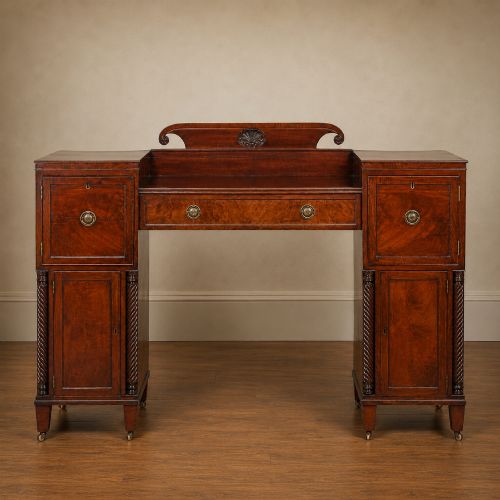
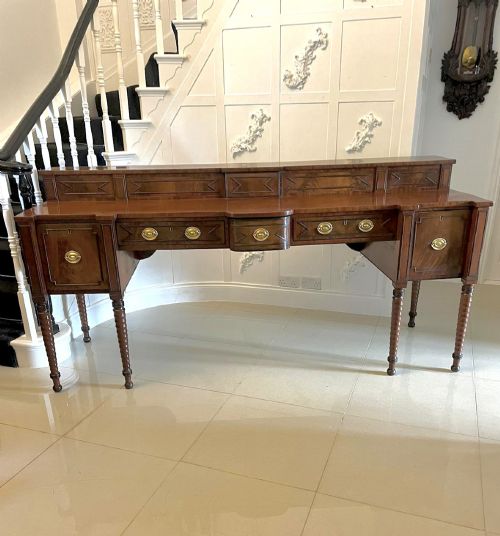


Figured Mahogany Sideboard
A figured mahogany sideboard brings deep wood grain and substantial presence to a room, offering both generous storage and period character.
Figured Mahogany Sideboard
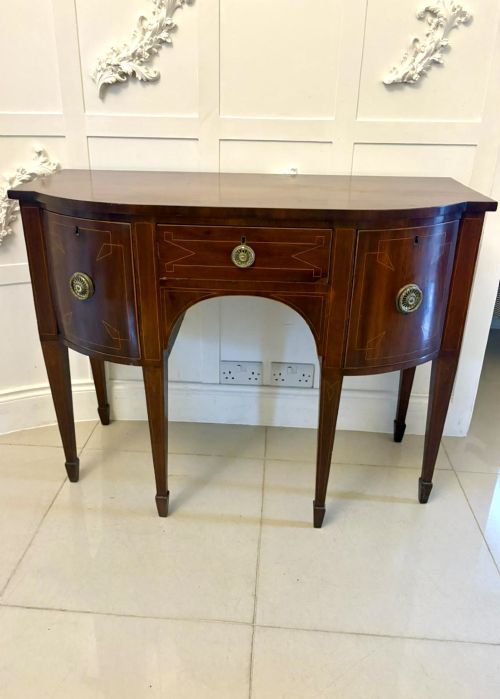
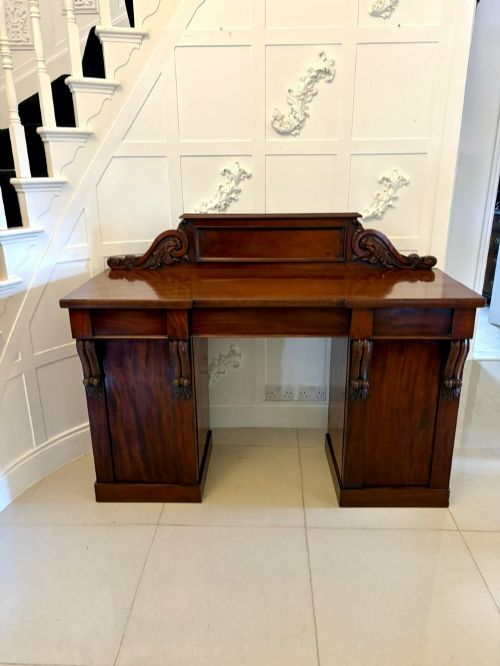
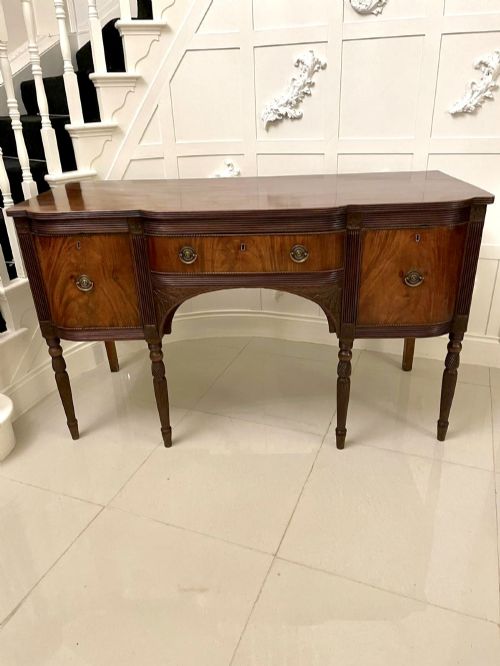
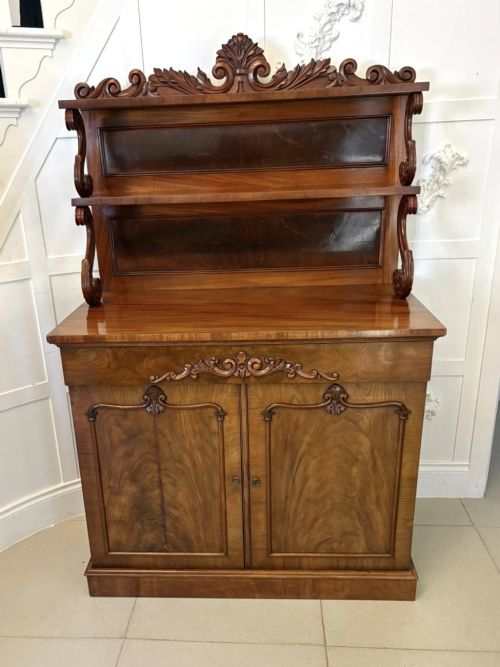
A figured mahogany sideboard is a substantial dining room storage piece built to hold linen, silver, and glassware. These items anchor a dining space, presenting a wide surface flanked by drawers and cupboards. You will frequently meet Victorian and George III examples on this page, alongside Regency and William IV iterations.
The form spans from breakfront designs to pedestal models and simpler bow-front shapes. Some pieces incorporate two-tiered chiffonier elements or serving console functions. Origins trace through the eighteenth and nineteenth centuries, with later pieces extending into the twentieth century.
How they were made
Cabinet makers utilised solid wood and veneer, applying flame mahogany veneer over structural timbers such as oak to create striking grain patterns on drawer fronts and doors. Boxwood stringing and brass fittings frequently accent the primary timber.
Construction techniques combine traditional joinery with decorative carving, particularly on Victorian and William IV pieces. The application of veneer requires careful alignment of the wood grain to achieve symmetry across wide cabinet doors and breakfront surfaces.
Figured Mahogany Sideboard Retail Price Guide 2026
Typical asking prices for figured mahogany sideboard among the pieces listed under this phrase on Sellingantiques today, from the lower quarter to the upper quarter. They describe what is for sale here now, not the wider market.
Listings feature pieces spanning from the 18th century through the Victorian era and into the 20th century, utilising mahogany, oak, and brass.
What varies in quality
The visual impact depends largely on the choice of timber, with highly figured flame mahogany displaying greater depth and movement than plain stock. The symmetry of the grain matching across multiple doors or drawers sets finer examples apart.
Execution of detail defines the tier of craftsmanship. Crispness in carved ornamentation, precision in boxwood inlay, and the weight and finish of original brass hardware indicate the level of skill invested by the maker.
The Figured Mahogany Sideboard Glossary
- Figured mahogany
- Timber showing distinctive, rippled or flame-like grain patterns. This wood was selected for its decorative appearance on prominent surfaces.
- Breakfront
- A cabinet design where the central section projects forward from the flanking wings. This architectural layout creates depth and shadow on large sideboards.
- Chiffonier
- A compact sideboard or cabinet, often featuring two tiers or a shelf superstructure. These pieces serve similar storage functions on a smaller scale.
- Pedestal sideboard
- A form featuring independent pedestals supporting end cupboards connected by a central counter or table section. Such pieces are frequently associated with the Regency period.
- Flame mahogany veneer
- A thin slice of wood cut from the fork of the mahogany tree to reveal a flickering flame pattern. It is laid over a secondary wood like oak.
Figured Mahogany Sideboard: Frequently Asked Questions
How do I date a sideboard?
Dating relies on stylistic clues, construction methods, and timber choice. George III pieces often display straight lines and boxwood inlay, while Victorian examples lean toward heavier proportions and carved details.
Changes in hardware, such as brass handles and backplates, also provide chronological markers. Comparing the secondary woods, like oak drawer linings, helps confirm the era of manufacture.
Where should I place a sideboard?
These pieces traditionally anchor the dining room wall opposite the dining table, providing a surface for serving food and storing tableware. Their substantial length requires adequate wall space and clearance for opening cupboard doors.
Beyond the dining room, smaller bow-front or breakfront versions work well in large hallways or drawing rooms. Ensure the room dimensions accommodate the depth of pedestal or breakfront forms.
How do I care for mahogany?
Maintenance involves dusting with a soft, dry cloth and avoiding direct sunlight that can fade the rich reddish-brown colour. Keeping furniture away from heat sources prevents the wood veneer from drying and cracking.
Occasional application of appropriate wax nourishes the timber and preserves the sheen. Avoid silicone-based sprays, which build up and dull the historic finish over time.
What is the difference between George III and Victorian sideboards?
George III sideboards generally exhibit lighter proportions, refined bracket feet, and delicate stringing or inlay. They prioritize classical restraint and balanced architectural lines.
Victorian sideboards tend to be larger, featuring heavier carving, plinth bases, and more prominent door panels. The timber selection often emphasises bold grain movement rather than subtle inlay.