


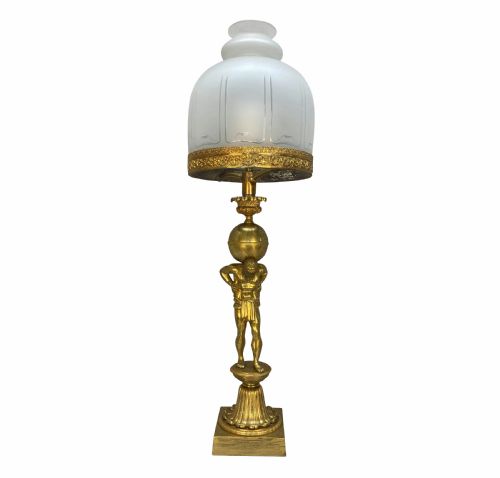


Figural Glass Lamp
A figural glass lamp brings sculptural human or animal forms together with functional illumination, bridging fine art and domestic lighting.
Figural Glass Lamp
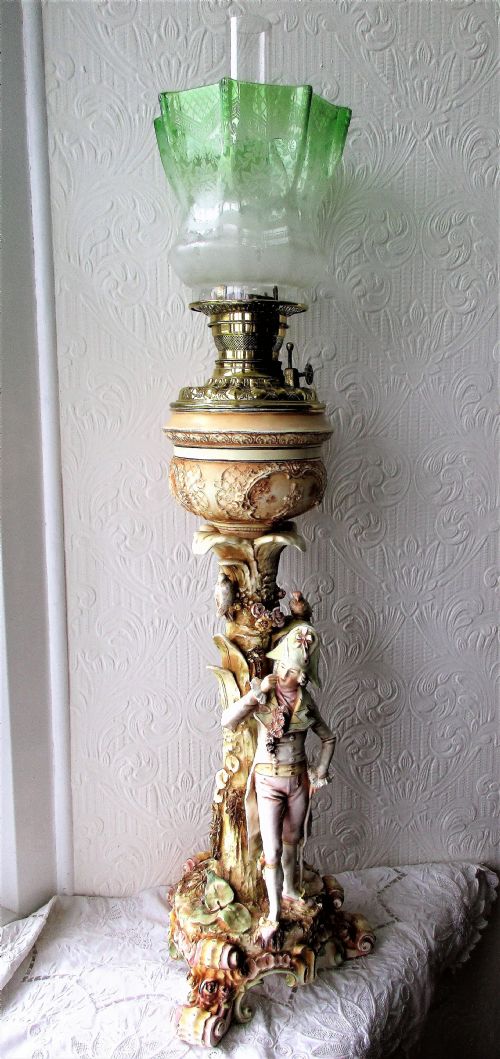
A figural glass lamp combines a cast or sculpted figure with glass elements, spanning periods from the 19th Century through the 1940s in styles including Art Deco, Art Nouveau, and Regency. When you search for a figural glass lamp, you encounter table lamps, wall sconces, and oil lamps that incorporate glass shades or bodies alongside sculptural metal and ceramic components.
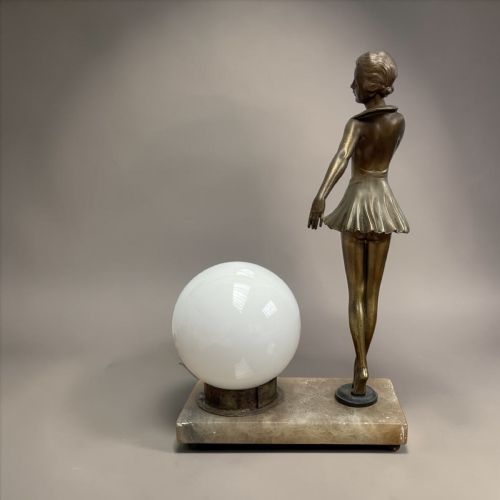
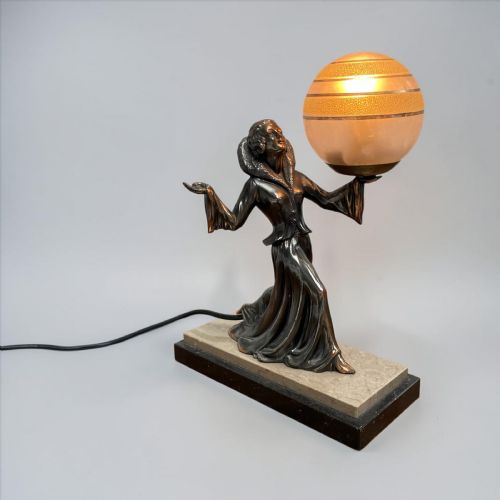
The most common examples on this page date from the 1920s and 1930s, typically presenting Art Deco lady figures, nudes, or cherubs in chrome, spelter, and frosted glass. These pieces range from substantial English Regency gilt-bronze figures to French mood lamps and German porcelain designs.
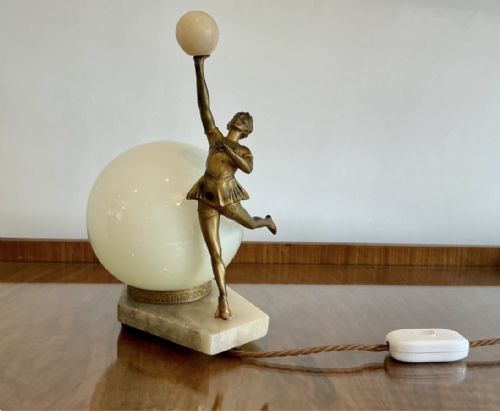
The forms function primarily as table lamps and night lights, utilising materials like marble bases to anchor heavy metal or glass figures. The sculptural subjects vary from mythological representations to stylised dancers and animals, reflecting the aesthetic priorities of their respective decades.
Materials and construction
Makers utilised a mixture of metals such as bronze, brass, chrome, and spelter to form the sculptural bodies, frequently mounting them upon heavy marble bases for stability. Glass components, including frosted and peach-coloured varieties, were moulded or blown to serve as shades, globes, or integral parts of the figural composition.
Techniques combined metal casting with specialised glass production, drawing on the skills of foundries and glassworks across England, France, and Germany. Patination, silvering, and gilt finishes were applied to metal elements to enhance depth and contrast against the translucent glass.
Listings feature table lamps, oil lamps, and wall sconces spanning the 19th Century, Regency, and decades from 1890 through 1940.
Distinctions in quality
Material selection and maker attribution further separate the tiers, with signed works by known sculptors and established glass houses commanding greater artistic merit. The integration between the figural base and the glass shade demonstrates the level of design cohesion achieved by the maker.
Karl Ens·Anton Buschelberger·Emile Picault·Baccarat·Walther and Sohne·Sitzendorf·Auguste Moreau
The Figural Glass Lamp Glossary
- Spelter
- A zinc alloy commonly used as a cost-effective substitute for bronze in decorative figures during the 19th and early 20th centuries. It accepts patination well to imitate more expensive metals.
- Frosted glass
- Glass treated to create a diffuse surface that softens light output, frequently utilised for shades and figural elements in Art Deco lighting. Acid etching or sandblasting achieves this opaque effect.
- Art Deco
- A design movement prevalent in the 1920s and 1930s characterised by streamlined forms, geometric patterns, and stylised representations of the human figure. It marked a distinct departure from organic Art Nouveau curves.
- Gilt-bronze
- Bronze objects coated with a thin layer of gold or gold-coloured alloy to impart a rich, reflective surface. This finish is frequently found on Regency and 19th-century figural works.
- Torchere shade
- An upward-pointing shade designed to direct light toward the ceiling, often paired with tall figural lamp bases. These shades are typically made of glass to diffuse the upward beam.
Figural Glass Lamp: Frequently Asked Questions
How do I identify an Art Deco figural lamp?
Art Deco pieces generally feature stylised human forms, clean geometric lines, and materials such as chrome, spelter, and frosted glass dating from the 1920s and 1930s.
The figures often represent dancers, nudes, or animals with a distinct aerodynamic quality, reflecting the modern industrial aesthetics of the interwar period.
Were these lamps originally electric?
Many examples from the 19th Century started life as oil lamps or fluid lamps before being converted to electricity at a later date.
Pieces produced from the 1920s onwards were frequently designed specifically for electric illumination, incorporating internal or external bulb fittings within the figural composition.
What is the difference between spelter and bronze?
Bronze is a robust copper alloy that takes fine chisel work and ages with a deep patination, whereas spelter is a softer zinc alloy.
Spelter was widely used for mass-produced decorative figures and requires a applied surface finish to simulate the appearance of bronze.
How should I clean a frosted glass shade?
Frosted glass benefits from gentle cleaning with lukewarm water and a mild detergent, avoiding harsh abrasives that might scratch the treated surface.
Care should be taken around painted or silvered metal parts to prevent moisture from damaging historic patination or finishes.