


Fiddle Pattern Silver
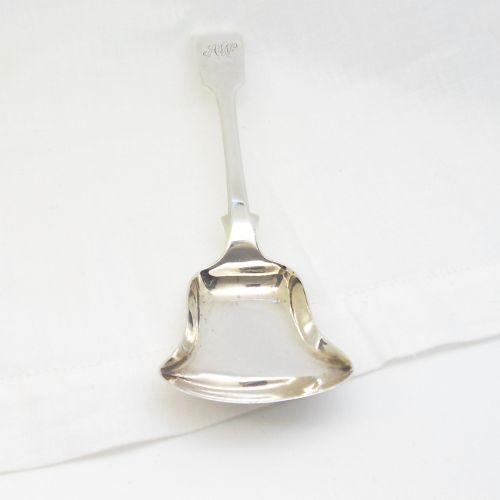
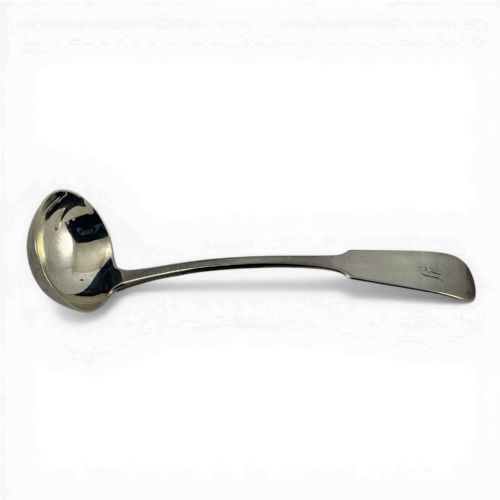
Fiddle pattern silver encompasses traditional cutlery and serving flatware defined by distinctive violin-shaped handles, originating in the Georgian and Victorian eras.
Fiddle Pattern Silver
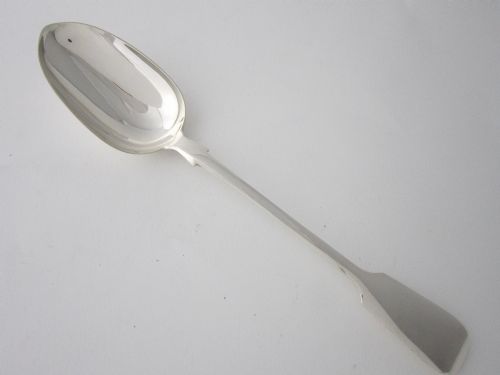
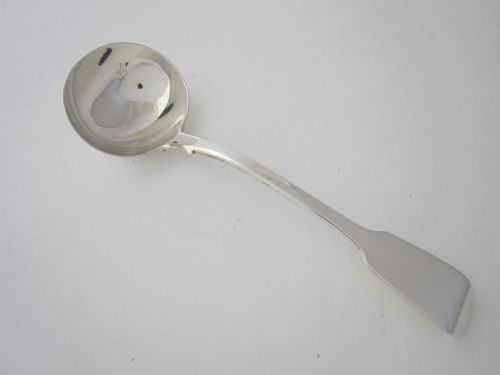
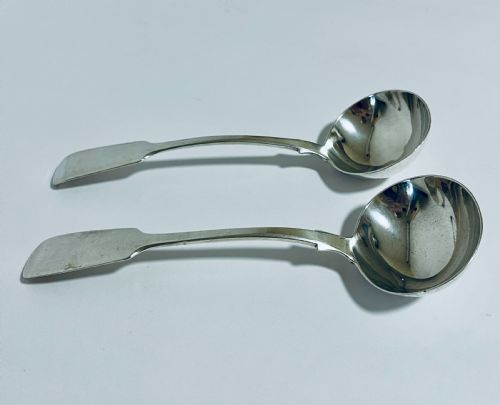
Fiddle pattern silver centres on utilitarian flatware and cutlery shaped with a characteristic shoulder tapering down the stem, resembling a violin silhouette. Buyers seek these pieces for traditional table service, ranging from individual teaspoons and dinner forks to large serving ladles and complete canteens.
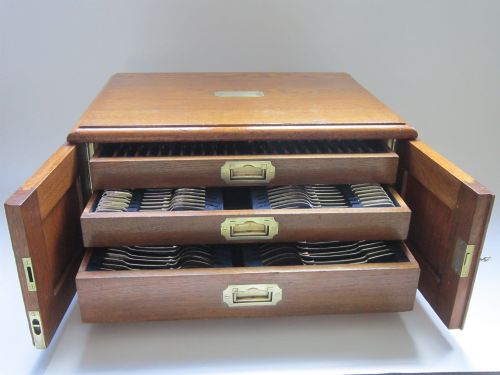
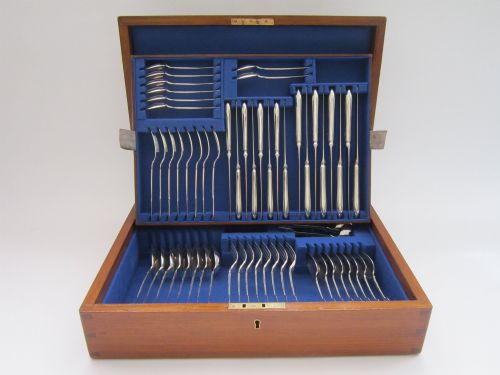
The pieces on this page are predominantly Georgian and Victorian, spanning periods from the early nineteenth century through to the late Victorian decades. Most items appear in solid sterling silver, occasionally accompanied by fitted wooden canteens lined with velvet, felt, or brass fittings.
Regional British production is strongly represented alongside London assays, with provincial pieces originating from Scottish, Irish, and English provincial assay offices such as Exeter, York, Newcastle, and Dublin.
How They Were Made
Items were forged from sterling silver using traditional silversmithing techniques, often shaped by hand or struck with dies to achieve the distinctive violin profile. Many pieces feature additional decorative variations, such as thread borders, shell motifs, or husk details applied to the handle terminals.
Makers struck their pieces with hallmarks designating the city of assay, the date letter, and the silversmith's stamp. Fitted canteens were constructed from hardwoods like mahogany and oak, lined with protective materials such as velvet or felt to house the flatware safely.
Listings feature sterling silver flatware produced across Georgian and Victorian periods, including provincial pieces from Scotland and Ireland.
What Varies In Quality
Quality in fiddle pattern silver is determined by the weight of the metal and the crispness of the stamping, with heavier gauges providing greater durability and balance in the hand. Pieces that retain sharp definition in their shoulders and any accompanying crests or shell engravings demonstrate superior craftsmanship.
The completeness and integrity of sets also influence distinction, as assembled matched groupings or comprehensive canteens for multiple persons differ from individual serving pieces. Provincial provenance from rarer makers or regional Scottish and Irish assay offices adds distinct collector interest.
John Walton·William Ferguson·Jamieson and Naughton·George Adams·Benjamin Davis·John Smith·Edward Power
The Fiddle Pattern Silver Glossary
- Hallmark
- Official stamps struck into silver indicating the maker, assay office, and year of production. These marks provide definitive evidence of origin and age.
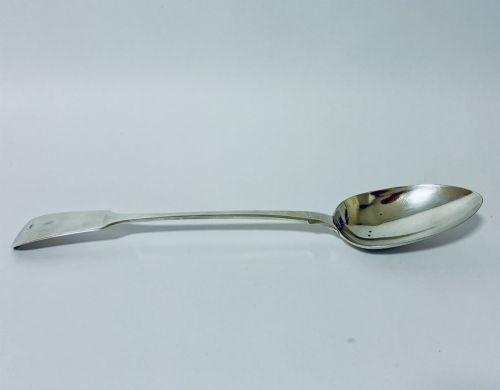
- Basting Spoon
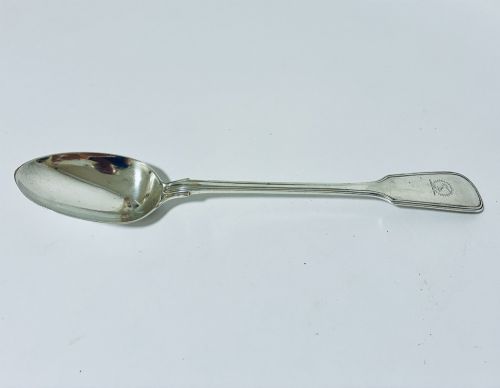
- A large serving spoon utilised for culinary tasks at the table or hearth. They often feature extended handles and substantial silver weight.
- Fish Slice
- A flat, sometimes pierced utensil designed for serving fish dishes. Blades frequently display engraved crests or decorative piercing.
- Canteen
- A fitted box or chest designed to store a set of cutlery securely. Interiors are typically lined with materials such as velvet or felt.
- Provincial
- Items manufactured outside of London in regional centres like Exeter, York, or Scottish and Irish towns. These pieces bear local assay marks.
Fiddle Pattern Silver: Frequently Asked Questions
How do I identify fiddle pattern silver?
The pattern is immediately recognised by the distinct shoulder on the handle stem that swells outward before tapering to a rounded end, mimicking the outline of a fiddle.
Additional variations may include decorative threads, husks, or shells along the edge, but the underlying fiddle silhouette remains consistent across spoons, forks, and ladles.
What is the difference between Georgian and Victorian pieces?
Georgian pieces date from the reigns spanning the eighteenth century up to 1837, often displaying simpler lines or crisp provincial hallmarks from towns like Exeter and Dublin.
Victorian items emerge from 1837 onwards, frequently incorporating heavier gauges of silver, elaborate canteens for twelve persons, and variations like fiddle, thread and shell.
Are provincial silver items different from London pieces?
Provincial pieces originate from assay offices outside London, such as Newcastle, York, Exeter, or Scottish and Irish cities like Dublin and Inverness. These items often feature unique town marks and are prized for their regional rarity.
London-assayed silver generally reflects high-volume metropolitan production by prominent silversmiths of the period.
How were complete canteens organised?
Canteens were built from hardwoods such as oak or mahogany to house coordinated sets of cutlery and flatware for multiple diners, often numbering up to twelve persons.
The interiors contain fitted wooden slots lined with velvet or felt to protect the sterling silver surfaces from scratching during storage.