

Fender Fire Guard
A fender fire guard anchors the hearth, protecting the room from stray embers while defining the fireplace with polished metal and wirework.
Fender Fire Guard
A fender fire guard sits directly on the hearth to contain ashes and sparks from an open fire. When you search for a fender fire guard, you encounter substantial hearth barriers and low kerbs that frame the fireplace opening.
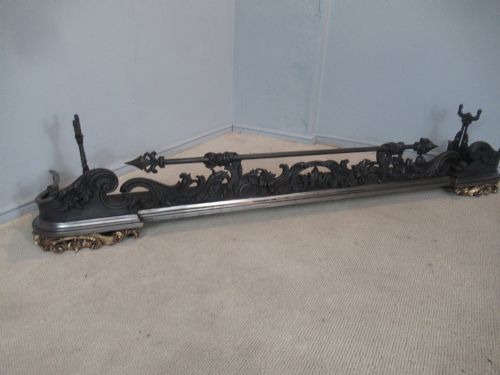
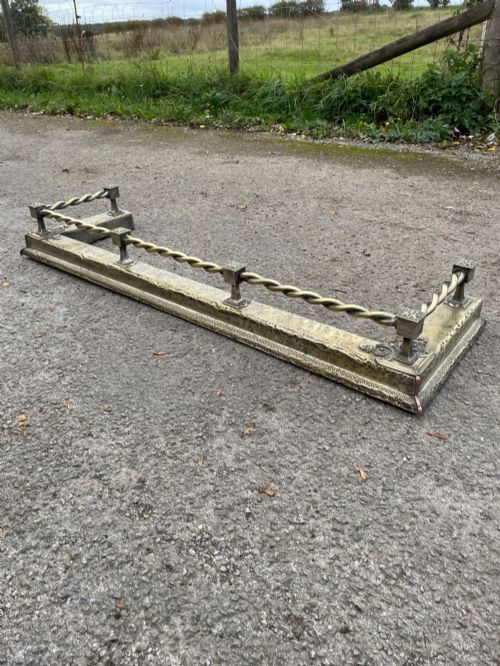
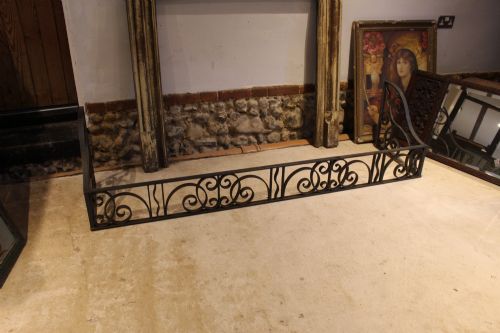
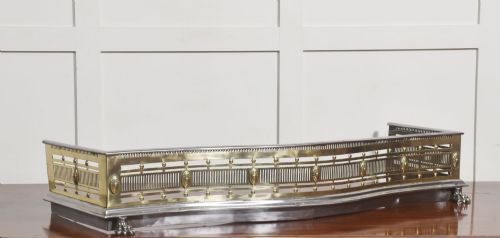
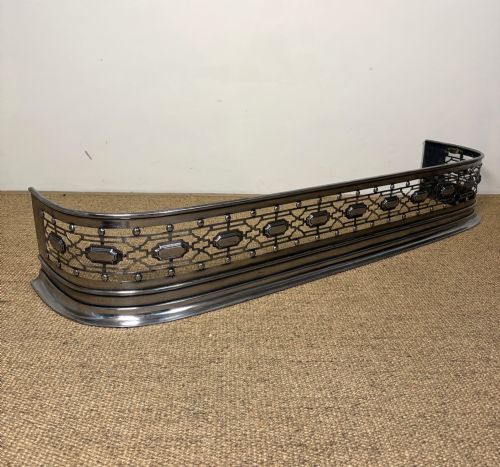
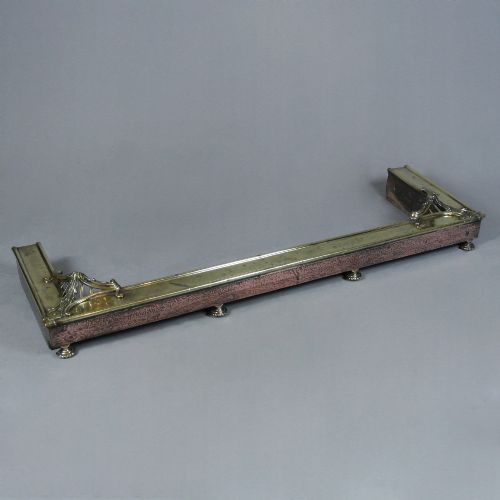
The pieces appearing on this page span the nineteenth century into the early twentieth century, taking the form of traditional low hearth kerbs, adjustable frames, and folding wirework panels. Victorian and Edwardian examples predominate alongside earlier Regency and Georgian designs.
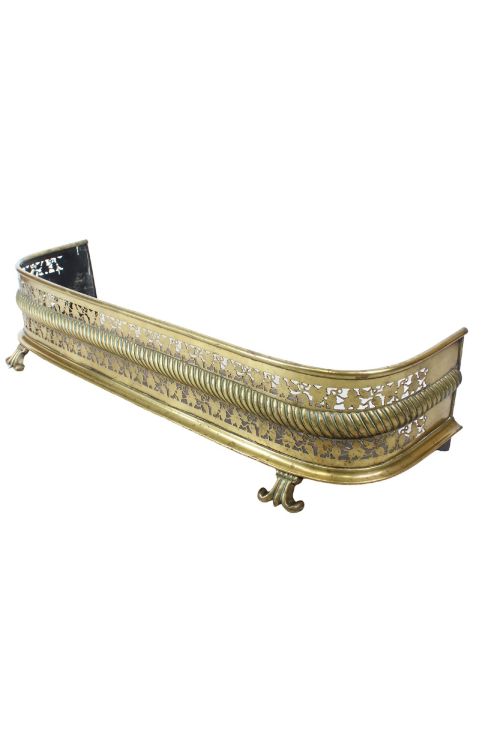
Makers utilised brass, steel, and iron to construct these hearth accessories, frequently incorporating decorative elements such as pierced metalwork, copper panels, and leather seats on club variants.
Materials and Construction
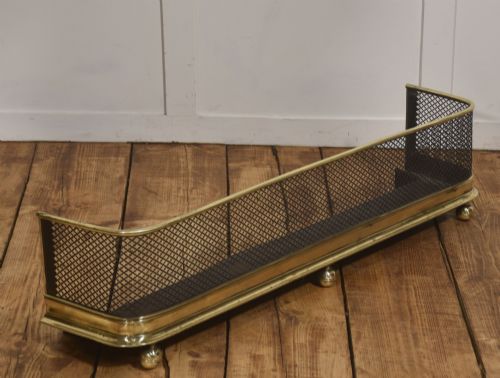
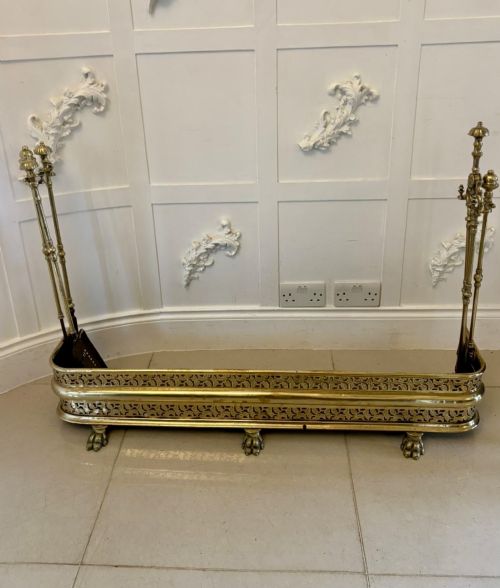
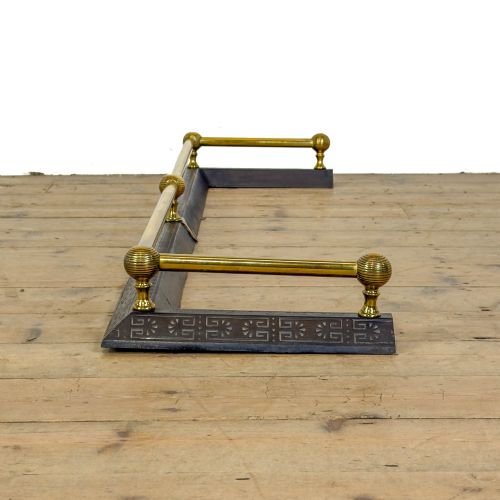
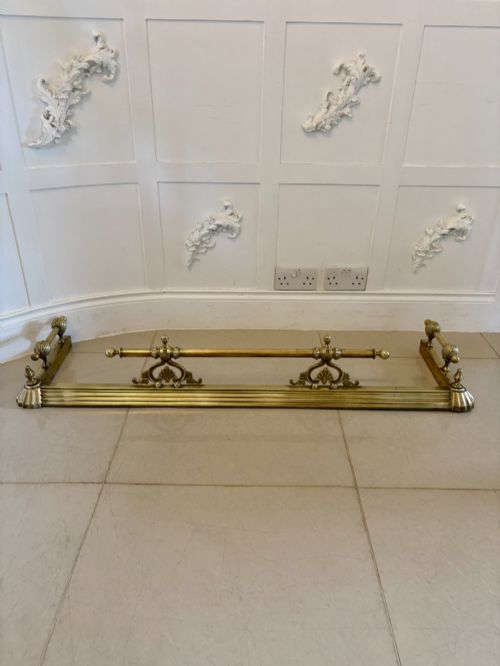
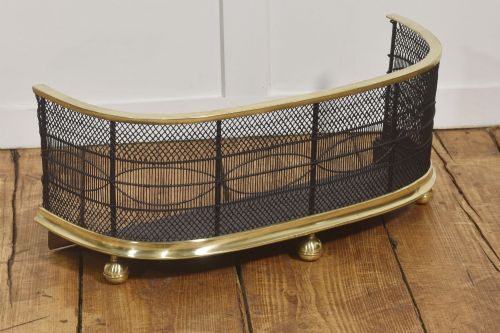
Makers constructed these hearth barriers primarily in brass, steel, and iron, often combining polished brass rails with cast iron bases for weight and stability. Copper panels and wire mesh also appear across the selection, contributing distinct textures to the metalwork.
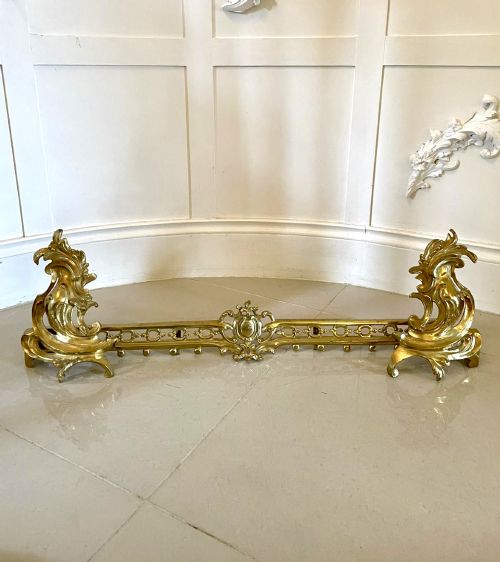
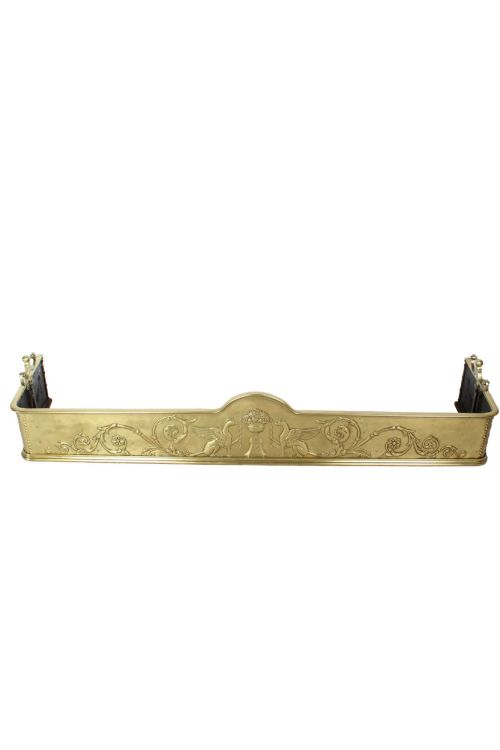
Techniques range from pierced sheet brass and engraved steel to riveted copper and fine wirework. Detail work includes cast classical motifs, applied green enamel cabochons, and hand-beaded decoration on copper surfaces.
Fender Fire Guard Retail Price Guide 2026
Typical asking prices for fender fire guard among the pieces listed under this phrase on Sellingantiques today, from the lower quarter to the upper quarter. They describe what is for sale here now, not the wider market.
A nineteenth-century nursery guard thoughtfully includes an integrated clothes rail for warming children's garments by the hearth.
Distinctions in Standard
The calibre of a piece rests upon the weight of the metal utilised and the crispness of its cast or pierced decoration. Hand-engraved steel and finely pierced brass distinguish finer workshop output from simpler mass-produced kerbs.
Original components, such as matching fire irons, integrated leather upholstery on club seats, and functional adjustable mechanisms, elevate the standing of a piece within the range.
E F Caldwell New York
The Fender Fire Guard Glossary
- Fender
- A low metal guard placed around the hearth to contain sparks and keep furniture at a safe distance. They appear in brass, steel, and iron.
- Club fender
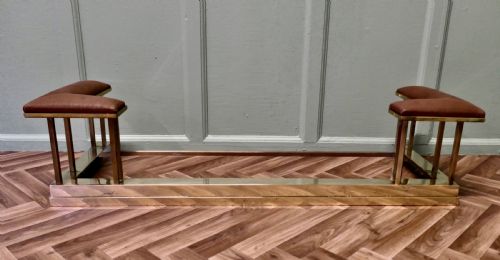
- A low hearth guard featuring upholstered leather seats on either side, originating in gentlemen's clubs for warmth and proximity to the fire.
- Nursery fender
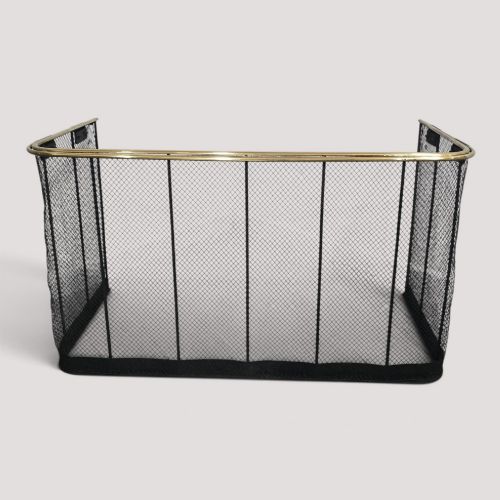
- An tall wire mesh or iron guard designed to protect children from open flames, often including a top rail.
- Pierced brass
- Sheet brass cut through with decorative geometric or floral patterns, commonly seen on Victorian hearth kerbs.
- Patera
- A circular ornamental bas-relief resembling a classical disk, frequently stamped or cast onto copper and brass fenders.
Fender Fire Guard: Frequently Asked Questions
What is a club fender?
A club fender is a hearth guard built with integrated leather-upholstered seats running along the top rails. This design allowed people to sit close to the warmth of the fire.
They originated in gentlemen's clubs and country houses, providing a social space directly around the fireplace while containing stray embers.
How do I measure for a fender?
Measure the width and depth of your hearth stone to ensure the metal kerb sits securely within the perimeter. Allow adequate clearance between the fire opening and the inner edge of the guard.
Adjustable models offer flexibility if your hearth dimensions fall between standard sizes.
What is the difference between a fender and a fire guard?
A fender is a low frame or kerb that sits flat on the hearth to contain coals and ash. A fire guard typically incorporates wire mesh or folding panels to block flying sparks from entering the room.
Some larger nursery designs combine both functions by adding a protective barrier above the low metal base.
How do I care for antique brass?
Dust the metal regularly with a soft, dry cloth to prevent the buildup of grime on polished surfaces. Avoid harsh chemical cleaners that strip the historic patina accumulated over decades.
Gentle application of traditional metal polish suits brighter brass components, while patinated copper and bronze require only light cleaning.