
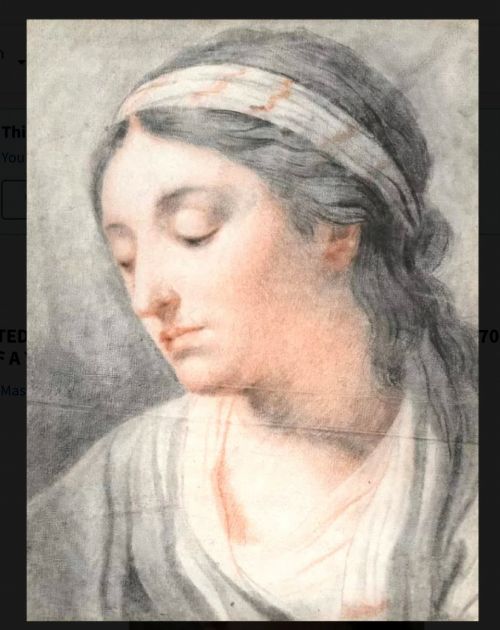


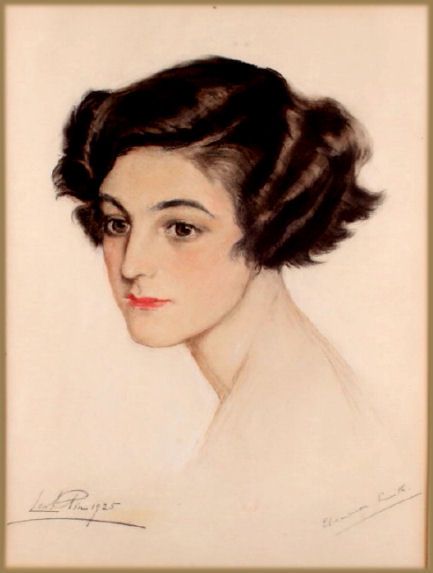

Female Portrait Pencil Sketch
A female portrait pencil sketch captures character through line and tone, offering an intimate glimpse into past lives.
Female Portrait Pencil Sketch
A female portrait pencil sketch brings together works executed on paper using graphite, chalk, or charcoal, often complemented by watercolour washes. These pieces range from 18th-century studies to 20th-century modernist and Art Deco examples.
Buyers frequently encounter framed portrait drawings and sketches originating from Victorian, Regency, and Georgian periods, as well as mid-century British and French contexts. The subjects span named sitters, society figures, and anonymous studies.
Works appear in various configurations, from single framed artworks to sets of multiple portraits and paired family studies. Each piece preserves the immediate touch of the artist's hand.
Materials and technique
Artists create these works primarily on paper supports, utilising graphite and traditional pencil media to build form through line and shading. Watercolour wash and chalk frequently appear alongside pencil to add tone and subtle colour.
Framing typically involves wood and glass to protect the delicate paper substrate from environmental damage. Original mountings and antique wooden frames often accompany the drawings.
Listings feature works spanning the 18th century through the mid-20th century, executed in pencil, charcoal, and watercolour.
Judging quality in portrait drawings
The preservation of the paper support and the subtlety of tonal gradation significantly influence the standing of a piece. Examples that retain crisp detail without excessive fading or paper discolouration command greater attention.
Augustus John·Raoul Millais·Ozias Humphry·Mariette Lydis·Charles Prosper Sainton·Leo Klin
The Female Portrait Pencil Sketch Glossary
- Graphite
- A form of carbon used as a drawing medium in pencils, producing varying tones of grey and black depending on hardness. It forms the primary marking substance in most historical sketches.
- Watercolour wash
- A thin, transparent layer of diluted pigment applied over or beneath pencil lines to introduce colour and atmosphere. It often defines drapery or background elements in portrait drawings.
- Bandeau
- A narrow band or headband worn around the hair, frequently seen in 18th-century and Regency female portrait subjects. It helps date the costume depicted in the sketch.
- Chalk
- A soft, opaque drawing material made from earthy minerals, used to create broad strokes of highlight or shadow. It often appears in combination with pencil on toned paper.
Female Portrait Pencil Sketch: Frequently Asked Questions
How should I frame an antique pencil sketch?
Protect works on paper by using acid-free mount board and framing them behind glass that blocks ultraviolet light. Keep them away from direct sunlight to prevent the graphite and paper from fading.
Ensure the paper does not touch the glass directly by using a mat or spacers, which allows air circulation and prevents condensation damage.
How do I identify the period of a portrait?
Examine the hairstyle, collar shape, and clothing of the sitter, as these details shift noticeably across the 18th, 19th, and 20th centuries. Costume history provides the most reliable chronological anchor.
Paper characteristics, framing methods, and any accompanying signatures or inscriptions on the reverse further assist in dating the drawing accurately.
Are these drawings usually signed by the artist?
Many historical portrait sketches remain unsigned, as artists often produced them as preliminary studies rather than finished exhibition pieces. Monograms, initials, or attributions sometimes accompany the work instead.
Signed examples by recognised artists do appear, carrying distinct signatures or studio stamps that link the drawing to a specific hand.
What is the difference between a sketch and a study?
A sketch is typically a quick, spontaneous rendering capturing an immediate impression of a subject, whereas a study is a more deliberate, detailed examination of a specific feature or pose.
Both serve as works on paper, but studies often show a higher degree of finished anatomical or tonal precision.