


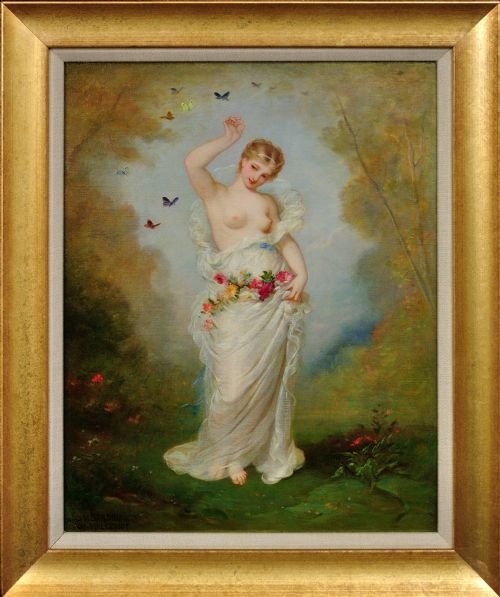


Female Nude Artwork
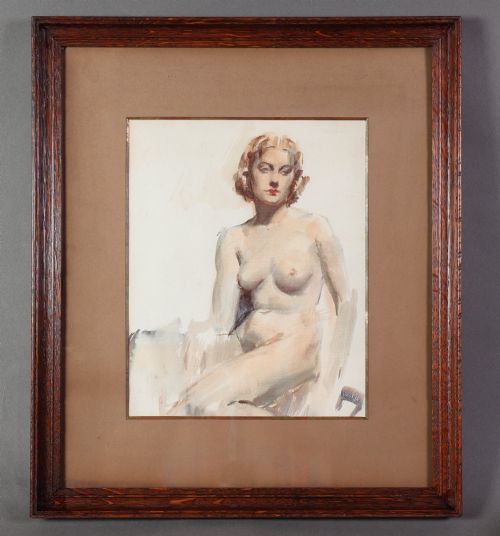
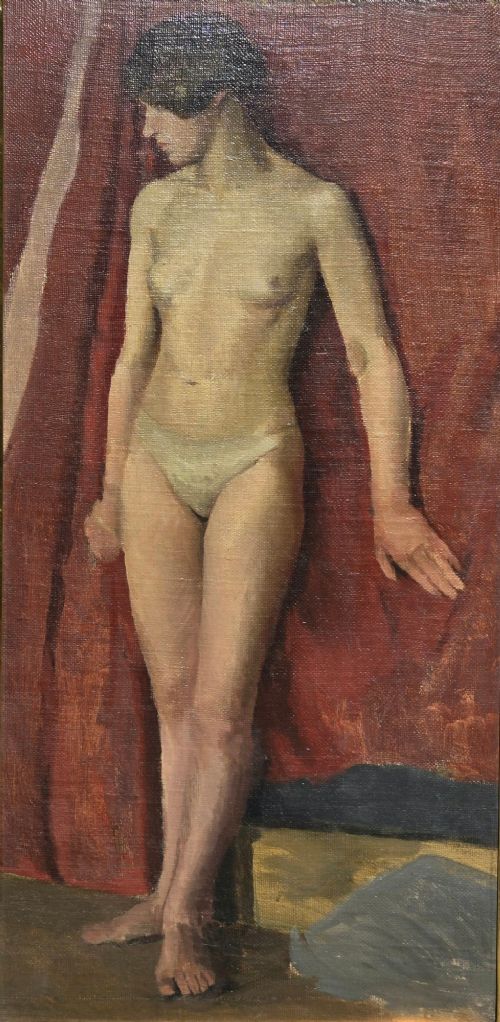
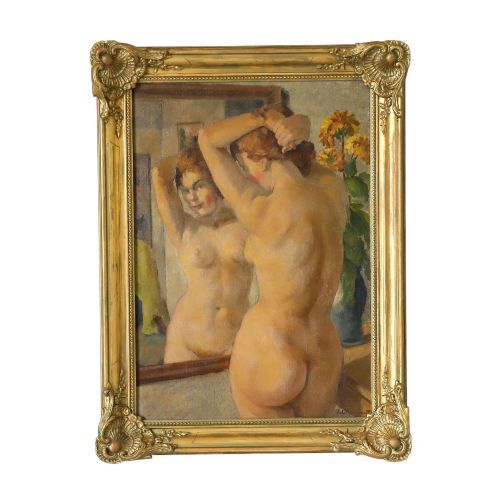
When buying female nude artwork, you are selecting figurative studies and portraits that capture human form through diverse twentieth-century movements.
Female Nude Artwork
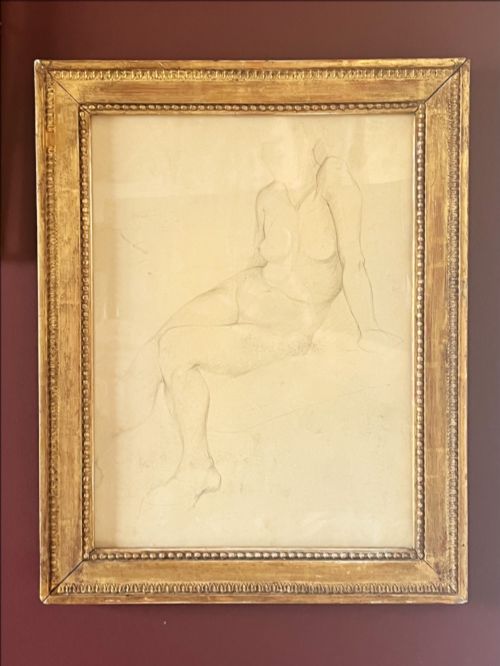
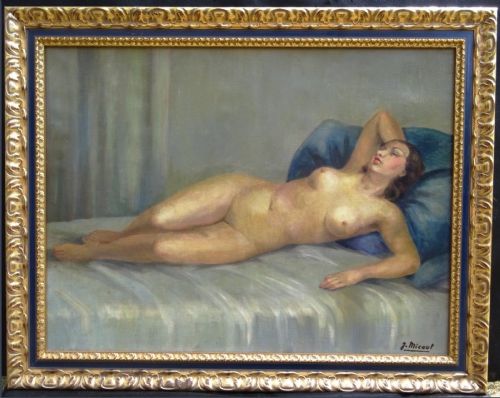
Female nude artwork encompasses paintings, drawings, and sculptures produced primarily during the nineteenth and twentieth centuries, with a strong representation of 1920s and 1930s examples. Buyers encounter everything from rapid life studies in charcoal to finished oil paintings on canvas and board.
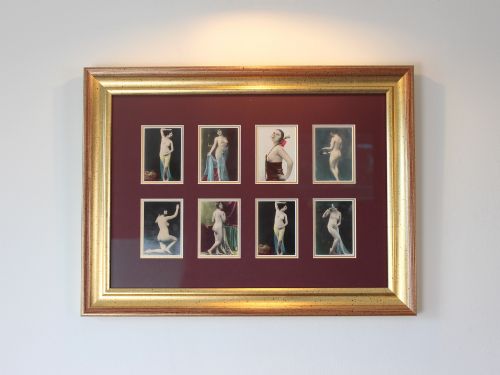
The selections span distinct stylistic traditions, including French Art Deco, British Modernism, Post-Impressionism, and Academic Realism. Works range from intimate domestic interior scenes to mythological depictions and photographic prints.
Pieces frequently emerge from European artistic hubs like Montparnasse, alongside British school creations. The most common forms on this page are framed oil paintings and works on paper such as graphite and charcoal sketches.
How they were made
Artists utilised traditional painting supports, applying oil paint to canvas, board, and paper, often capturing subjects directly from life. The handling of medium varies from fluid brushwork in Post-Impressionist oils to precise linear control in pencil and pen and ink drawings.
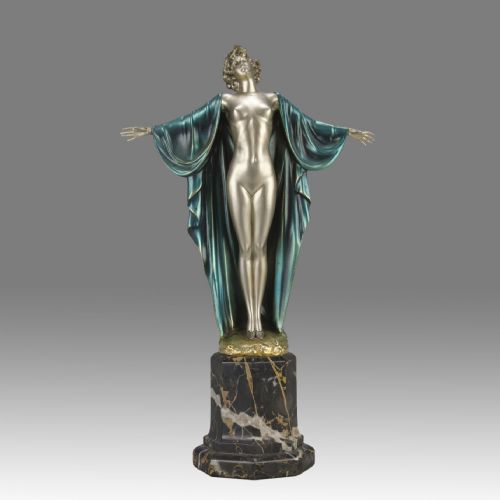
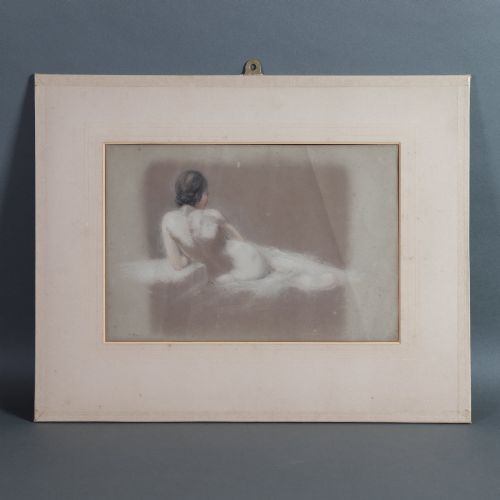
Works on paper rely on dry and wet media, pairing charcoal, graphite, chalk, and pastel with hand-tinted photographic processes. Sculptural objects incorporate metalworking techniques, such as cold-painted bronze figures mounted on bases.
The selection includes contributions from established British, French, and Swedish schools spanning Academic Realism to Cubism.
What varies in quality
Quality rests upon the artist's command of anatomy, proportion, and gesture, distinguishing swift academic exercises from fully realised compositions. The confidence of the draughtsmanship in charcoal or pen lines dictates the immediacy and impact of studies.
Material longevity and preservation influence value, particularly the stability of oil on canvas versus vulnerable works on paper stored incorrectly. The integration of period framing also contributes to the integrity of the piece.
Ferdinand Preiss·William Etty·Philippe de Rougemont·Julian Mandel·Augustus John·Henri Vincent-Anglade·Sir William Russell Flint·Jean Hippolyte Marchand·Pinchus Krémègne·Mariette Lydis
The Female Nude Artwork Glossary
- Life study
- A drawing, painting, or sculpture created from a live human model. These works often emphasise direct observation and anatomical accuracy over narrative context.
- Chiaroscuro
- The use of strong contrasts between light and dark to give a sense of volume to three-dimensional objects and figures. This technique is frequently employed in dramatic oil paintings.
- Post-Impressionism
- An art movement extending roughly from the 1880s to the early twentieth century that rejected impressionist naturalism in favour of bolder colours and expressive forms. Practitioners focused on symbolic content and structural design.
- Cold painted bronze
- A method where bronze sculptures are painted with cold enamel or oil paints rather than fired in a kiln. This finish requires careful preservation to prevent flaking.
- Intimist
- A style of painting focusing on domestic interior scenes and private moments. Artists working in this mode prioritized mood and quiet daily observations.
Female Nude Artwork: Frequently Asked Questions
What periods do these artworks represent?
The inventory spans the nineteenth and twentieth centuries, with a heavy concentration of pieces from the 1920s, 1930s, and 1950s. This includes interwar modernism and Art Deco creations.
You will also find occasional nineteenth-century academic studies alongside mid-century expressive works.
How should I display works on paper safely?
Drawings in charcoal, pastel, and graphite require mounting behind glass with conservation-grade materials to prevent friction and acid damage. UV-protective glazing helps protect fugitive pigments from fading.
Keep these pieces away from direct sunlight and damp environments to preserve the paper support.
What is the difference between a life study and a finished painting?
A life study is typically executed quickly from a live model to capture posture, lighting, and form without narrative distractions. These often show visible working lines and concentrated focus on anatomy.
Finished paintings involve layered compositions, developed backgrounds, and deliberate stylistic choices intended for public exhibition.
Are bronze sculptures marked by the foundry?
Many period bronze figures carry maker signatures, foundry stamps, or edition numbers stamped directly into the metal or the base. These markings help confirm the period of production.
Examining the underside and mounting points often reveals casting details and authentication evidence.