
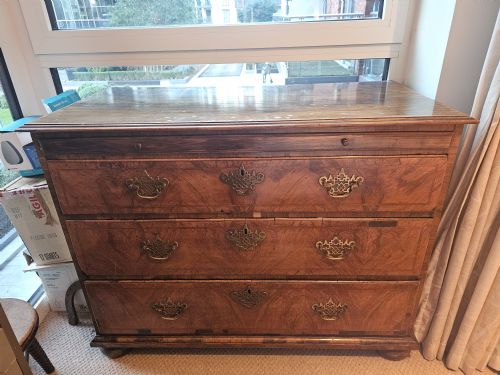


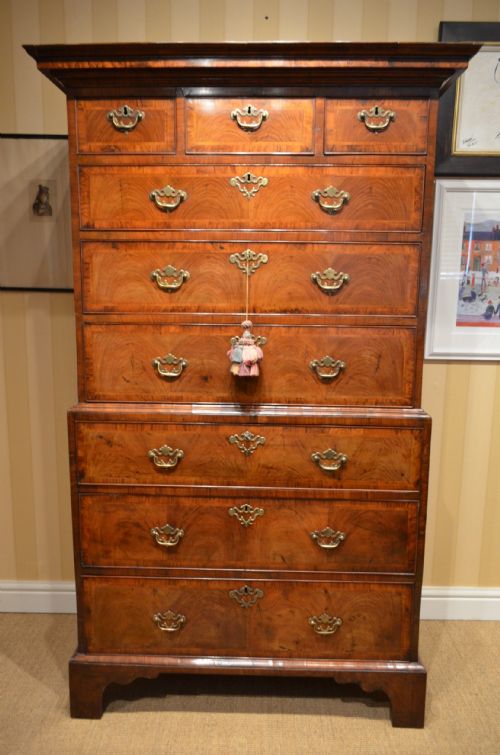

Featherbanded Chest Drawers
A featherbanded chest drawers brings linear elegance and rich timber tones into a room.
Featherbanded Chest Drawers
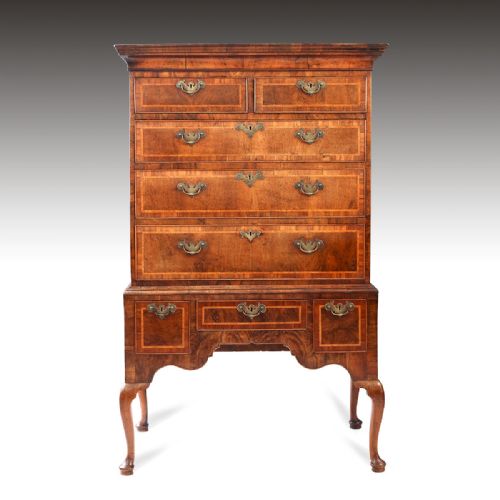
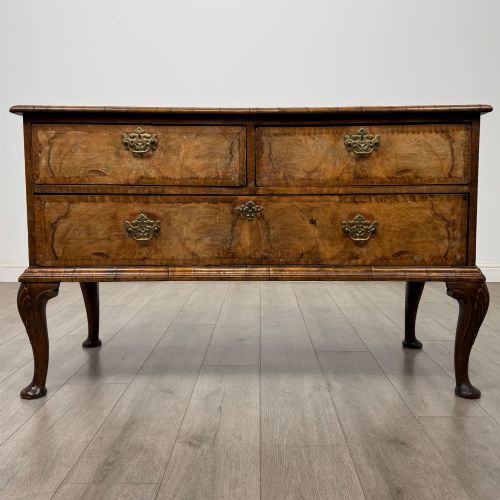
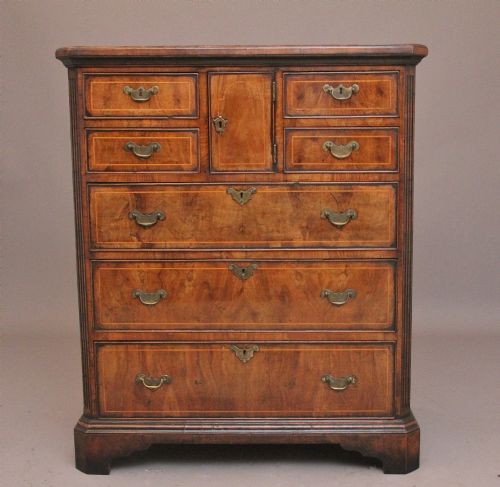
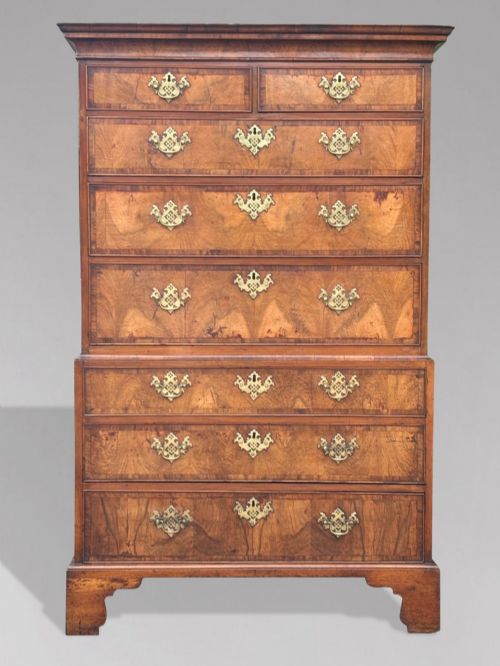
A featherbanded chest drawers is a storage piece defined by delicate decorative banding around the drawer edges, most commonly found from the seventeenth and eighteenth centuries. These items appear in formats ranging from simple chests of drawers to taller cabinets on chests, chests on stands, and chests on chests.
The pieces on this page lean heavily towards the Georgian, George I, George II, and Queen Anne periods, alongside William and Mary examples. Buyers searching for a featherbanded chest drawers will encounter substantial walnut and burr walnut timber surfaces framed by lighter banding.
What varies in quality
Quality in a featherbanded chest drawers rests on the depth of figure in the walnut veneer and the crispness of the inlaid banding. Finer examples maintain original brass hardware and proportional small scales, such as miniature or low proportions.
The integrity of the timber surfaces and the skill with which the cross-grained banding surrounds the drawer edges distinguish standard cabinetwork from exceptional workshop production.
Several examples include sliding top panels, giving eighteenth-century owners a hidden spot to tuck away valuables.
The Featherbanded Chest Drawers Glossary
- Featherbanding
- A decorative inlay technique using small strips of veneer arranged to resemble the barbs of a feather. This detail frames drawer fronts on period walnut furniture.
- Walnut veneer
- Thin sheets of figured walnut timber applied to a secondary wood carcass such as oak. This method displayed expensive grain patterns efficiently.
- Chest on chest
- A tall storage unit formed of two stacked chest sections, one sitting directly upon the other. It maximised vertical storage space in eighteenth-century rooms.
Featherbanded Chest Drawers: Frequently Asked Questions
What is featherbanding?
Featherbanding is a decorative inlay technique where thin strips of wood veneer are cut and laid in a herringbone pattern around drawer perimeters.
Cabinetmakers used this detail on walnut furniture during the late seventeenth and eighteenth centuries to frame the drawer fronts.
How do I date a walnut chest?
Dating relies on stylistic clues like leg shapes, handle designs, and overall construction methods.
Pieces from the Queen Anne and George I eras often display cabriole legs or walnut veneer over oak carcases.
Are these chests made in sections?
Many larger examples, such as chests on chests and cabinets on chests, were constructed in two distinct parts.
This made transport through narrow stairwells and historic doorways much easier for owners.
Where should I place one?
These chests suit bedrooms, hallways, or living spaces where rich timber tones can be appreciated.
Their compact proportions often allow them to fit into spaces where modern furniture feels too bulky.