

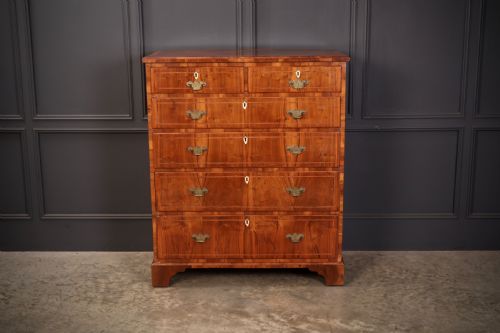


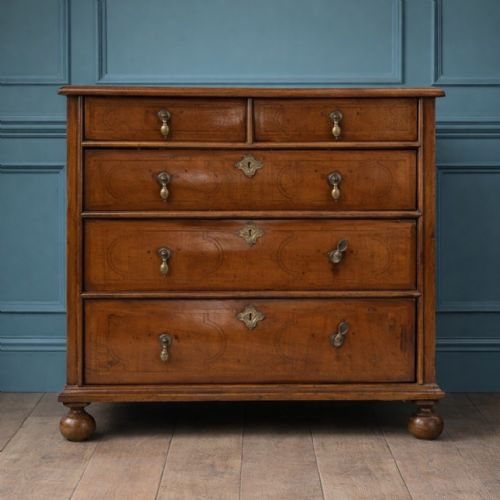


Feather Walnut Cabinet
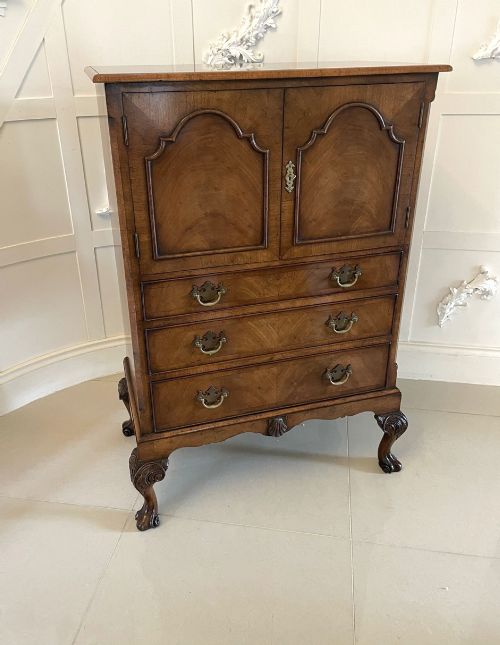
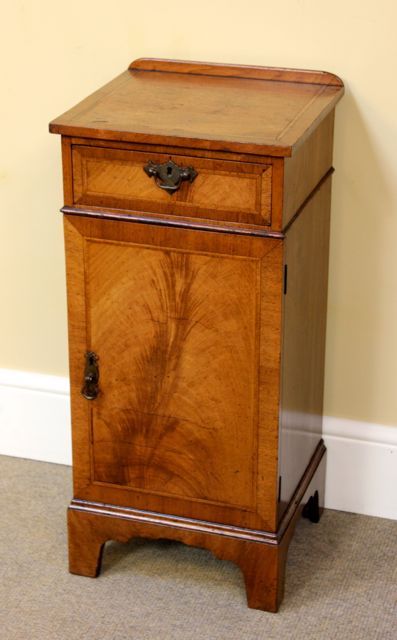
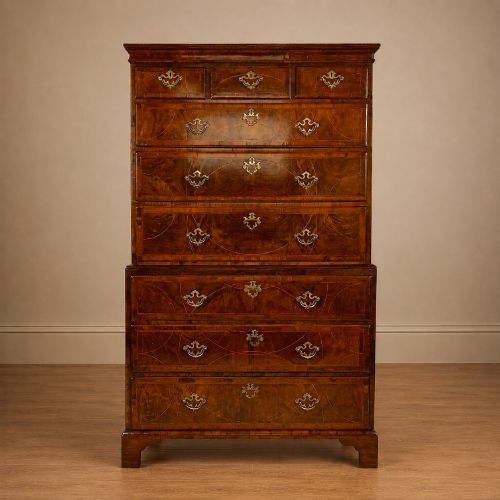
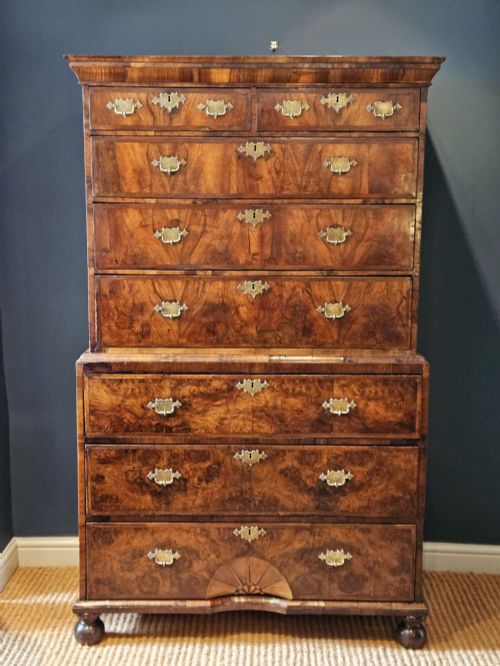
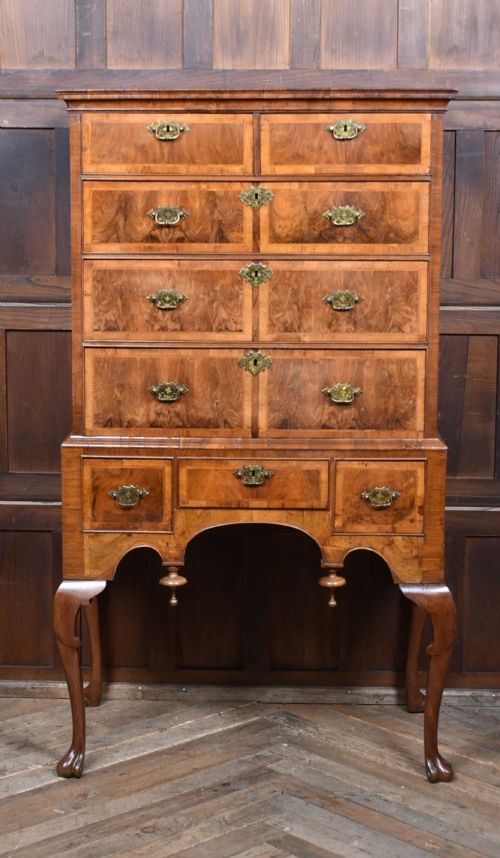
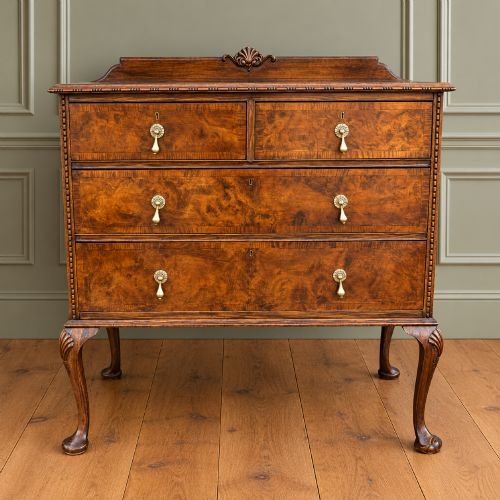
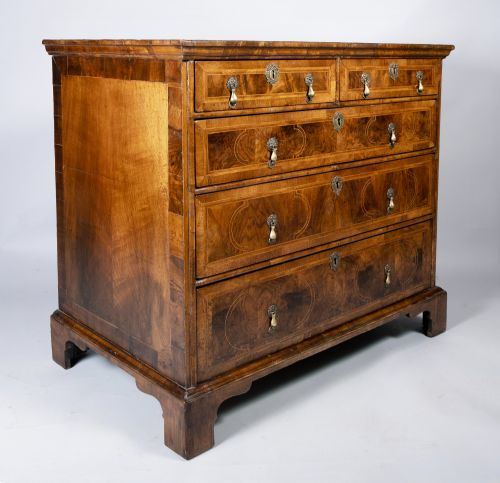
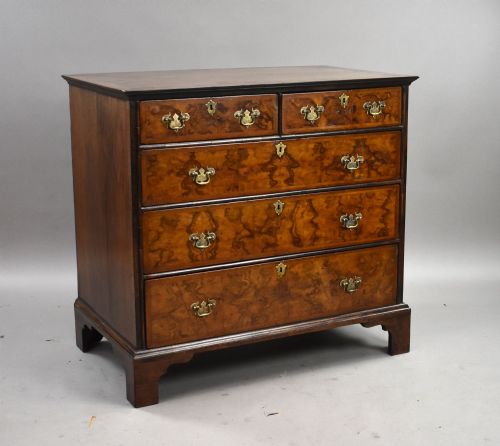
These feather walnut cabinet pieces bring distinct figured grain and banded edges into a room, offering both storage and cabinetwork skill.
Feather Walnut Cabinet
The feather walnut cabinet category encompasses a range of case furniture built predominantly from walnut and burr walnut, featuring distinctive banded veneers. Buyers searching this phrase look for period pieces that display intricate grain patterns and traditional timber construction.
The selections on this page span several centuries, running from early examples of the seventeen hundreds through Georgian iterations up to later twentieth century revivals. Cabinets, chests on stands, chests of drawers, and bureaux dominate the available forms.
Early eighteenth century pieces represent the high point of this cabinetmaking tradition, often employing feather banding and line inlay. Later interpretations from the nineteen twenties and thirties adopt Queen Anne styles to replicate these earlier forms.
Materials and Construction
Cabinetmakers utilised walnut and burr walnut veneers applied to secondary woods such as oak, creating rich surface patterns across drawer fronts and doors. Timber selection was central to the craft, with figured veneers chosen for their visual movement.
Feather banding and line inlay required precise cutting of veneer strips to frame drawer perimeters and top surfaces. Brass hardware, including drop handles and escutcheons, complemented the warm brown tones of the wood.
Feather Walnut Cabinet Retail Price Guide 2026
Typical asking prices for feather walnut cabinet among the pieces listed under this phrase on Sellingantiques today, from the lower quarter to the upper quarter. They describe what is for sale here now, not the wider market.
Listings feature walnut, burr walnut, oak, and brass across eighteenth century, Georgian, and twentieth century periods.
Distinguishing Quality
The fineness of a feather walnut cabinet rests on the symmetry and placement of the burr walnut veneer across the main surfaces. Meticulous alignment of grain patterns shows deliberate intent by the original maker.
The crispness of the feather banding and the survival of the original brass mounts dictate the overall success of the piece. Crisp edge work and well-executed line inlay separate standard items from finer examples.
The Feather Walnut Cabinet Glossary
- Feather banding
- A decorative inlay technique where veneer slices are cut and arranged at an angle to resemble a bird feather. This technique frames drawers and cabinet doors on period furniture.
- Chest on stand
- A form comprising an upper case fitted with drawers resting upon a low, leg-based support frame. This design lifts storage off the floor.
- Escritoire
- A writing cabinet featuring a fall front that opens to reveal internal compartments and small drawers. These pieces combine workspace with enclosed storage.
Feather Walnut Cabinet: Frequently Asked Questions
What is feather banding?
Feather banding is a decorative technique where small strips of veneer are cut and laid in a chevron pattern to create a border.
It frames the primary surfaces of drawers and top boards on eighteenth century walnut furniture.
How do I date a walnut cabinet?
Dating relies on construction methods, hardware types, and timber characteristics seen across different stylistic periods.
Early eighteenth century pieces show specific joinery and veneer choices that differ from later twentieth century revivals.
Where should I place a cabinet?
These cabinets suit reception rooms or hallways where controlled light highlights the figured walnut grain.
Keep them away from direct heat sources to protect the delicate veneers from drying.
What is burr walnut?
Burr walnut comes from irregular growths on walnut trees, producing complex and swirling grain patterns.
Cabinetmakers sliced this timber into thin veneers to cover larger drawer and door surfaces.