


Faux Grain Chest
A faux grain chest is a pine or softwood storage piece given simulated timber decoration, offering rustic country character and practical utility.

Faux Grain Chest
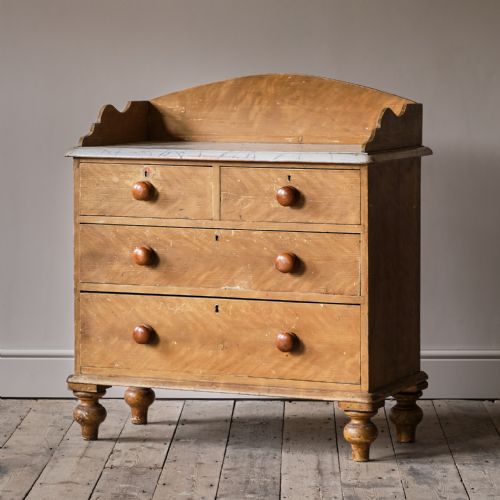
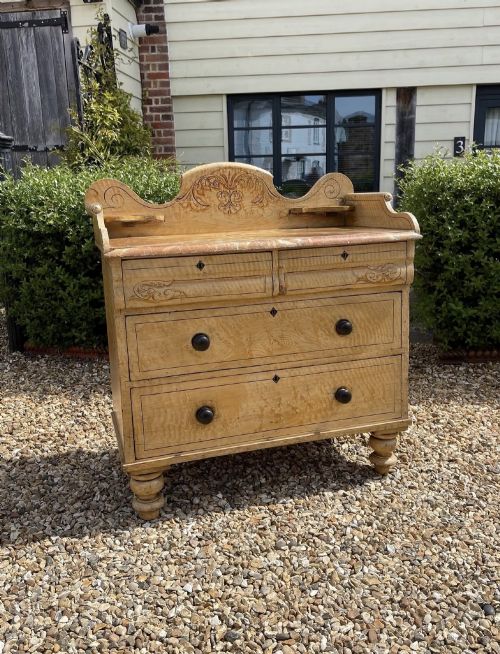
A faux grain chest brings provincial English, French, and Scandinavian country charm into domestic interiors through simulated timber finishes. These pieces take the form of standard chests of drawers, washstands, blanket boxes, and even miniature furniture.
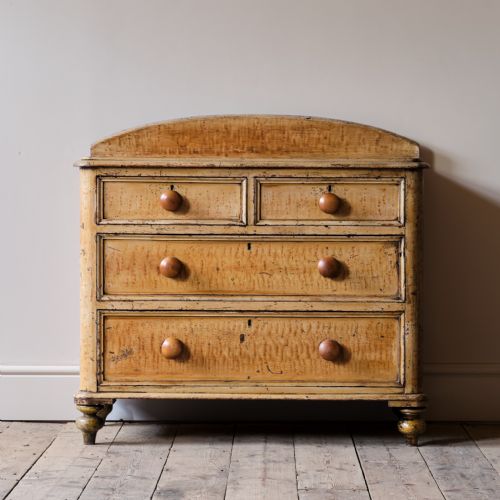
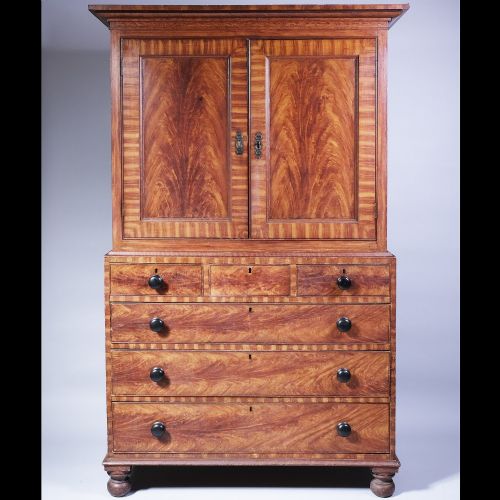
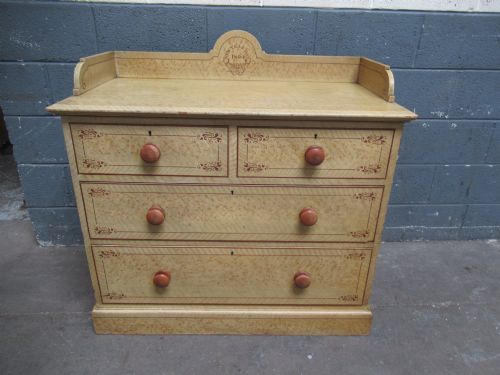
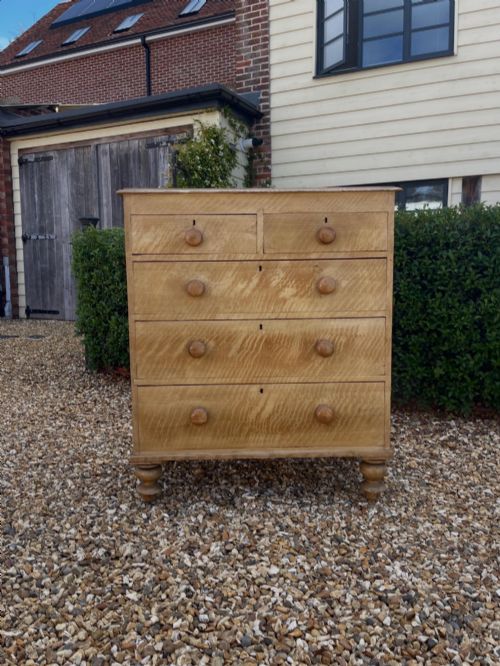
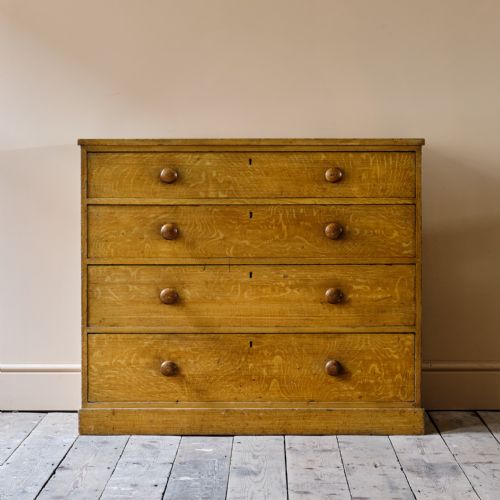
The version most commonly met on this page is the Victorian pine chest of drawers coated in original scumble paint. Makers produced these items to mimic expensive hardwoods using humbler timbers.
Buyers look for these items to anchor a room with tactile warmth and authentic nineteenth-century texture. They work well in bedrooms and hallways where traditional storage meets decorative surface work.
How they were made
Carpenters constructed the carcases and drawers primarily from solid pine or softwood using traditional joinery methods. Secondary materials like brass, iron, ceramic, and glass appear on handles, escutcheons, and knobs.
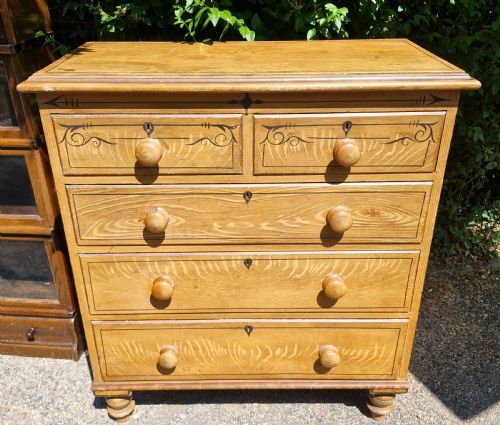
Artisans applied a base coat of paint before dragging, combing, or sponging darker glazes over the surface to create simulated wood patterns. This scumble or faux bois technique required steady hands and specialised tools to drag patterns through wet glaze.
Listings feature pine and softwood pieces spanning the nineteenth and early twentieth centuries, finished with original paint, scumble, and faux bois decoration.
What varies in quality
The sophistication of the surface decoration sets the standard across these items. Skilled decorators achieved convincing depths of grain that mimic oak or exotic timbers, whereas lesser examples show flat, mechanical brushwork.
Survival of the original paint surface dictates desirability among collectors. Pieces retaining their untouched nineteenth-century scumble or faux bois glazes hold greater visual harmony than those stripped or overpainted later.
The Faux Grain Chest Glossary
- Scumble
- A translucent dark glaze dragged or brushed over a lighter base coat to create decorative patterns. This technique allowed painters to simulate richer woods on plain pine furniture.
- Faux bois
- French for false wood, describing paintwork that imitates the grain and knots of timber. Artisans used combs and feathers to manipulate the wet glaze.
- Mule chest
- A blanket box fitted with one or two drawers in the base. It bridges the gap between a traditional chest and a chest of drawers.
- Escritoire
- A writing desk with a sloping front or fall-front panel concealing pigeonholes and small drawers. These pieces often received painted grain finishes in Scandinavian workshops.
- Washstand
- A low cabinet or table designed to hold a basin and jug for morning ablutions. They frequently incorporated small drawers and splashbacks.
Faux Grain Chest: Frequently Asked Questions
What is a scumble painted chest?
A scumble painted chest is a wooden storage unit coated in a translucent glaze manipulated to imitate the grain of expensive hardwoods. Artisans used combs and brushes while the top layer was wet to create figured patterns.
This decorative method was popular in nineteenth-century country houses and farmhouses. It elevated humble pine furniture into something visually rich without the cost of solid mahogany or oak.
How do I clean faux grain furniture?
Cleaning requires a soft, dry cloth to remove dust without disturbing the historic painted surface. Avoid modern chemical sprays and excessive water, which can soften nineteenth-century glazes.
Microfibre cloths or soft feather dusters are ideal for daily maintenance. If marks require attention, use a damp cloth wrung out thoroughly in mild soapy water and dry immediately.
Are these chests made of solid pine?
Most examples utilise solid pine or softwood throughout the carcase, drawer linings, and backboards. Carpenters relied on these accessible timbers for everyday domestic furniture.
Softwood took paint and scumble glazes readily, making it the primary canvas for simulated wood finishes. Knots and natural grain patterns in the wood often show faintly through the translucent topcoats.
Where were these painted chests used?
These pieces served practical storage roles in Victorian bedrooms, nurseries, housekeepers rooms, and country house corridors. They held linens, clothing, and domestic supplies out of sight.
Today they function equally well in modern homes as bedroom storage units or hallway statement pieces. Their painted surfaces introduce colour and texture to neutral interior schemes.