
Farmhouse Wooden Trestle Table
A farmhouse wooden trestle table brings sturdy timber utility and enduring rustic character into everyday domestic spaces.
Farmhouse Wooden Trestle Table
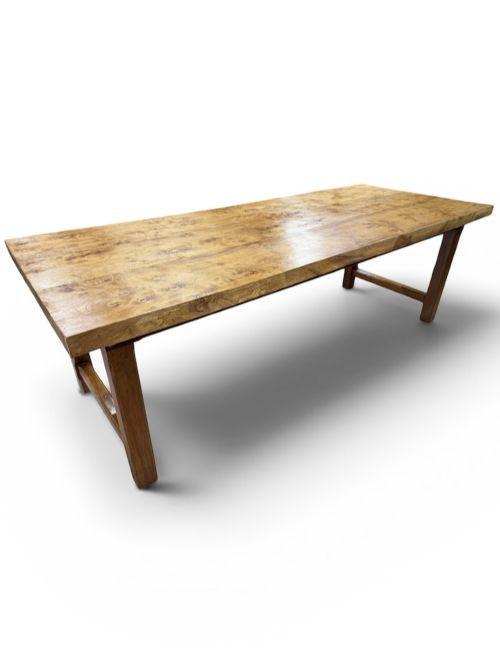
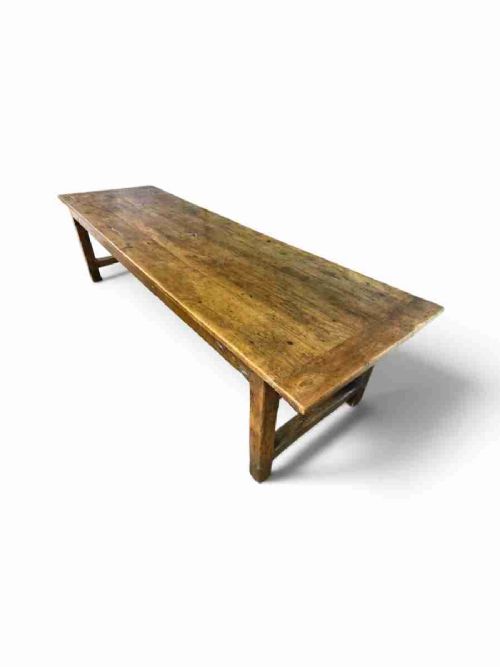
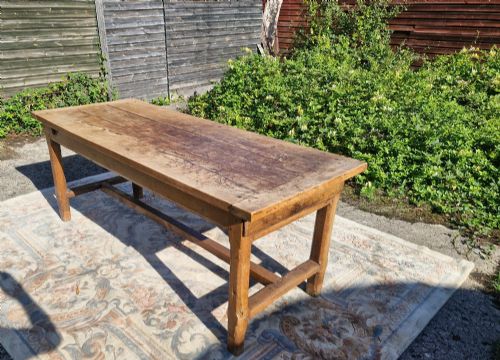
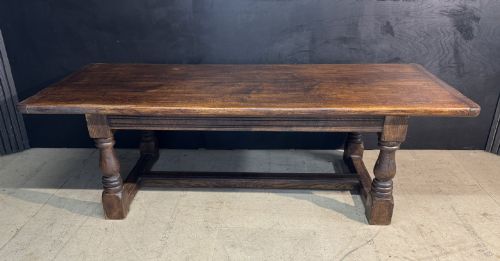
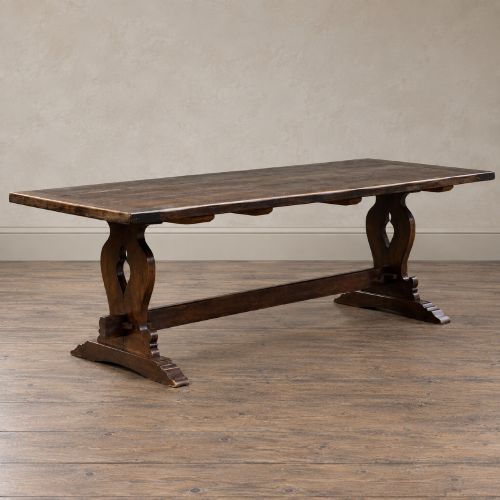
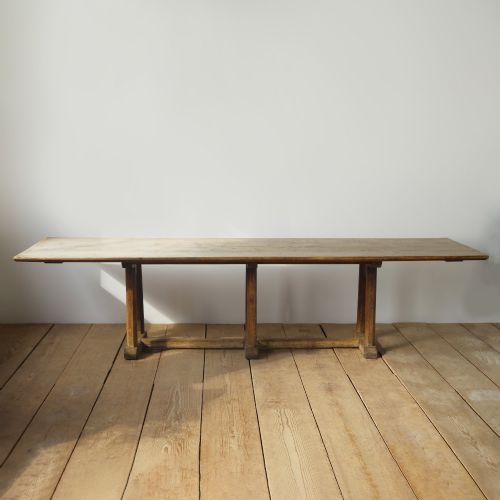
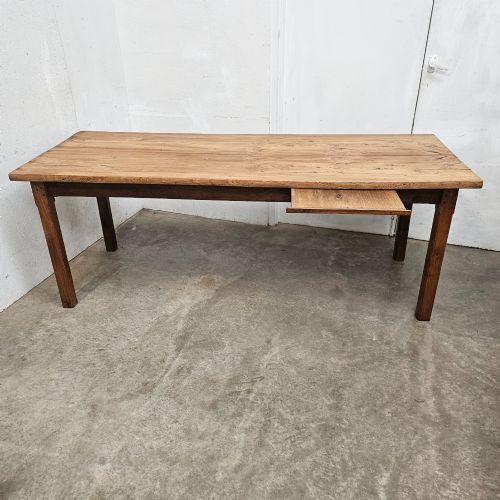
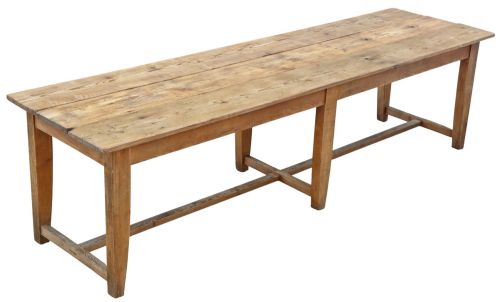
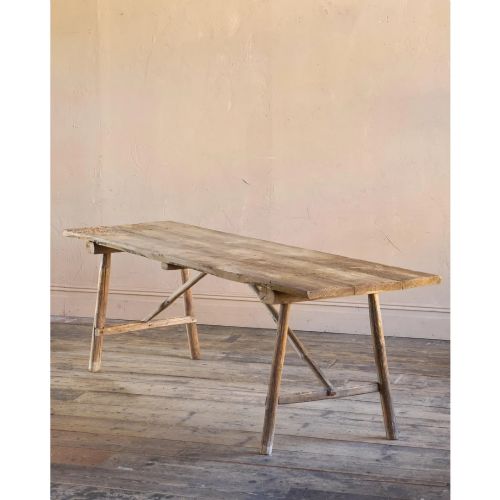
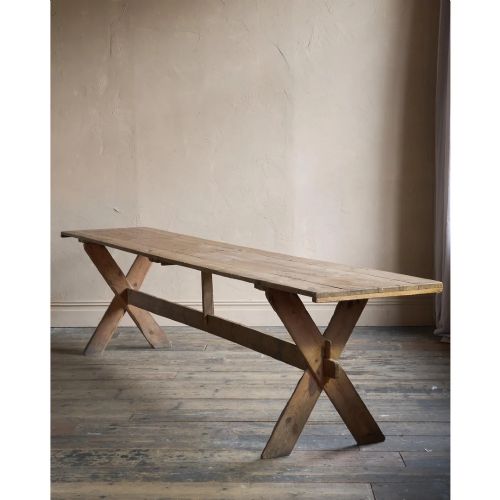
A farmhouse wooden trestle table is fundamentally a utilitarian dining or kitchen surface designed for heavy domestic use across centuries. The pieces gathered here span from the eighteenth century through to the early decades of the twentieth century, originating from English, French, and Scandinavian workshops.
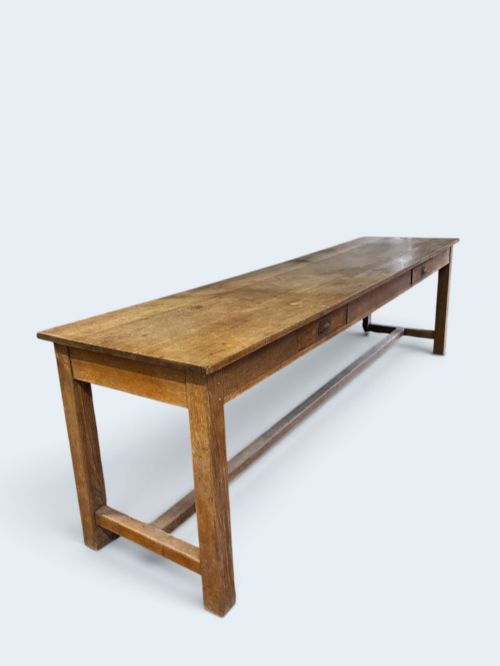
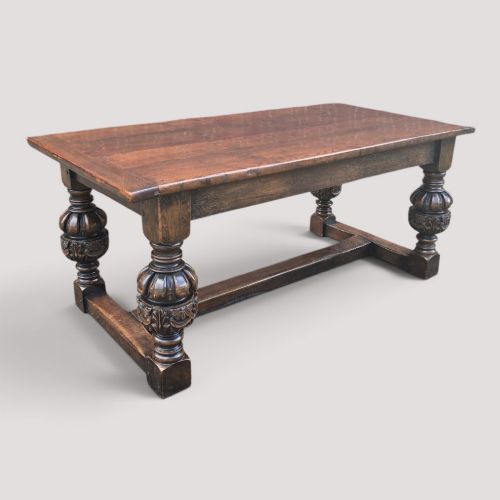
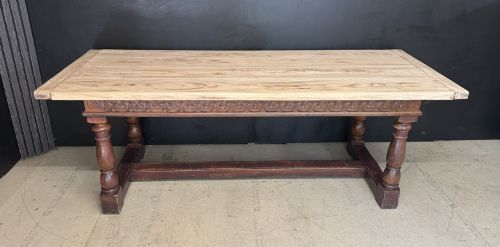
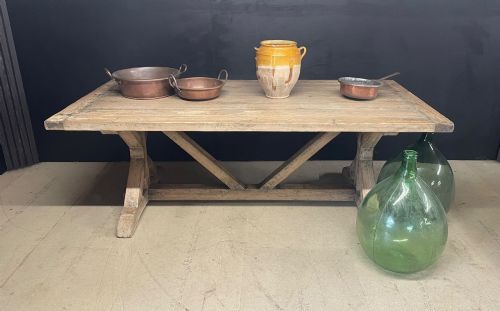
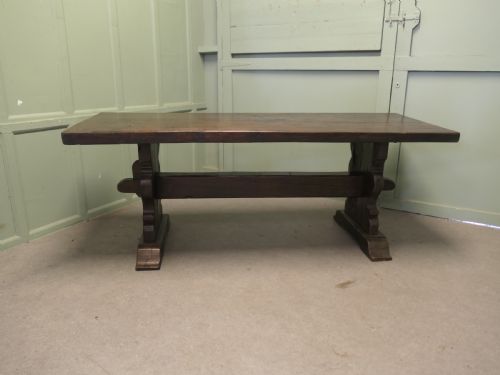
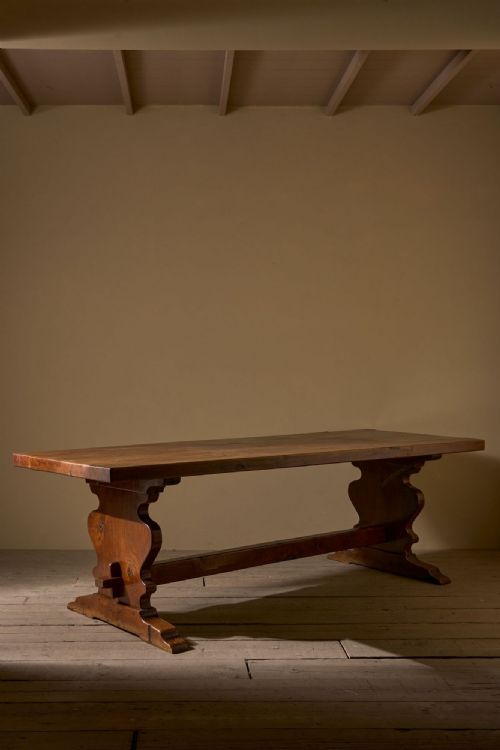
Most examples encountered on this page adopt traditional refectory proportions, often constructed with thick timber planks supported by robust structural bases. Dining tables, kitchen tables, and serving tables dominate the selection, frequently accompanied by associated forms like benches.
Regional variations appear distinctly, ranging from deep French oak and cherrywood constructions to pale Swedish scrubbed pine and English solid oak. Buyers frequently meet nineteenth-century interpretations that echo earlier Elizabethan or Georgian country aesthetics.
Materials and Construction
These tables rely primarily on solid native hardwoods and softwoods, with oak, pine, elm, and cherrywood forming the structural core of the pieces. Joinery is typically straightforward and robust, utilising thick timber boards fastened securely to substantial underframes.
Many surfaces consist of two-board or multi-plank tops that reveal the natural grain and age of the wood. Iron fixings and understated carved details occasionally reinforce the timber framework without compromising the utilitarian purpose of the design.
Some spacious tables conceal up to eight drawers beneath their massive timber tops for storing farmhouse linens.
Assessing Quality
Quality in these tables rests upon the integrity of the timber selection and the proportional balance of the base and top. Thick, stable boards that have weathered evenly over generations distinguish superior examples from ordinary utilitarian pieces.
The refinement of the surface patina and the honesty of the construction dictate the standing of a table. Thoughtful integration of drawers or sturdy trestle supports indicates careful workshop execution rather than hasty commercial production.
The Music House Norwich
The Farmhouse Wooden Trestle Table Glossary
- Refectory table
- A long, narrow dining table originally built for monastic dining halls and later adopted in domestic farmhouses. These forms prioritize length and sturdy leg bracing to accommodate large gatherings.
- Trestle table
- A table supported by structural uprights connected by a horizontal stretcher rather than four independent corner legs. This configuration allows maximum legroom along the length of the surface.
- Plank top
- A table top constructed from multiple longitudinal boards joined side by side. Two-board tops are particularly sought after for their width and unified timber grain.
- Patina
- The surface sheen and coloration developed through decades of daily use, polishing, and natural oxidation. A rich patina signals age and consistent historical care.
Farmhouse Wooden Trestle Table: Frequently Asked Questions
How do I clean a wooden farmhouse table?
Maintenance requires only a damp cloth and mild soap to preserve the historic surface and accumulated patina. Avoid harsh chemical cleaners that strip the natural character from older timber.
Regular waxing helps nourish dry wood, particularly on pine and oak surfaces exposed to modern central heating. Allow natural oils to settle rather than applying glossy varnishes.
Can I use these tables outdoors?
These tables were constructed strictly for indoor domestic environments within farmhouses, kitchens, and dining rooms. Fluctuating outdoor humidity and temperature extremes damage historic timber and weaken traditional joinery.
Keep pieces away from direct heat sources and damp spaces to prevent the wood from warping or splitting. Proper indoor placement protects the structural integrity of the trestle base.
How do I seat guests comfortably?
Refectory designs and trestle configurations naturally maximise legroom because side stretchers sit lower than traditional aprons. Measure the clearance beneath the tabletop to ensure chairs or benches slide underneath easily.
Consider the length of the timber top and the placement of structural supports when calculating total seating capacity. Long variants easily accommodate eight to ten diners.
What defines French country style?
French country furniture emphasises practical elegance using regional timbers such as cherrywood, elm, and oak. These pieces balance robust utility with softer decorative proportions suited to provincial homes.
Subtle details like fitted drawers and tapered legs distinguish these regional interpretations from heavier English refectory designs. The resulting aesthetic feels both grounded and refined.