



French Provincial Trestle Desk
These French provincial trestle desks offer practical surfaces and sturdy bases, prized for rustic utility and enduring character.
French Provincial Trestle Desk
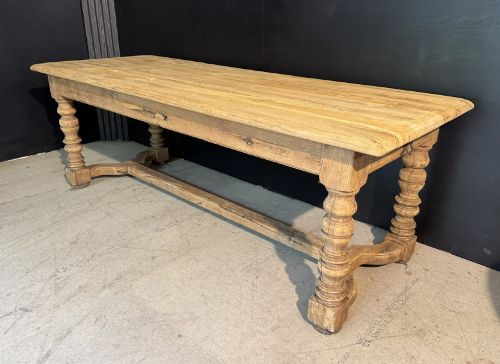
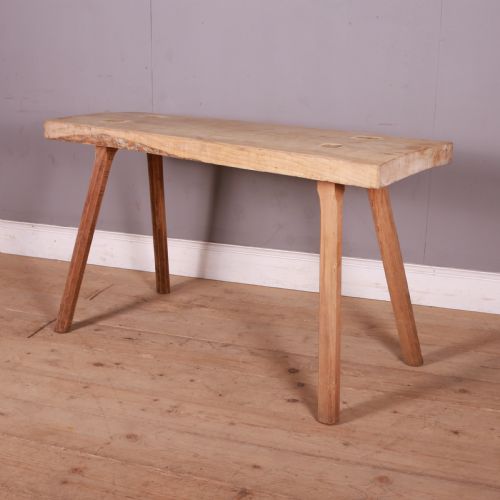
A french provincial trestle desk represents sturdy rural tables adapted from 19th Century and early 20th Century farmhouse designs. You encounter oak, pine, poplar, and sycamore examples built for daily labour rather than formal parlours.
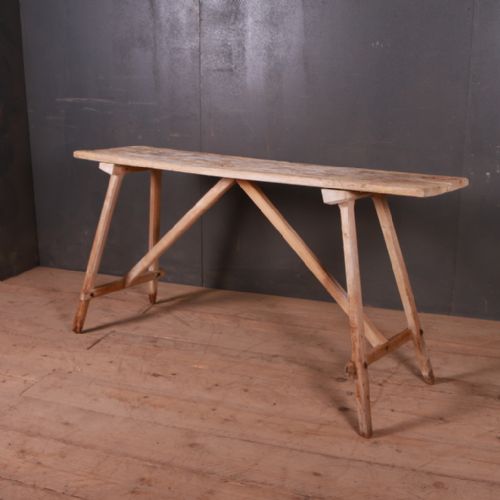
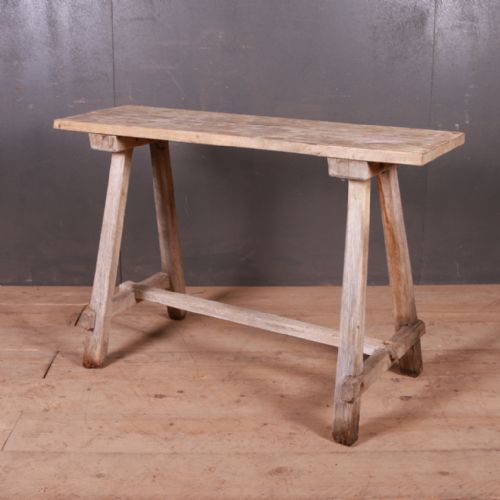
The form typically uses solid timber planks resting upon substantial end frames rather than four corner legs. Many pieces show the simple utility of console and dining tables put to desk use in country houses.
Origins trace directly to French country workshops where honest construction mattered more than elaborate ornament. Bleached wood variants appear frequently alongside darker timber surfaces aged through decades of use.
How They Were Made
Carpenters utilised native woods such as oak, elm, poplar, and pine, often combining timber types within a single frame. Tops were joined from heavy planks whilst trestle ends relied on pegged mortise and tenon joints.
Iron fittings occasionally reinforced the wooden underpinnings, adding industrial resilience to domestic tables. Surfaces remained unpolished or received simple wax treatments that allowed the grain of the wood to show clearly.
Listings feature oak, pine, poplar, sycamore, elm, and iron materials across the 1860, 1880, 1900, and 1920 periods.
What Varies in Quality
Better examples display thoughtful selection of hardwoods like oak and sycamore over softer pine or poplar constructions. The thickness of the top planks and the stability of the trestle base determine the overall integrity of the piece.
Proportion and restraint in any added drawers distinguish superior country furniture from heavier, clumsier builds. Natural bleaching achieved through time retains more character than harsh chemical treatments.
The French Provincial Trestle Desk Glossary
- Trestle
- A structural support consisting of a horizontal beam fixed to a pair of slanted legs. This design provides robust legroom underneath the main surface.
- Bleached oak
- Oak timber lightened by sun exposure or chemical washing to achieve a pale, neutral tone. This finish suits modern interiors seeking a softer historic look.
- Mortise and tenon
- A traditional joint where a projecting tongue fits snugly into a matching cavity. It holds frame structures firmly without relying on metal fasteners.
- Sycamore
- A dense hardwood displaying a pale colour and fine grain. Cabinet makers selected it for durability in heavy use farmhouse furniture.
- Console table
- A long narrow table placed against a wall. Many country pieces function naturally in this role due to their modest depth.
French Provincial Trestle Desk: Frequently Asked Questions
How do I date a French trestle table?
Dating relies upon examining the timber species, tool marks, and joint construction methods visible on the underside and frame. Earlier pieces often display hand-sawn board edges and pegged joints rather than modern screws.
Material choices also offer clues, as specific hardwoods fell in and out of favour across different decades. Comparing the patination of the top surface to the inner frame helps confirm age.
Can these tables be used as desks?
Their generous surface area and open underframes make them practical working desks for modern rooms. Chairs fit easily beneath the trestle structure without corner legs obstructing movement.
Some variations include functional drawers beneath the top for storing writing materials. Pairing the table with a simple wooden chair creates an effective workspace.
What is bleached oak?
Bleached oak refers to timber that has lost its original dark amber hue through natural weathering or deliberate lightening processes. This treatment became popular for creating a brighter appearance while retaining the strong grain of the wood.
Bleached surfaces fit well within contemporary spaces that favour neutral tones. The finish highlights the natural texture of the oak planks.
Are these tables solid wood?
Country furniture from this tradition relied entirely on solid timber construction rather than veneered panels. Planks of oak, pine, poplar, or elm formed every visible surface of the top and base.
This solid build accounts for the considerable weight and durability of the pieces. It also allows the wood to be sanded or waxed repeatedly over generations.