
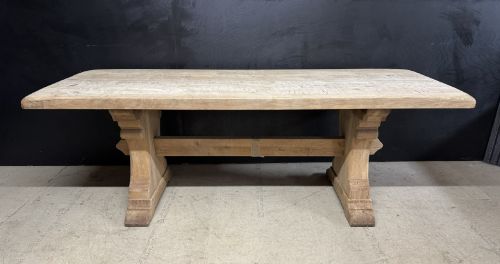
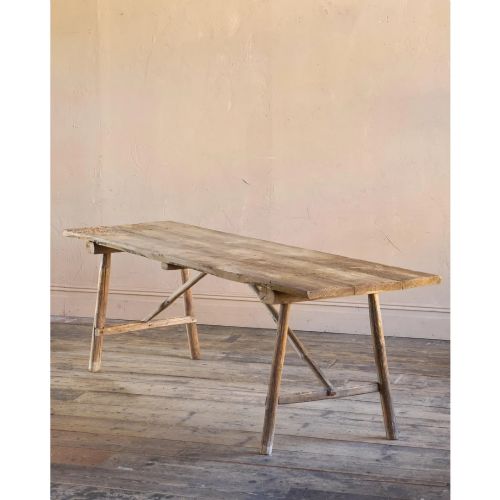


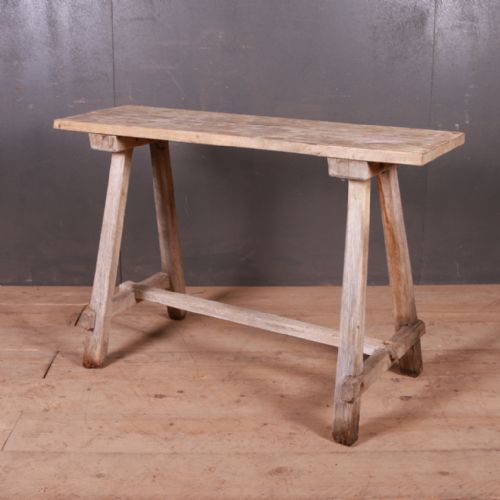


Bleached Wood Trestle Table
A bleached wood trestle table brings robust character and timeless utility to a dining room, offering sturdy architecture alongside a bright surface.
Bleached Wood Trestle Table
When you search for a bleached wood trestle table, you are looking for a long, sturdy dining surface supported by end uprights rather than four corner legs. These tables draw heavily on regional European traditions, spanning French provincial, Spanish traditional, and Italian country aesthetics. The form originates from practical refectory and farmhouse use, where stability on uneven floors and maximum seating capacity mattered most.
On this page, the version you are most likely to meet is a French example dating from the nineteenth century or the year 1920. These pieces typically combine generous proportions with the characteristic pale, neutral tone achieved through historic scrubbing or chemical lightening. Alongside dining tables, related forms such as servers and console tables appear, sharing the same utilitarian trestle architecture and aged timber construction.
Materials and construction methods
These tables rely principally on solid hardwoods and softwoods, with oak, pine, and general timber forming the main structural elements. Carpenters joined heavy planks using traditional pegged mortise and tenon joints to withstand decades of daily use. Iron accents occasionally reinforce the framework, particularly in pieces bridging country and industrial styles.
The characteristic pale finish results from intensive scrubbing with lye or soap over generations, or intentional modern and historic bleaching processes. This treatment strips away dark original varnishes to reveal the natural grain of the weathered timber beneath. The resulting surface offers a dry, matte texture that contrasts with polished antique furniture.
Listings feature pieces spanning the nineteenth century, Edwardian era, and the year 1920, predominantly originating from French, Spanish, and Italian workshops.
Assessing quality and character
Quality in these pieces rests primarily on the integrity of the structural timber and the honesty of the bleached finish. Superior examples display tight joinery, thick top planks that remain flat, and trestle bases that show minimal wobble despite centuries of contraction and expansion. The depth of the grain texture and the subtlety of the pale tone distinguish finer examples from heavier, flat-looking surfaces.
Proportion and scale also separate standard utility tables from more refined provincial pieces. The best tables possess balanced overhangs, well-turned or chamfered trestle supports, and patination that speaks of continuous domestic life rather than aggressive modern stripping. Pieces retaining original scrubbed surfaces command greater appreciation among collectors of rustic interiors.
The Bleached Wood Trestle Table Glossary
- Trestle table
- A table featuring a long horizontal top supported by two vertical uprights, or trestles, connected by a central stretcher. This design maximises legroom along the length of the table.
- Refectory table
- A long, narrow dining table traditionally used in communal dining halls. These sturdy tables are built to seat large numbers of people.
- Potboard
- A lower slatted shelf fitted between the legs or trestles of a table, originally intended for storing pots and kitchen utensils.
- Scrubbed finish
- A surface treatment achieved by repeatedly washing timber with stiff brushes and lye or soap, removing old finishes and leaving the wood pale and clean.
Bleached Wood Trestle Table: Frequently Asked Questions
How do I clean a bleached wood table?
Maintain the dry, matte appearance of the timber by dusting regularly with a soft, dry cloth. Avoid using silicone polishes or heavy oils, which can penetrate the porous grain and alter the pale colour.
For stubborn marks, use a damp cloth with mild soap, wiping gently in the direction of the grain. Dry the surface immediately afterwards to prevent water staining the unprotected wood.
Can I use these tables for everyday dining?
These tables were originally built for heavy daily use in farmhouses and provincial homes, making them well-suited for modern dining. The robust trestle construction provides excellent stability and allows diners to sit comfortably without legs in the way.
Use felt pads or placemats to protect the historic timber surface from hot dishes and moisture rings. Embracing minor new marks adds to the ongoing history of the piece.
How do I date a nineteenth century table?
Examine the underside and joints of the table for hand-cut marks, irregular peg placements, and signs of hand-planed timber boards. Nineteenth-century pieces often display subtle variations in board widths and hand-forged iron elements.
Compare the construction methods with known pieces from the same era, noting how timber shrinkage and wear correspond to age. Secondary wood types and traditional hardware provide further clues to the period.
What is French provincial style?
French provincial furniture refers to practical, unpretentious pieces made in the regions of France during the eighteenth and nineteenth centuries. These items combined urban stylistic influences with sturdy local craftsmanship.
The resulting tables feature simpler lines, heavier proportions, and honest timber construction tailored for rural homes rather than formal Parisian salons.