

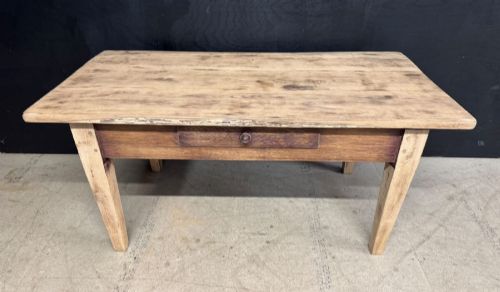
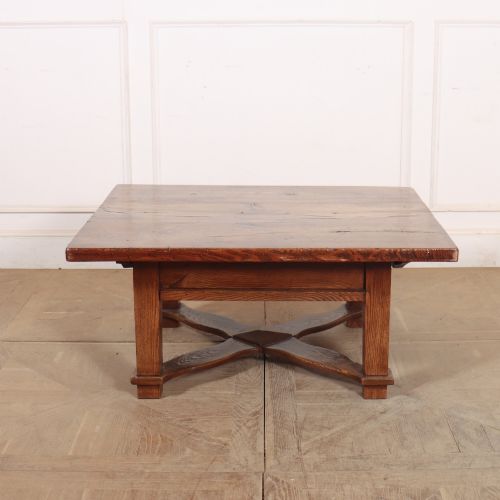


Farmhouse Cocktail Table
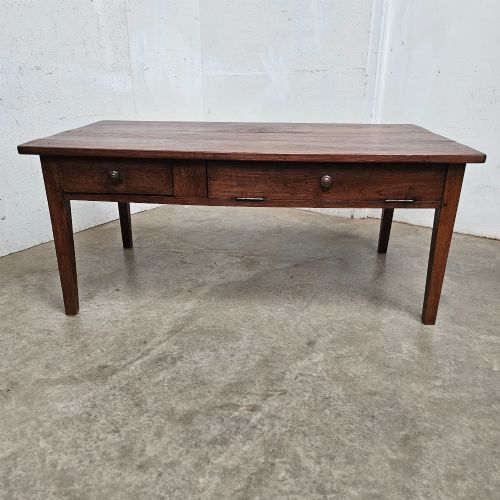
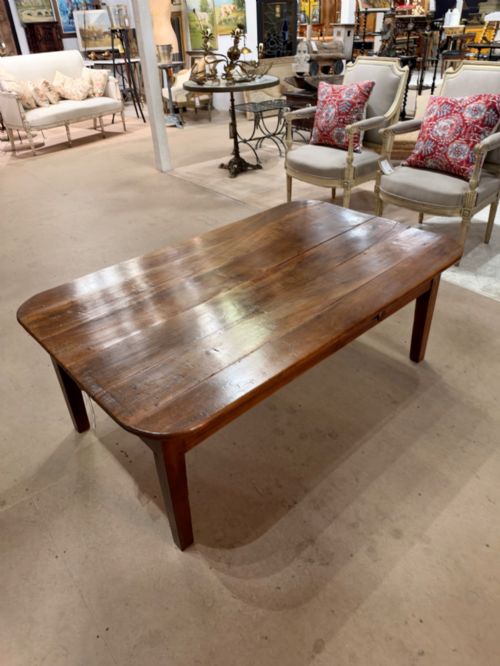
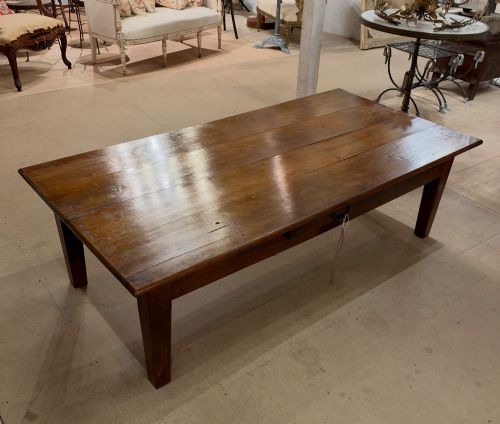
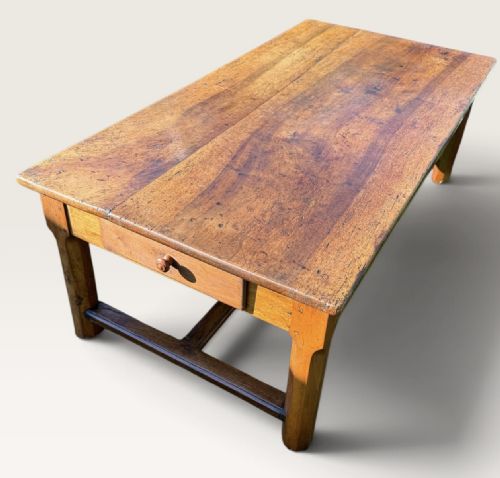
These farmhouse cocktail table pieces bring sturdy provincial character to a room, offering low surfaces built for daily service.
Farmhouse Cocktail Table
A farmhouse cocktail table brings practical surface area to a living space, taking its cues from traditional low country boards and modified work tables. The examples found here span the nineteenth and eighteenth centuries, drawing on regional styles from English country to French provincial and Austrian country.
Most pieces take the form of low coffee tables, often retaining functional details like side drawers for small storage. Timber selection ranges from cherrywood and walnut to oak, pine, elm, and iron, reflecting the utilitarian origins of these domestic furnishings.
How they were made
Cabinetmakers constructed these tables using solid regional hardwoods such as oak, elm, walnut, and cherrywood, joined to withstand heavy daily use. Surfaces occasionally feature painted finishes or simple drawer integrations, relying on straightforward carpentry rather than elaborate ornamentation.
Iron and brass elements appear selectively for structural support or handles, while pine serves in simpler rustic variants. The workmanship is direct and honest, prioritising sturdy construction and enduring utility above all.
Farmhouse Cocktail Table Retail Price Guide 2026
Typical asking prices for farmhouse cocktail table among the pieces listed under this phrase on Sellingantiques today, from the lower quarter to the upper quarter. They describe what is for sale here now, not the wider market.
What varies in quality
Quality depends heavily on the selection of timber and the proportion of the piece, with dense grain walnut and figured cherrywood sitting at the upper end of the scale. Tables featuring integrated drawers and original timber patination display superior craftsmanship compared to more utilitarian pine variants.
The sophistication of the regional style also dictates distinction, as finely turned legs and authentic provincial detailing elevate an object beyond basic domestic utility. Age alone does not determine worth; the integrity of the timber and the harmony of the proportions matter more.
The Farmhouse Cocktail Table Glossary
- Cherrywood
- A dense, reddish-brown timber frequently utilised in French provincial and nineteenth-century cabinetmaking. It darkens richly with age and exposure to light.
- Elm
- A tough, interlocking hardwood often chosen for rustic tables due to its resistance to splitting. It provides a distinct grain pattern visible on older country pieces.
- Provincial
- Pertaining to styles originating from the regions rather than metropolitan centres. These designs adapt urban fashions to local materials and practical needs.
- Patina
- The surface sheen and colour acquired by wood through decades of handling, polishing, and natural ageing. It indicates genuine age and use.
- Side drawer
- A compartment built into the frieze of a table for storing small implements. Its presence adds both utility and traditional character to low tables.
Farmhouse Cocktail Table: Frequently Asked Questions
What is a farmhouse cocktail table?
A farmhouse cocktail table is a low surface adapted from traditional country tables and work benches. These pieces provide stable placement for daily items in a living space.
They utilise regional timbers such as oak, cherrywood, elm, and walnut. Many examples date from the eighteenth and nineteenth centuries, originating from English, French, and Austrian workshops.
How were these tables used originally?
Many of these low tables derive from utilitarian work boards, kitchen tables, or occasional furniture altered for domestic comfort. Side drawers held small implements or household items.
Their robust construction allowed them to endure heavy daily tasks in rural homes. Today, their height suits them well for placement before seating in modern living areas.
How do I identify the timber?
Examining the grain, colour, and weight helps distinguish between walnut, oak, cherrywood, elm, and pine. Walnut displays a deep, rich brown tone, while cherrywood tends towards a warm reddish hue.
Elm and oak show pronounced grain figures, whereas pine is lighter in weight and colour. Close inspection of unpainted surfaces reveals the natural characteristics of each wood.
How do I care for antique wood tables?
Maintaining these tables requires keeping them away from direct heat sources and excessive moisture to prevent timber movement. Regular dusting with a soft cloth preserves the surface.
Occasional application of appropriate wax protects the historical patina without altering the finish. Gentle handling ensures the timber continues to age gracefully.