

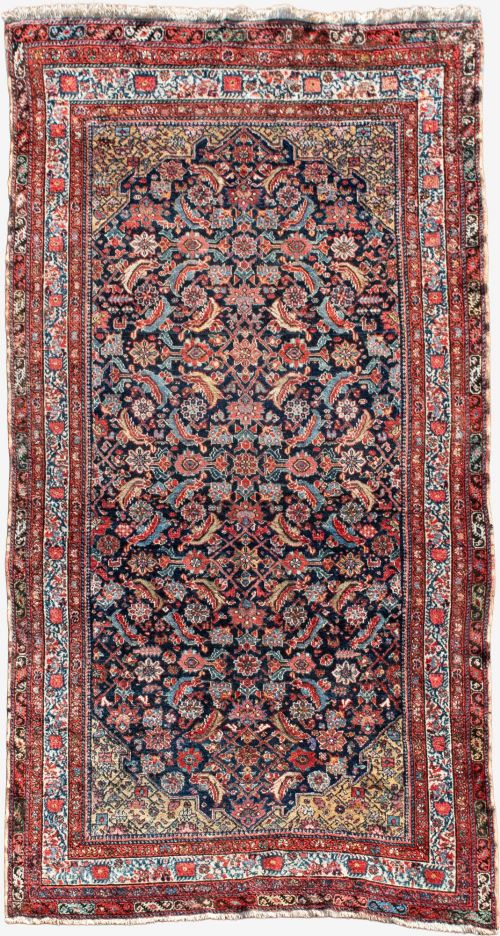
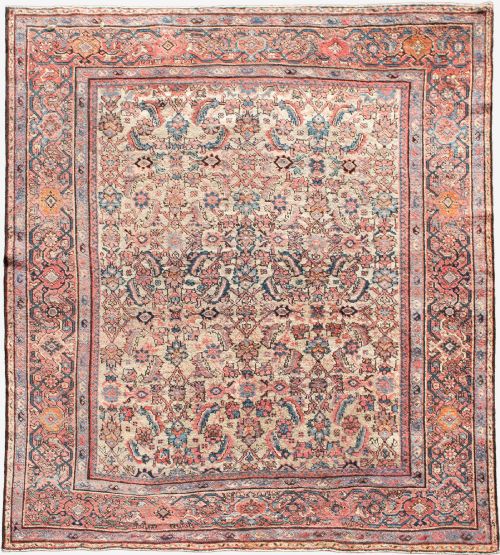
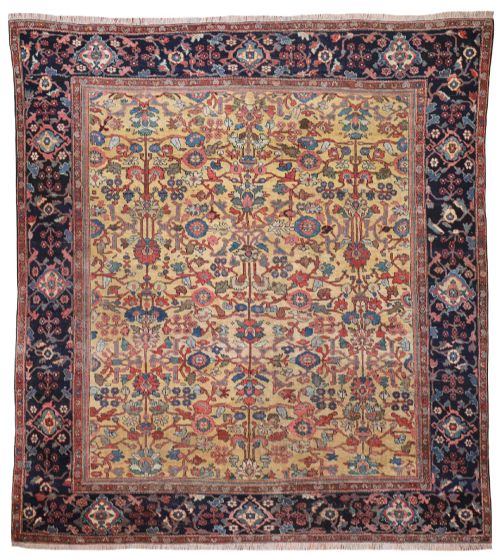
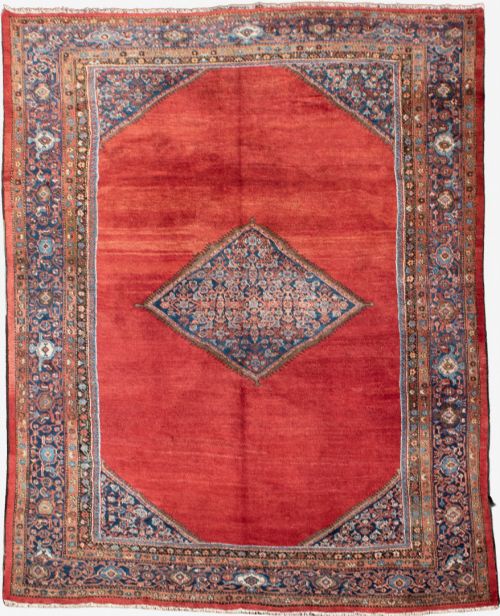


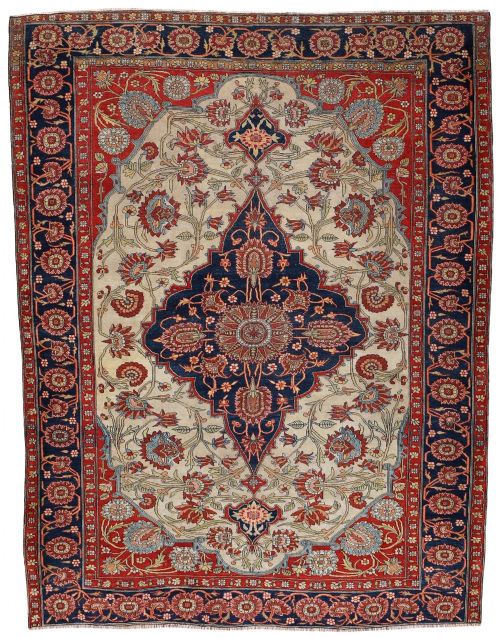


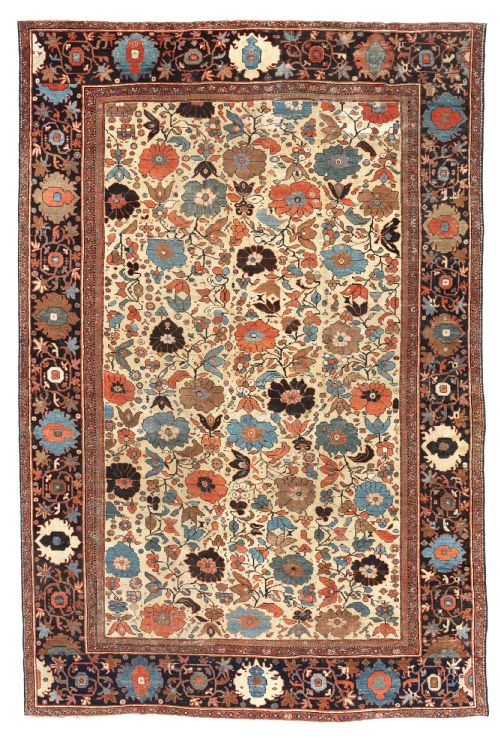
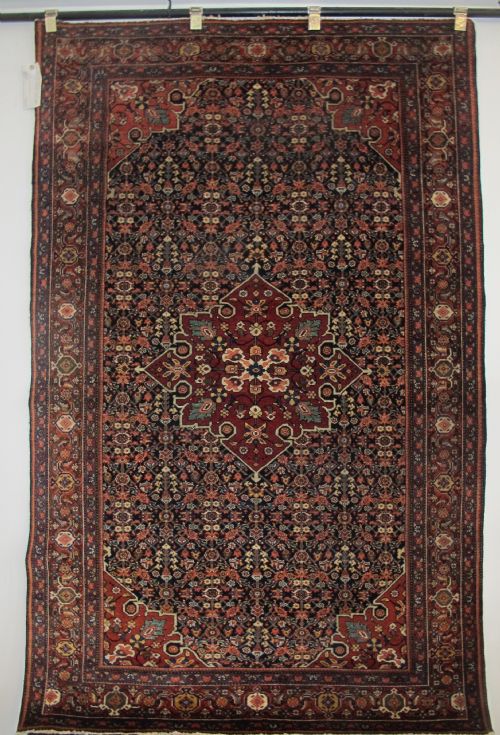

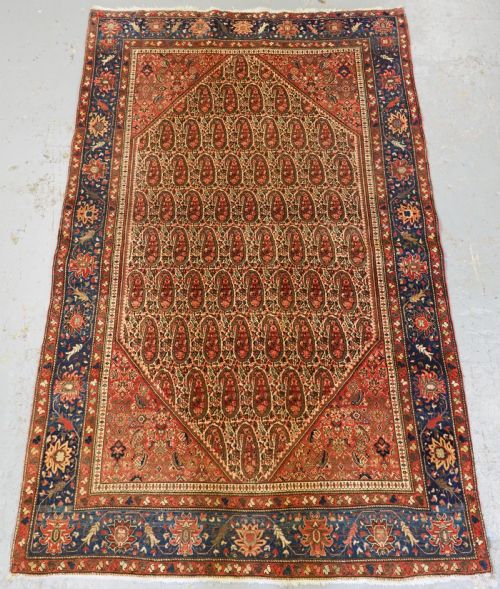
Farahan Wool Rug
These farahan wool rug pieces are traditional Persian carpets woven from wool, bringing genuine nineteenth-century heritage to your floor.
Farahan Wool Rug
When you search for a farahan wool rug, you encounter traditional Persian carpets and rugs originating from the nineteenth and early twentieth centuries. These pieces span room-size carpets, square formats, and smaller runners designed for distinct spaces.
The selections on this page centre on Persian production, including pieces specifically identified as Farahan, Fereghan, and Sarouk. Most examples date from the decades between eighteen-fifty and nineteen-thirty.
What varies in quality
Quality in these carpets rests upon the fineness of the weave and the precision of the traditional Persian patterns. Dense knotting allows intricate motifs like the boteh design to appear sharply rendered across the wool surface.
The handled examples show variation in scale, ranging from compact area rugs to large room-size carpets. The distribution of soft colours and the integrity of the cotton foundation further distinguish individual pieces.
Farahan Wool Rug Retail Price Guide 2026
Typical asking prices for farahan wool rug among the pieces listed under this phrase on Sellingantiques today, from the lower quarter to the upper quarter. They describe what is for sale here now, not the wider market.
Every single piece here relies exclusively on wool and cotton, keeping sheep happily relevant since the nineteenth century.
The Farahan Wool Rug Glossary
- Boteh
- A traditional teardrop or almond-shaped motif representing a floral or cypress sprout, frequently seen in Persian weaving.
- Runner
- A long and narrow carpet format suited for hallways or passages, represented among nineteenth-century Persian productions.
- Sarouk
- A style of Persian rug originating from the same broader region, often associated with fine weaves and soft palettes.
- Pile
- The upright yarn loops or cut ends forming the soft surface of the rug, composed entirely of wool in these examples.
Farahan Wool Rug: Frequently Asked Questions
How do I date a farahan wool rug?
Dating relies on stylistic indicators, structural analysis, and records placing these Persian carpets between eighteen-fifty and nineteen-thirty. Dealers examine the specific wool quality and regional weaving traits.
Comparison with documented pieces from the nineteenth century helps narrow the decade of production for unmarked examples.
Where were these carpets made?
These pieces originate from Persia, specifically associated with West Persian workshops and the Farahan or Sarouk traditions. The geographical attribution stems from distinct regional designs.
Local weaving communities utilised cotton foundations and wool from regional flocks to establish their characteristic styles.
What materials are used in these rugs?
The listings consist entirely of wool pile supported by cotton foundations. These natural materials provide the durability expected of traditional Persian floor coverings.
Weavers selected wool for its resilience and softness underfoot, paired with strong cotton warps and wefts.
How do Farahan and Sarouk rugs differ?
Farahan and Sarouk styles both emerge from Persian weaving traditions but exhibit distinct handling of patterns and weave density. Sarouk pieces sometimes display very fine weaves and soft colours.
Both categories utilise wool and cotton, reflecting closely related regional workshops from the nineteenth and early twentieth centuries.