


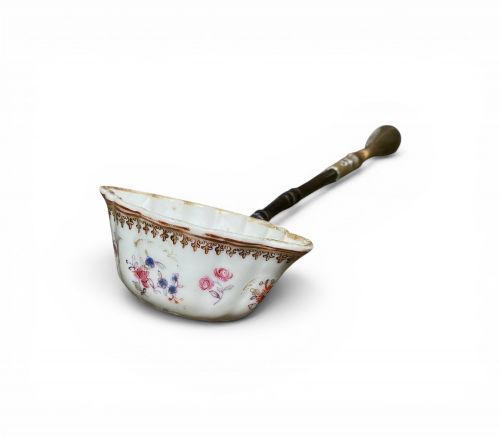


Famille Rose Export China
Famille rose export china comprises painted porcelain plates, bowls and tea wares made in China for Western markets during the eighteenth and nineteenth centuries.
Famille Rose Export China
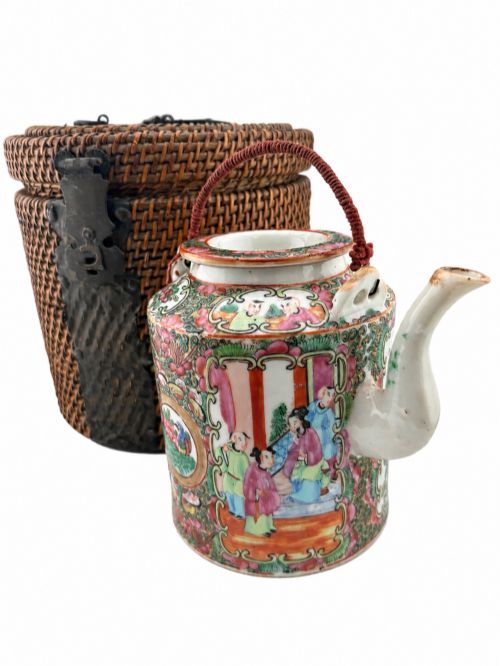
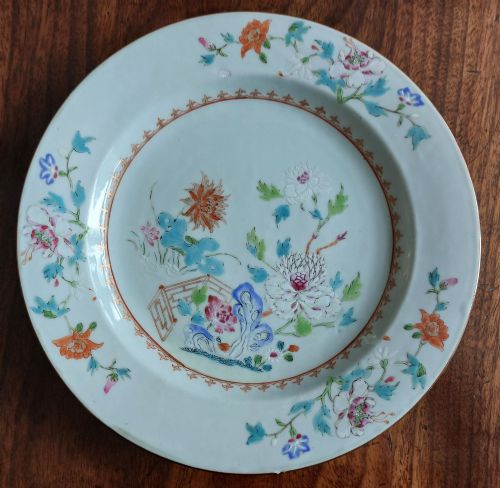
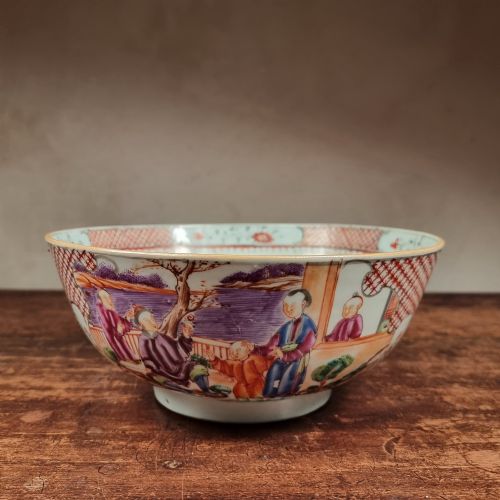
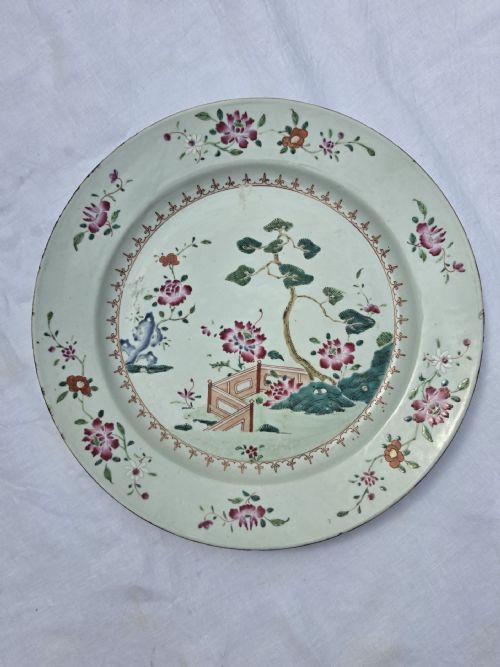
Famille rose export china centres on domestic tableware and decorative vessels produced in China during the Qing Dynasty, specifically under the Qianlong reign and into the nineteenth century. Buyers encounter forms ranging from punch bowls, chargers and plates to teapots, cream jugs, ladles and vases made for export to European and British markets.
Vessels designed for functional dining sit alongside large display bowls and matched pairs of vases or lamps. This variety reflects the changing tastes of Western patrons who commissioned bespoke armorial dinner services or purchased decorative wares from Chinese trading ports.
How they were made
Potters shaped hard-paste porcelain before applying complex overglaze enamels, incorporating distinct pink and rose colour palettes alongside gold leaf and gilt detailing. Artisans painted motifs by hand directly onto the glazed surface before secondary firing to fix the colours.
Specialised workshops produced armorial plates and dishes to order, painting detailed coats of arms with precise heraldic colours. Later nineteenth-century Cantonese production utilised dense enamel glazes and vibrant bird and floral designs covering the entire surface of bowls and vases.
Famille Rose Export China Retail Price Guide 2026
Typical asking prices for famille rose export china among the pieces listed under this phrase on Sellingantiques today, from the lower quarter to the upper quarter. They describe what is for sale here now, not the wider market.
Sparrow beak cream jugs earned their charming name from the tiny, pinched pouring lip mimicking a bird's bill.
What varies in quality
The crispness of the porcelain body and the stability of the overglaze enamels distinguish finer eighteenth-century Qianlong examples from later nineteenth-century output. Early pieces demonstrate controlled application of gold leaf and delicate enamel glazes, while heavier Canton pieces rely on bold coverage.
The Famille Rose Export China Glossary
- Famille rose
- A primary palette of opaque pink and rose enamels introduced to Chinese porcelain decoration during the Qing dynasty. This palette replaced earlier green-dominated families of colour.
- Qianlong
- The sixth emperor of the Qing dynasty, whose long reign oversaw the peak of export porcelain production. Pieces from this period often display refined painting and armorial designs.
- Armorial
- A ceramic service or individual piece painted with a specific European family coat of arms. These were commissioned through trade ports from specific heraldic sketches.
- Rose medallion
- A nineteenth-century Cantonese decorative style featuring panels filled with birds, flowers and figures arranged around a central medallion. The surface is densely packed with colourful enamel work.
- Hard-paste porcelain
- A durable ceramic material composed of kaolin and petuntse fired at high temperatures. It forms the robust white body characteristic of Chinese export wares.
Famille Rose Export China: Frequently Asked Questions
What is famille rose export china?
Famille rose export china refers to porcelain manufactured in China specifically for international markets, characterised by a palette dominated by pink and rose overglaze enamels.
These items range from functional tea services and soup plates to large punch bowls and decorative vases produced across the eighteenth and nineteenth centuries.
How do I identify a Qianlong period piece?
Qianlong period pieces date between seventeen thirty-six and seventeen ninety-five, aligning with the reign of the Qianlong emperor. They typically exhibit refined hand-painted details, thin hard-paste porcelain bodies, and sophisticated armorial or botanical designs.
Later nineteenth-century Cantonese items often feature denser, heavier enamel coverage across the entire surface of the vessel.
What were armorial plates used for?
Armorial plates formed part of bespoke dinner services ordered by wealthy European and British families who sent their family crests to China to be painted onto the porcelain.
They served both as functional tableware for elite dining and as visible displays of family lineage and social status during formal meals.