


Faience Pottery Vases
These faience pottery vases bring tin-glazed earthenware and vibrant historical revivals directly into your collection.
Faience Pottery Vases
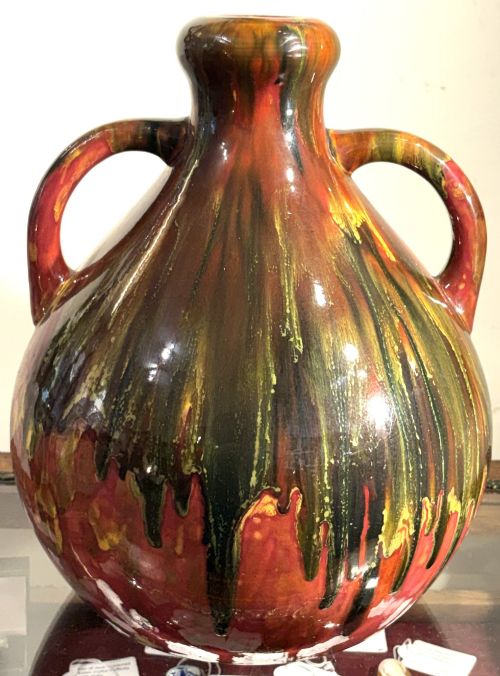
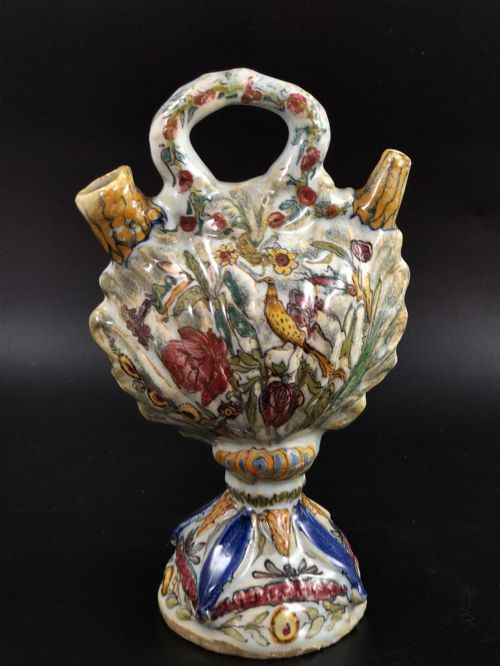
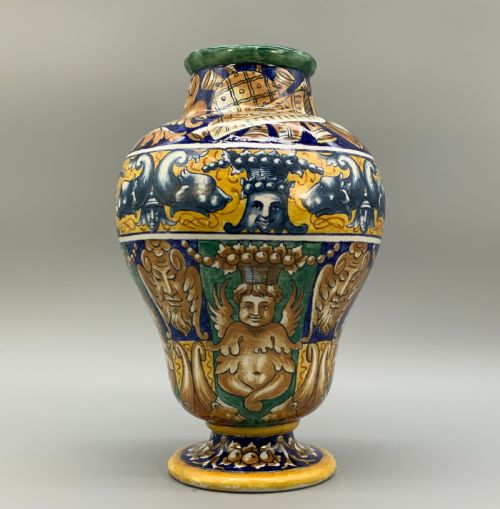
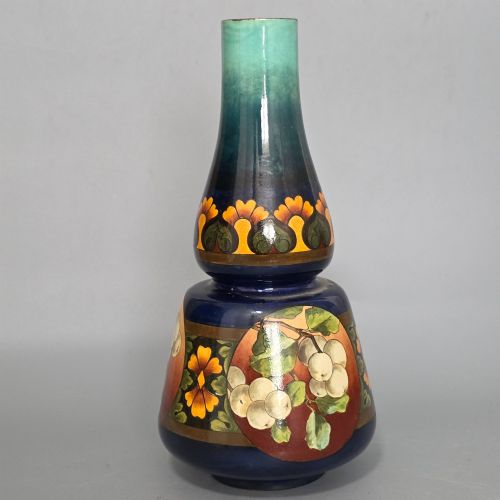
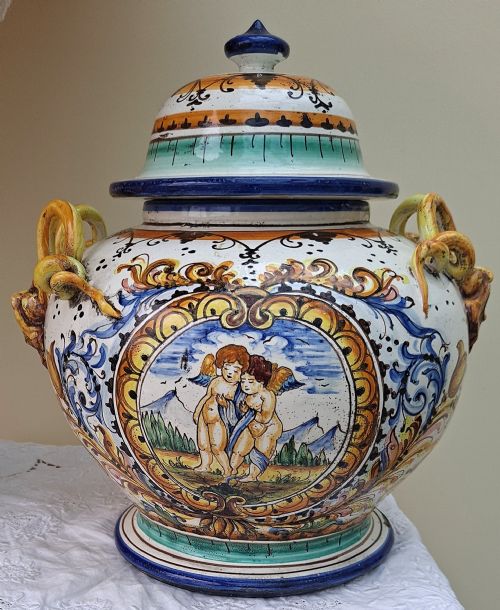
Faience pottery vases encompass tin-glazed earthenware vessels spanning from the seventeenth century through to the early twentieth century. You will encounter various vessel forms on this page, including traditional handled vases, pilgrim flasks, ewers, urns, and table lamps converted from earlier bodies.
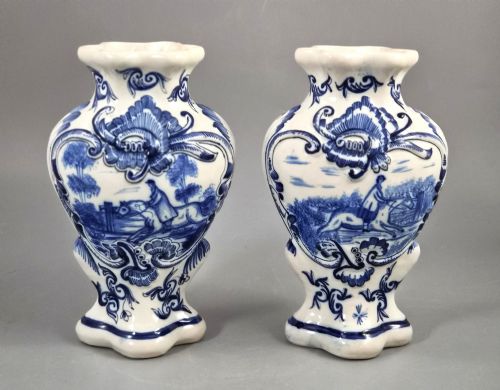
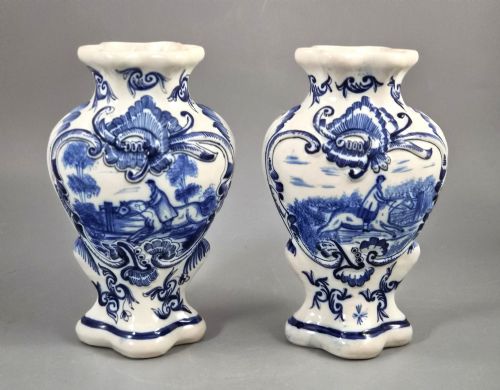
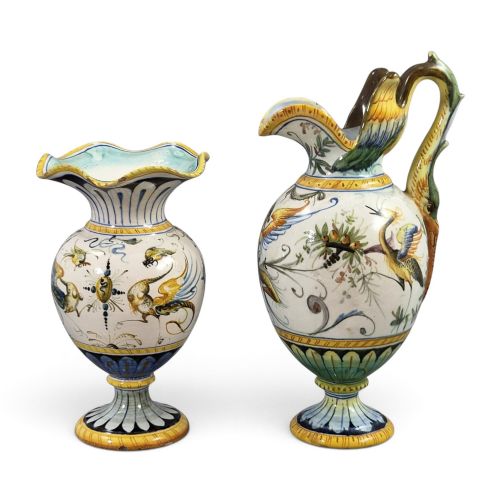
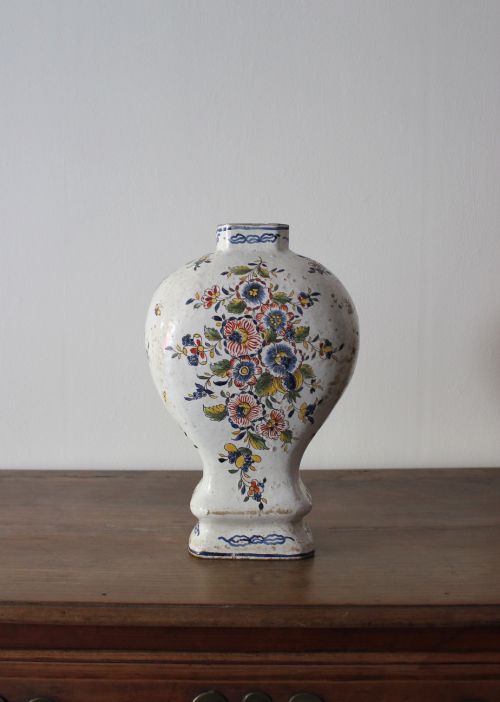
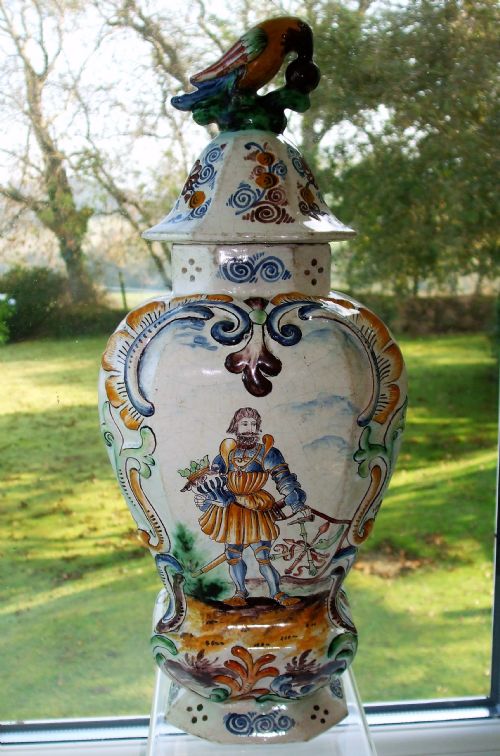
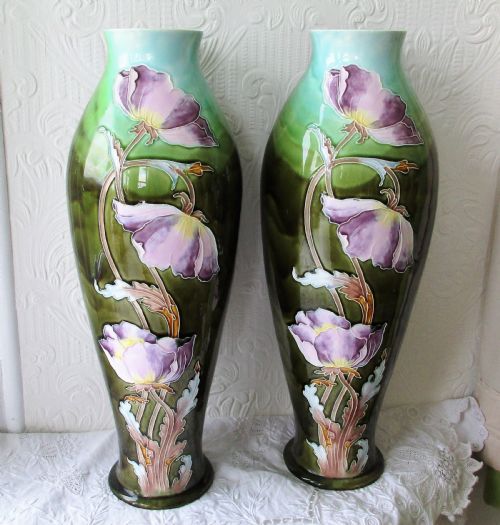
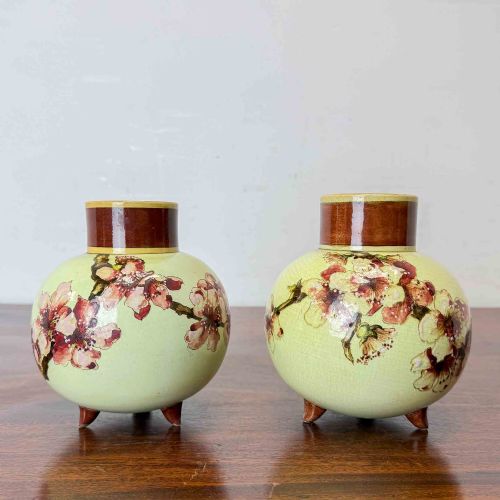
The regional variety is substantial, drawing on English, French, Dutch, and Italian traditions. Pieces range from blue and white Dutch Delftware and Chinoiserie designs to ornate Renaissance Revival and Art Nouveau productions.
How they were made
Makers utilised ceramic earthenware bodies coated in a tin glaze to provide a smooth, opaque white surface for painting. Artisans applied pigments directly onto this absorbent glaze before firing, often sealing the work with a clear top glaze.
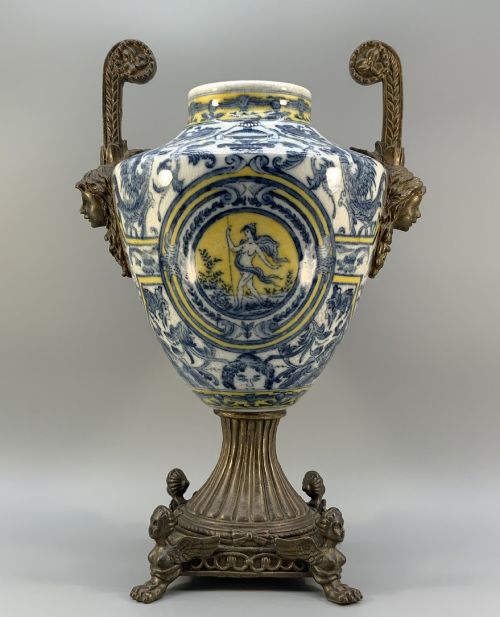
Some elaborate examples incorporate bronze mounts, while others utilise specialised techniques such as Slaters Patent texturing or Intarsio decoration. Potters shaped these pieces by hand or on the wheel, occasionally adding moulded handles, lids, and spouts.
Several pottery cats moonlight among the vases, offering a charming ceramic alternative to traditional floral displays.
What varies in quality
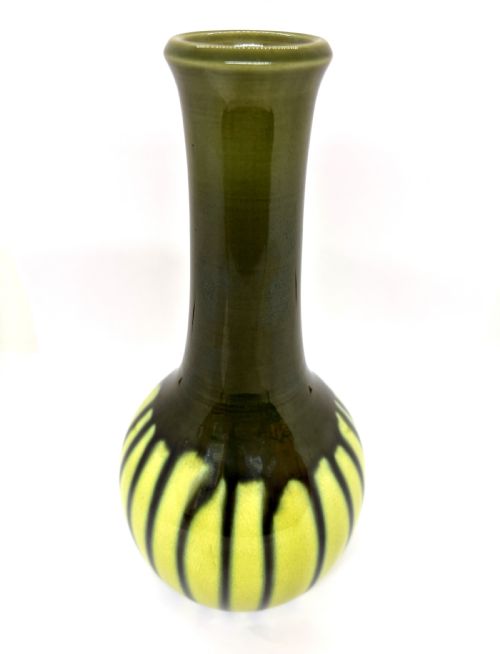
Quality rests primarily in the crispness of the hand-painted brushwork and the complexity of the glaze chemistry. Finer pieces demonstrate confident linework, rich polychrome or manganese blue pigments, and well-balanced proportions.
The distinction between standard commercial output and superior studio work also lies in the finish of secondary details, such as the precision of applied bronze mounts, the symmetry of handles, and the depth of the tin glaze.
Burmantofts·Fourmaintraux-Courquin·Cantagalli·Doulton Lambeth·Jules Vieillard·Gien
The Faience Pottery Vases Glossary
- Majolica
- A term historically applied to tin-glazed earthenware of Italian origin, often characterised by colourful pictorial or ornamental painting. It shares technical roots with faience and delftware.
- Pilgrim flask
- A flat-sided bottle with lugs for suspension, designed for travel. Ceramic versions often feature decorative scallop-shell forms and elaborate handles.
- Chinoiserie
- European decorative motifs inspired by Chinese art, popular on seventeenth and eighteenth-century blue and white pottery. These scenes typically depict imagined landscapes, birds, and figures.
- Tin glaze
- An opaque white ceramic glaze containing tin oxide. It allows potters to paint intricate designs directly onto the unfired surface.
Faience Pottery Vases: Frequently Asked Questions
How do I date a faience vase?
Dating relies on stylistic clues, glaze characteristics, and recorded workshop marks on the base. Renaissance Revival pieces often point to the nineteenth century, whereas Chinoiserie motifs commonly link to seventeenth or eighteenth-century traditions.
Examining the wear on the footrim and the composition of the ceramic body provides further context for age. Comparing pieces against documented factory timelines helps narrow the period of manufacture.
What is the difference between delft and faience?
Delft is a specific type of tin-glazed earthenware originating from the Netherlands, famous for its blue and white palette. Faience is the broader European term encompassing similar tin-glazed pottery made in France, Germany, and elsewhere.
All delftware falls under the wider umbrella of faience. Regional preferences in clay preparation and glaze pigments help distinguish Dutch work from French or Italian production.
Were these vases used for flowers?
Many forms, such as posy vases and tulip vases, were engineered specifically to display cut stems and bulbs. Others, like pilgrim flasks and decorative urns, served primarily as ornamental display pieces.
Converted table lamps and large storage vessels indicate that some pieces transitioned from functional household items to decorative focal points over time.
How should I clean my tin-glazed vase?
Dust the surface gently with a soft, dry cloth to prevent accumulation in crevices. Avoid harsh chemical cleaners or submersion in water, as old tin glaze can be porous and sensitive to moisture.
Professional conservation advice should be sought for pieces with structural repairs or delicate bronze mounts. Careful handling protects the historic painted surface from accidental abrasion.