


Facet Cut Stem Goblet
A facet cut stem goblet is a drinking vessel defined by geometric stem faceting, bringing tactile grip and brilliance to Georgian and later tables.
Facet Cut Stem Goblet
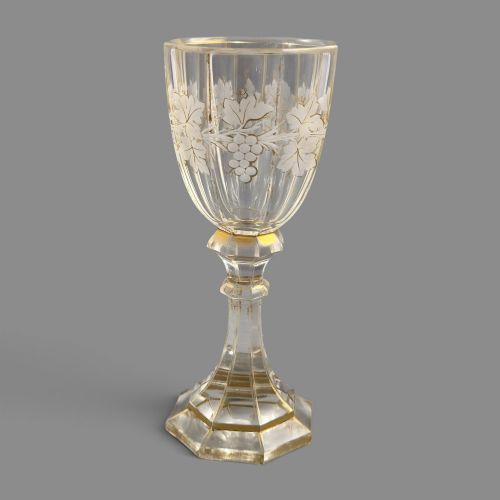
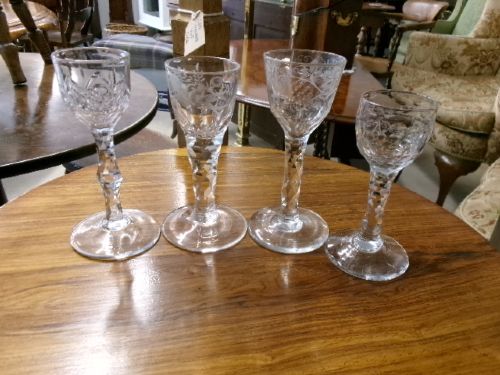
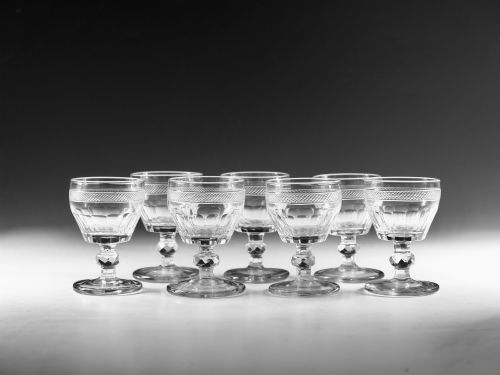
A facet cut stem goblet represents a drinking vessel designed with geometric facets carved into the stem, catching the light with every movement. When you search for a facet cut stem goblet, you encounter drinking glasses, wine glasses, and port glasses primarily originating from the eighteenth and nineteenth centuries.
The versions most frequently met on this page span Georgian English manufacture alongside nineteenth-century Bohemian and Regency examples. These range from plain drinking glasses with wide foot bases to heavily engraved vessels featuring Jacobite symbolism or gilded bowls.
How they were made
These items were shaped from lead glass, lead crystal, and clear glass using traditional blowing methods before undergoing cold-work cutting on a wheel. Artisans ground flat planes into the stems to create sharp facets, occasionally applying gilding or fine engraving to the bowls.
Makers utilised high-lead content materials to achieve the necessary refractive clarity for deep facet cutting. Decoration required steady hand-engraving techniques, visible in the delicate floral and political motifs found on eighteenth-century drinking vessels.
Listings span the eighteenth and nineteenth centuries, featuring lead crystal, cut glass, and clear glass materials shaped into wine glasses, port glasses, and goblets.
What varies in quality
The distinction between ordinary and exceptional examples rests upon the crispness of the stem faceting and the balance of the metal. Sharp, precisely ground edges on the stem reflect light cleanly, whereas softer facets indicate rushed or worn wheel-work.
Proportion and clarity further separate standard glassware from superior pieces. Fine eighteenth-century drinking glasses maintain a harmonious weight between the heavy foot base, the faceted stem, and the thin-walled bowl.
James Giles·Moser Bohemian
The Facet Cut Stem Goblet Glossary
- Facet cut stem
- A stem shaped by grinding flat geometric planes into the glass surface. This technique enhances both the grip and the optical sparkle of the vessel.
- Lead glass
- A heavy, highly refractive glass containing lead oxide. It permits deeper cutting and a clearer ring when struck compared to standard soda glass.
- Jacobite engraving
- Decorative motifs associated with the secret societies supporting the exiled House of Stuart. These often include roses, buds, and oak leaves.
- Foot base
- The bottom supporting platform of a drinking vessel. Georgian examples frequently feature a wide profile to ensure stability.
Facet Cut Stem Goblet: Frequently Asked Questions
What is a facet cut stem goblet?
A facet cut stem goblet is an antique drinking vessel featuring geometric flat planes ground into its stem. These cuts were introduced in the eighteenth century to increase brilliance and improve grip.
Such vessels were utilised for wine, port, and sherry across Georgian and Regency dining tables. Their distinguishing feature remains the light-catching stem beneath an engraved or plain bowl.
How do I date an antique goblet?
Dating relies on examining the weight of the metal, the form of the bowl, and the profile of the foot. Eighteenth-century pieces often display distinct facet patterns and darker metal tones compared to later nineteenth-century productions.
Tool marks left by the wheel during the cutting process also help determine the period. Comparing the style of engraving to documented examples narrows down the decade of manufacture.
Were these glasses used daily?
Many of these vessels served functional roles during formal dining and social gatherings in the Georgian and Regency periods. They held strong wines like port and sherry rather than everyday water.
Over time, changing dining fashions moved these decorative items from active service to display cabinets. Their survival in good condition reflects careful handling by past owners.
What does Jacobite engraving mean?
Jacobite engraving refers to symbolic imagery used by secret societies supporting the restoration of the Stuart monarchy. Glasses bore hidden political messages intended for loyal toasts.
Common symbols include the six-petalled rose, closed buds representing future heirs, and the oak tree. These decorated vessels formed part of clandestine drinking rituals.