


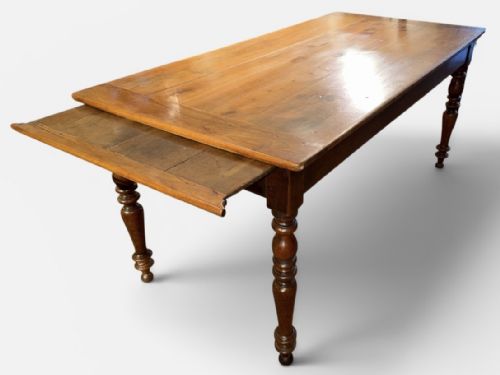


Extending Farmhouse Table
An extending farmhouse table brings daily utility and generous proportion to a room, offering clever mechanisms to expand your dining space when guests arrive.
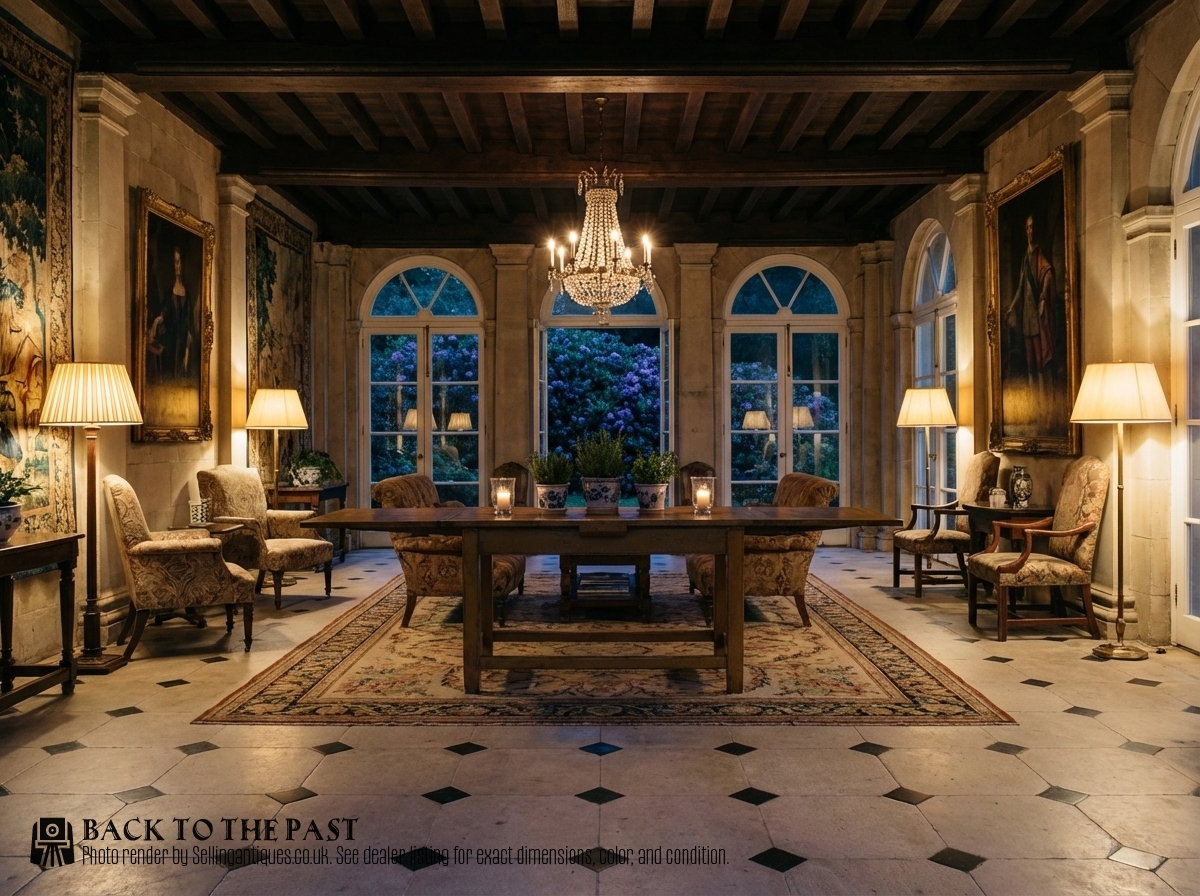
Extending Farmhouse Table
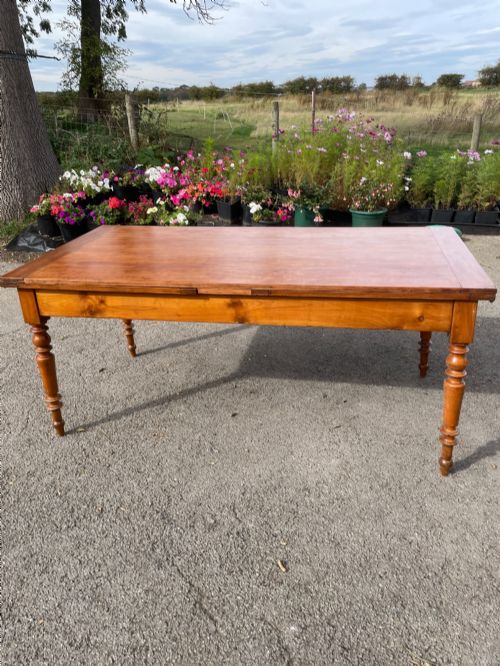
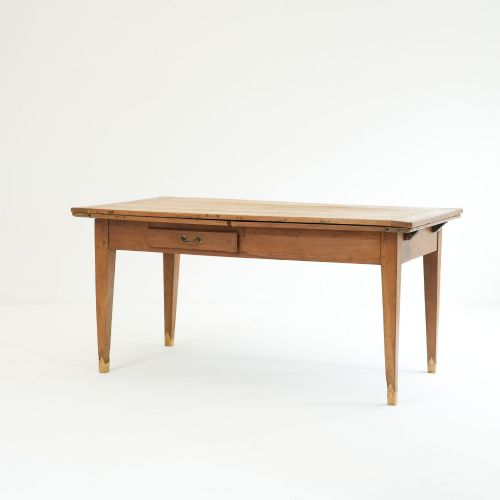
An extending farmhouse table provides a robust surface designed for communal dining, adapting from compact daily use to generous lengths through built-in leaves or drop-side mechanisms. These tables appear most frequently in oak, pine, and cherry wood across the nineteenth century, reflecting practical domestic origins in regional workshops.
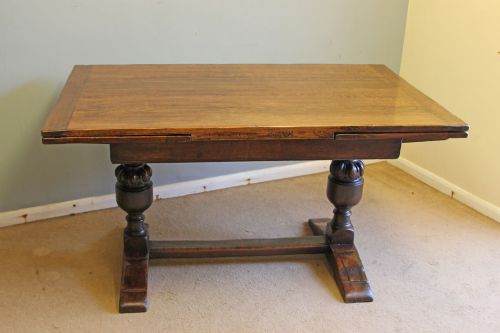
The selection ranges from French provincial draw-leaf designs in fruitwood to sturdy English oak refectory tables built with double extending mechanisms. Period examples span from seventeenth-century Basque styles to twentieth-century oak variations, maintaining utilitarian roots while accommodating modern hosting needs.

Materials and construction
Makers utilised solid hardwoods like oak, cherry, and fruitwood alongside pine, building substantial frames supported by peg joints, stretcher bases, and sturdy legs. Timber selection dictated the daily resilience of the piece, with dense grain handling generations of kitchen activity and heavy use.
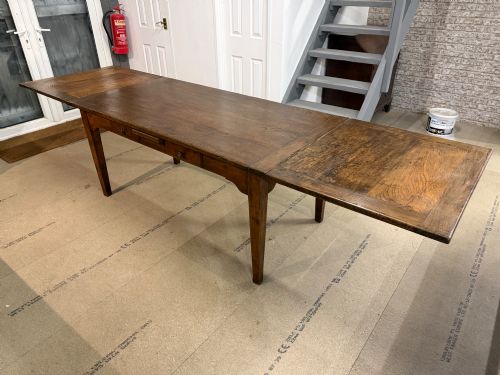
Extending systems rely on sliding draw leaves, drop-leaves, or internal leaves that glide smoothly on wooden runners, supplemented by brass hardware where required for movement. These ingenious mechanisms allow the central top to part cleanly while support rails extend from beneath.
Extending Farmhouse Table Retail Price Guide 2026
Typical asking prices for extending farmhouse table among the pieces listed under this phrase on Sellingantiques today, from the lower quarter to the upper quarter. They describe what is for sale here now, not the wider market.
Craft and proportion
Quality rests in the seamless operation of the extension mechanism and the integrity of the structural timber, ensuring the top remains flat and stable when fully opened. Superior pieces display thoughtful timber matching across the leaves and base, alongside tight joinery that resists sagging under weight.
The refinement of the legs, edge profiling, and surface patina separate standard workshop production from finer regional examples. A well-preserved original scrubbed or polished finish reveals the natural grain without masking the honest wear of past decades.
The Extending Farmhouse Table Glossary
- Draw leaf
- A table featuring two concealed leaves stored beneath the main top that pull out from each end to extend the surface. This mechanism keeps the main surface stable while adding length.
- Refectory
- A long, narrow dining table traditionally used in communal dining halls and characterised by strong stretcher rails running between the legs. It provides exceptional legroom and stability.
- Fruitwood
- Timber sourced from fruit-bearing trees such as cherry, apple, and pear, valued for its fine grain and warm tone. Cabinet makers frequently utilised it in regional French furniture.
- Bread slide
- A pull-out wooden board integrated beneath the tabletop, historically used for cooling bread or expanding workspace. It adds a functional touch found in regional kitchen tables.
Extending Farmhouse Table: Frequently Asked Questions
How do I operate the extending mechanism?
Most antique extending tables rely on draw leaves that slide out from underneath the main top, or centre leaves that drop into place once the frame parts. Pull gently on the ends to test the movement of the wooden runners.
Keep the tracks clean and lightly waxed to ensure smooth operation without forcing the timber components.
Are these tables suitable for daily kitchen use?
These pieces were originally built for heavy daily domestic labour, making them exceptionally well-suited for modern family kitchens and dining rooms. Solid timber construction handles routine meals and gatherings with ease.
Use coasters and placemats to protect historic polished surfaces from moisture and heat while maintaining the natural patina.
How can I tell the period of the table?
Examine the timber species, joinery methods beneath the top, and the style of the legs, noting that nineteenth-century examples often feature fruitwood or pine, while earlier pieces lean towards heavy oak. Hand-cut joints and tool marks offer clues to the workshop era.
Compare the hardware, such as brass fittings, against known regional construction traits from the nineteenth and early twentieth centuries.
What is the difference between refectory and draw-leaf tables?
Refectory tables use a long, fixed top supported by stretchers, whereas draw-leaf tables incorporate moving sections that slide out to increase the surface area. Both designs prioritise stability and dining capacity.
Choose a draw-leaf version if floor space is at a premium and you need adjustable length for entertaining.