





Extending Dining Room Table
An extending dining room table gathers people around a shared meal and adapts its span for every scale of company.
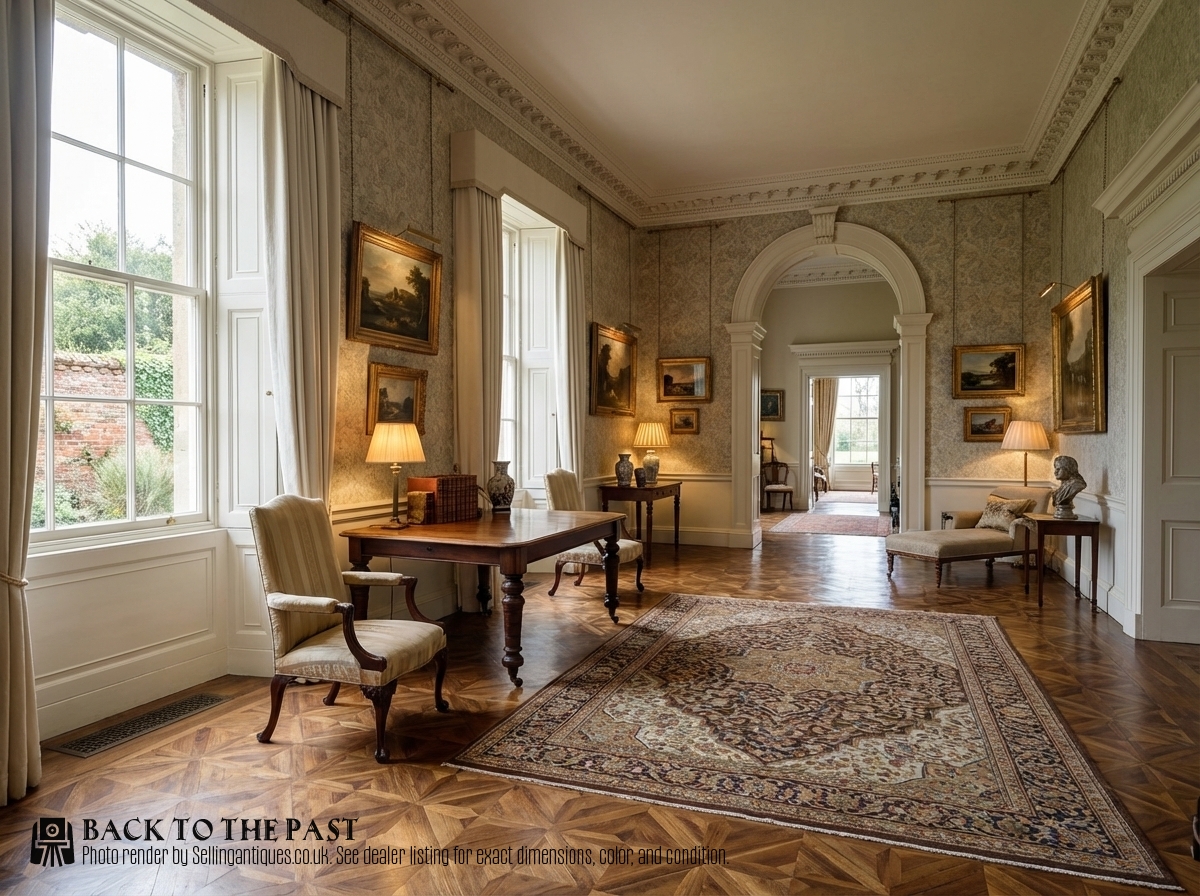
Extending Dining Room Table
An extending dining room table provides the surface for large gatherings and everyday meals alike, shifting in length as hosts require. The versions met most often on this page date from the nineteenth century, including Victorian, Regency, and William IV examples.
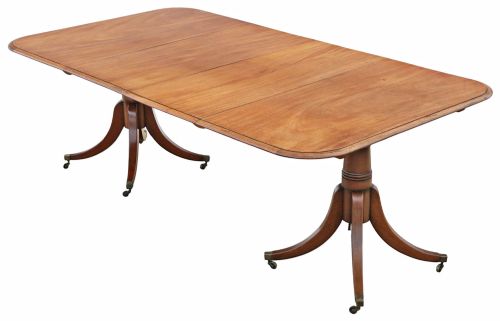
Makers built these pieces in formats ranging from twin and triple pedestals to draw-leaf designs and large boardroom scales. Timber choices centre on mahogany and oak, occasionally supplemented by walnut or satinwood inlay.
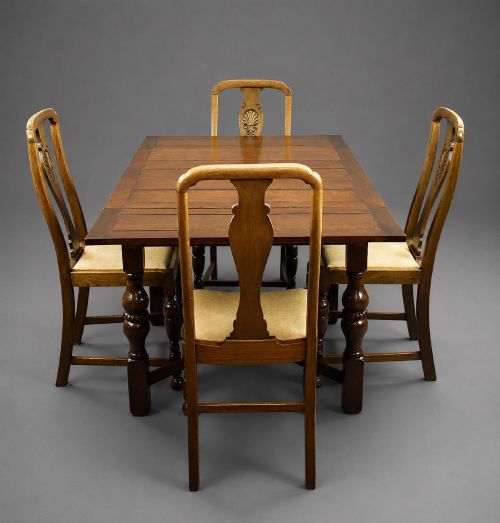
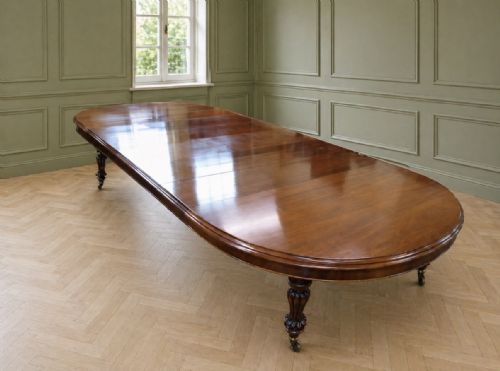
Beyond standalone tables, buyers encounter complete dining sets accompanied by chairs, or expansive boardroom tables designed to seat upwards of twenty people.
What varies in quality
The sophistication of the extending mechanism and the stability of the central pillars determine the tier of a piece. Well-engineered runners and solid pedestal bases ensure the table remains level when fully extended with multiple leaves.
The selection of timber grain, timber matching across added leaves, and the finesse of secondary details such as satinwood inlay or turned legs elevate finer workshops above standard production.
Extending Dining Room Table Retail Price Guide 2026
Typical asking prices for extending dining room table among the pieces listed under this phrase on Sellingantiques today, from the lower quarter to the upper quarter. They describe what is for sale here now, not the wider market.
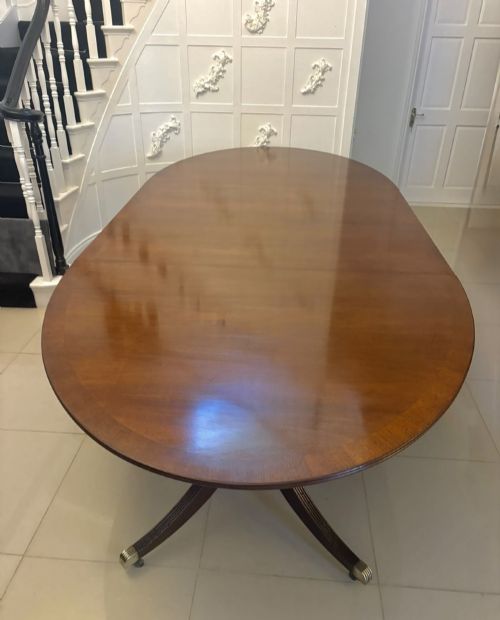
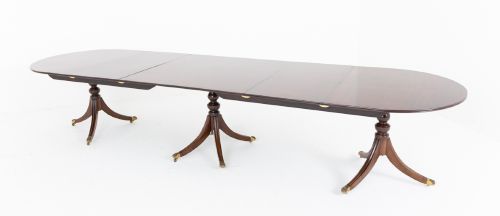
Pedestal formats range from single pillar supports to triple pedestal arrangements designed for extended boardroom tables.
Whytock and Reid·Maple and Co·Gillows
The Extending Dining Room Table Glossary
- Pedestal
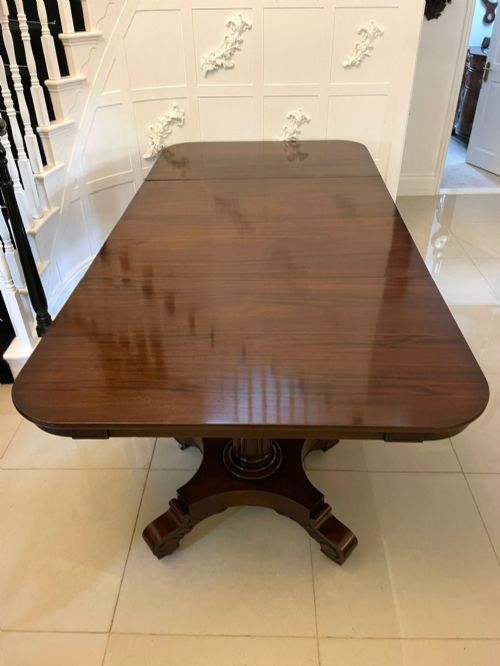
- A central column supporting the table top, often dividing into three or four carved legs. Multiple pedestals are utilised on longer tables to distribute weight evenly.
- Draw-leaf
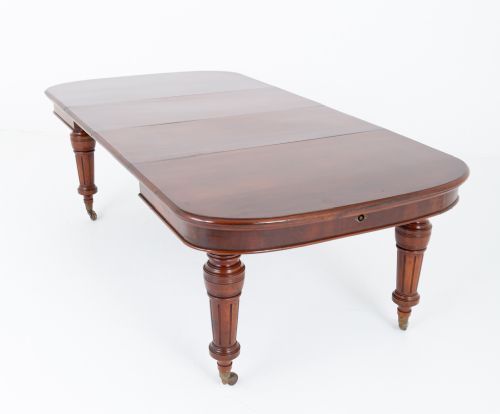
- A table style where auxiliary leaves slide out from beneath the main top, extending the surface area without requiring separate loose boards stored elsewhere.
- Satinwood inlay
- A contrasting light wood veneer embedded into darker primary timber such as mahogany to create decorative borders and geometric patterns.
- Leaf
- A removable or sliding section of timber inserted into the centre of the table to increase its overall seating capacity.
- Boardroom table
- An exceptionally large format built to accommodate numerous diners or meetings, frequently stretching past twelve feet in length.
Extending Dining Room Table: Frequently Asked Questions
How do you extend the table?
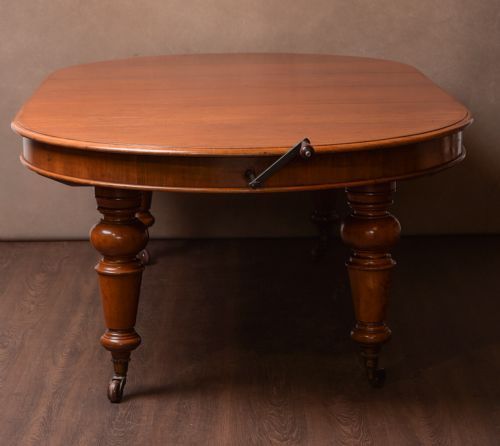
Most nineteenth-century examples rely on a central runner system where the two halves pull apart to receive loose leaves. Additional pedestals or swing legs are then positioned underneath to support the added weight.
Draw-leaf versions operate differently by sliding stored leaves out from underneath the main surface. Both methods allow the table to contract for daily dining and expand for guests.
Where were these tables made?
These tables originated in British workshops, ranging from regional cabinetmakers to prominent firms in London and Lancaster. Many pieces reflect the dominant styles of the Georgian, Regency, and Victorian periods.
Maker attributions occasionally point towards established workshops like Gillows, known for robust engineering and refined timber selection.
How many people will it seat?
Seating capacity varies according to the length of the table and the number of available leaves. Standard residential tables accommodate eight to ten diners comfortably.
Larger boardroom examples stretch up to eighteen or twenty feet, providing ample room for sixteen to twenty-six people depending on the configuration.
How do you care for the timber surface?
Polished mahogany and oak surfaces benefit from regular dusting with a soft cloth and occasional applications of beeswax to nourish the wood. Avoiding direct sunlight and excessive heat protects the polish and prevents timber from warping.
Using felt mats beneath hot dishes and serving items preserves the finish against moisture and thermal shock.