






Extending Book Trough
These extending book trough pieces are clever adjustable desk accessories that expand to hold a growing shelf of volumes.

Extending Book Trough
When you search for an extending book trough, you encounter clever sliding mechanisms designed to keep volumes upright on a desk or table. These pieces adjust smoothly to fit a changing row of books.
You meet various forms on this page, including book slides, book rests, and book troughs from the Victorian, Edwardian, and Regency periods. The walnut and oak versions are most common.
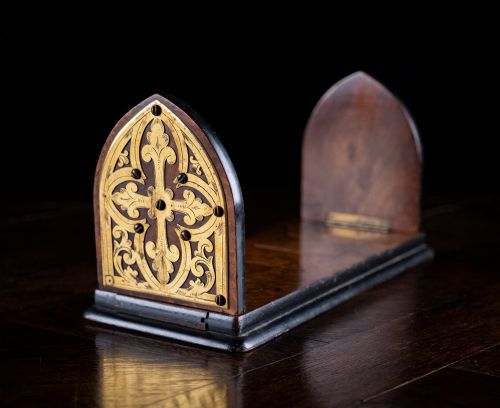
Makers produced these for home libraries and studies, using woods like mahogany, rosewood, and ebonised wood alongside brass mounts. The designs range from simple wooden slides to Gothic revival and Anglo-Indian carved teak pieces.
How they were made
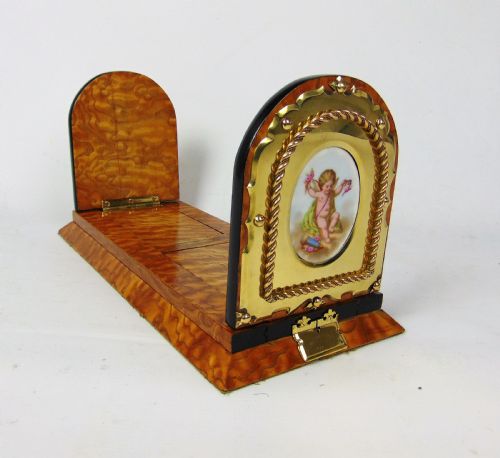
Craftsmen used hardwoods such as walnut, oak, mahogany, and coromandel, often pairing them with brass mounts and hinges. Some examples feature ebonised wood, maple, olive wood, or carved teak.
Specialist techniques include Tunbridge Ware and Pietra Dura inlay, creating decorative panels set into the wooden frames. The sliding mechanisms rely on fitted wooden channels and brass hardware to extend smoothly.
Extending Book Trough Retail Price Guide 2026
Typical asking prices for extending book trough among the pieces listed under this phrase on Sellingantiques today, from the lower quarter to the upper quarter. They describe what is for sale here now, not the wider market.
The listings show extending book troughs and slides in Victorian, Edwardian, and Regency styles, utilising walnut, oak, brass, and bone.
What varies in quality
The precision of the sliding action separates standard items from superior pieces. Smooth movement without binding indicates careful initial joinery.
Material choice and decorative detail dictate the tier of a piece. Simple oak and walnut slides sit alongside elaborate examples featuring Pietra Dura inlay, Tunbridge Ware, or brass mounts.
Tiffany & Co
The Extending Book Trough Glossary
- Extending book trough
- An adjustable desk accessory that lengthens or shortens to contain a variable number of volumes.
- Pietra Dura
- The decorative technique of using cut and fitted small pieces of coloured stones to create pictorial designs on the wood surface.
- Tunbridge Ware
- A form of woodworking originating in Kent, characterised by intricate mosaic patterns made from many small pieces of naturally coloured wood.
- Gothic Revival
- A nineteenth-century architectural and decorative style drawing inspiration from medieval forms, often seen in pointed arches and heavy brass mounts.
- Coromandel
- A dense, heavy timber with dark grain used for luxury desk accessories and small furniture during the nineteenth century.
Extending Book Trough: Frequently Asked Questions
Where were extending book troughs used?
These pieces sat upon desks, library tables, and tabletops in Victorian and Edwardian homes. They kept reference books and favourite volumes close to hand in the study.
Desk accessories of this form also served as display stands for decorative books in the main living spaces of the house.
How do I date a book trough?
Dating relies on the timber used, the style of decoration, and the manufacturing techniques. Walnut and brass-mounted pieces often point to the Victorian era, while oak examples frequently date to the Edwardian period or later.
Decorative details like Pietra Dura or Tunbridge Ware inlay also help assign pieces to specific nineteenth-century decades.
What woods appear most often?
Walnut and oak form the basis for many surviving pieces. These durable timbers suited the daily adjustment of the sliding book holders.
Makers also utilised mahogany, rosewood, coromandel, and ebonised wood for more decorative or formal library settings.