
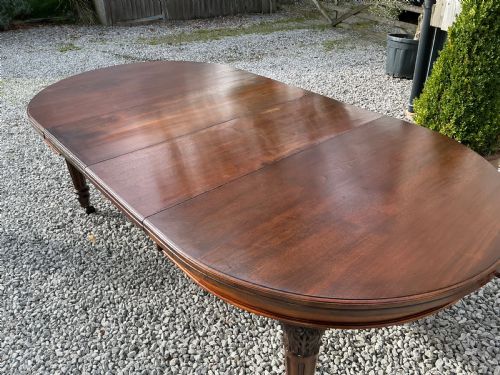

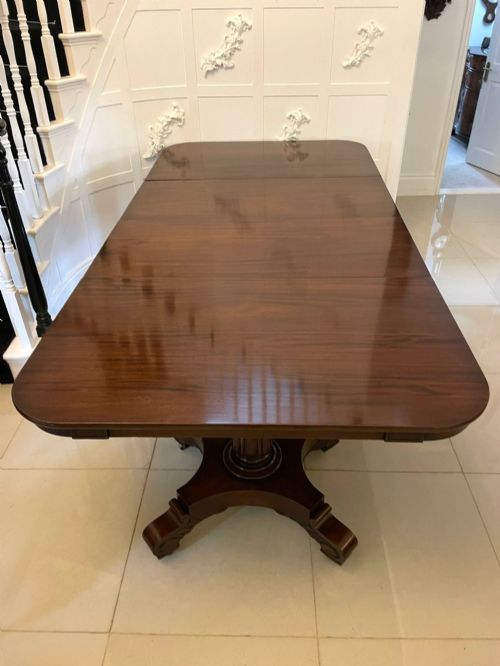
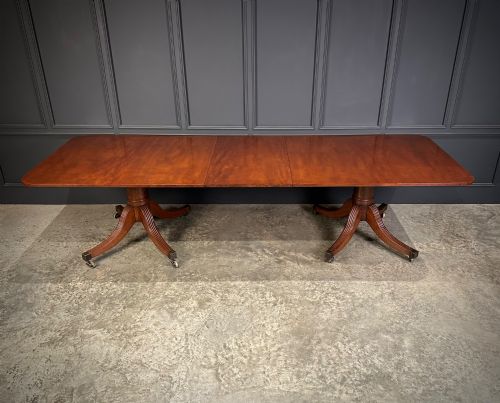
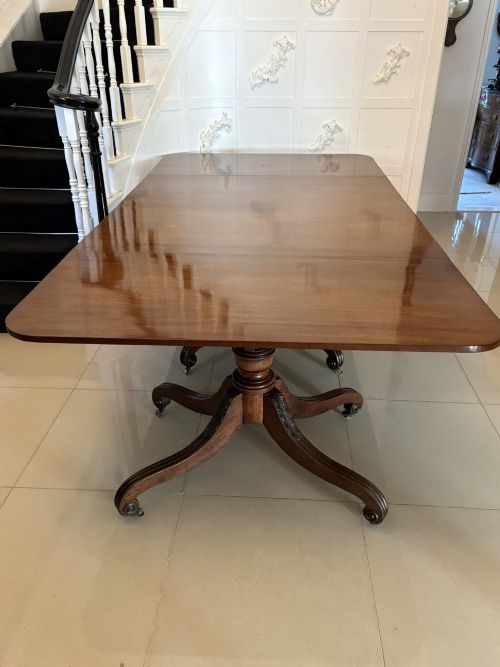

Extendable Conference Table
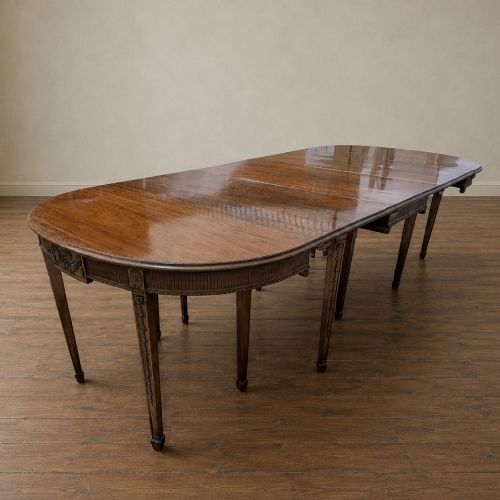
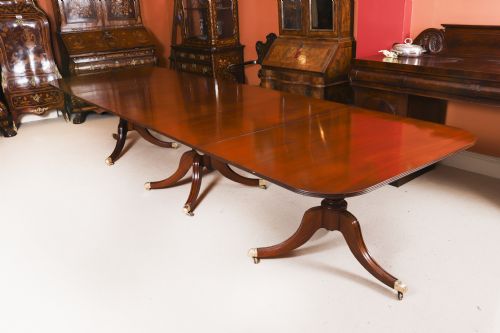
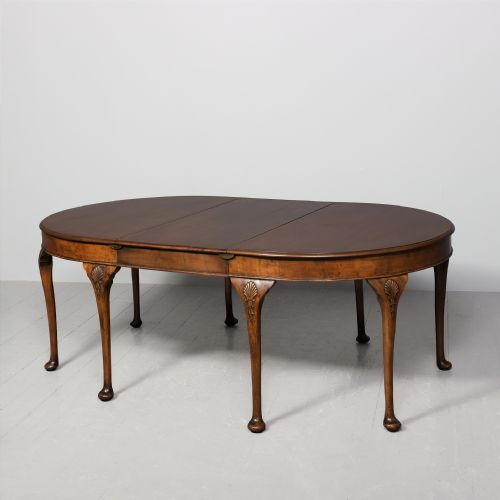
These extendable conference tables combine solid period timbers with practical folding mechanisms to seat large gatherings.
Extendable Conference Table
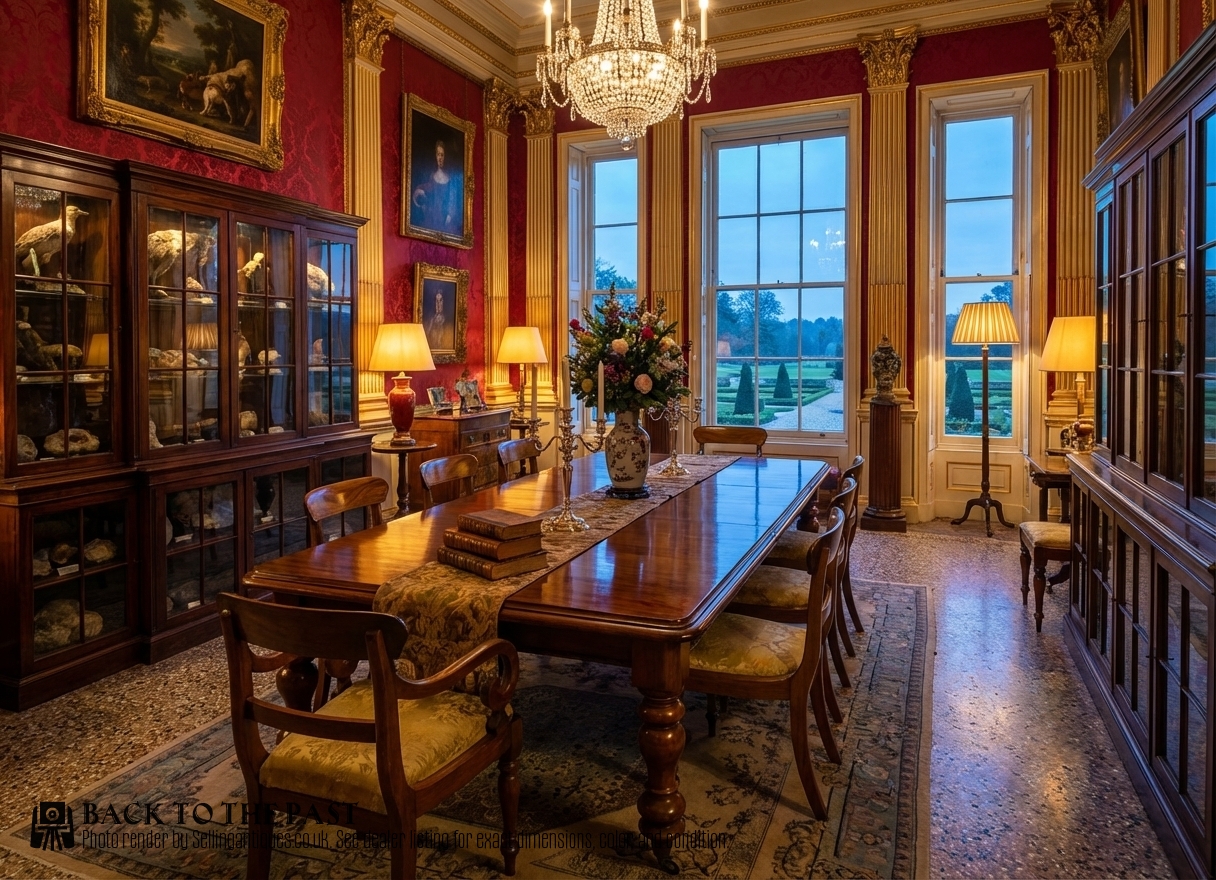
When searching for an extendable conference table, buyers examine large timber dining formats adapted from Georgian, Regency, and Victorian workshops to accommodate expansive seating requirements.
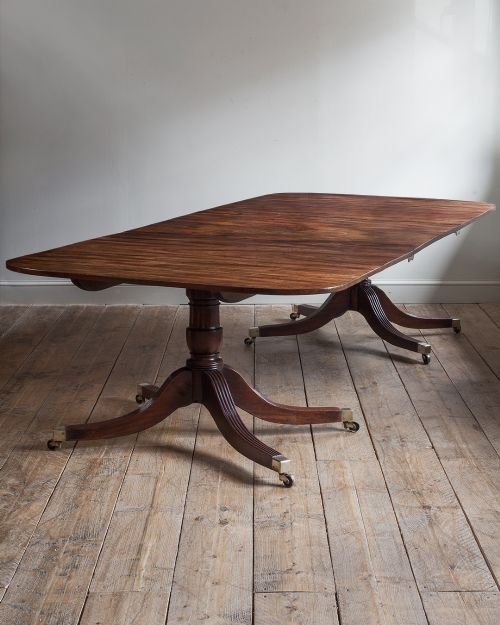
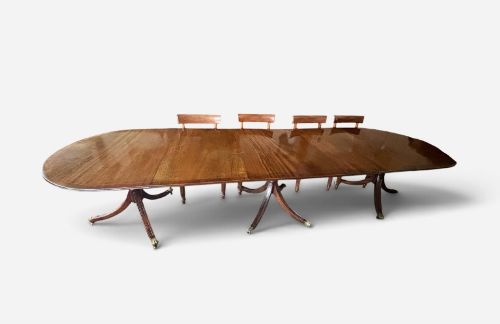
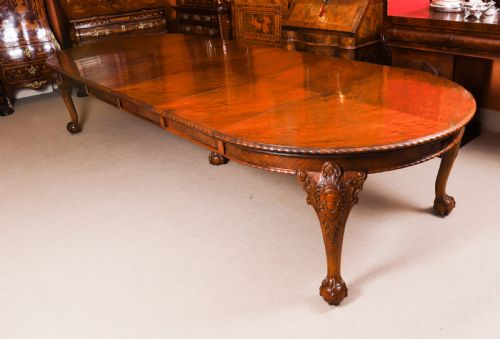
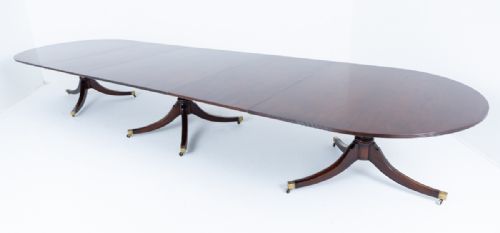
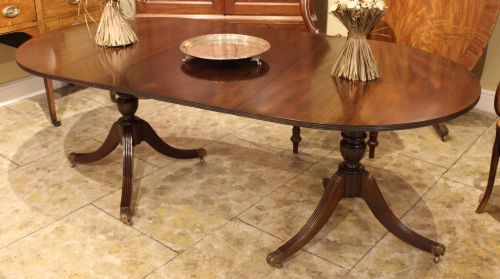
The versions most frequently met on this page rely on mahogany, walnut, or oak construction, often utilising multiple pedestals or removable leaves to alter the length.
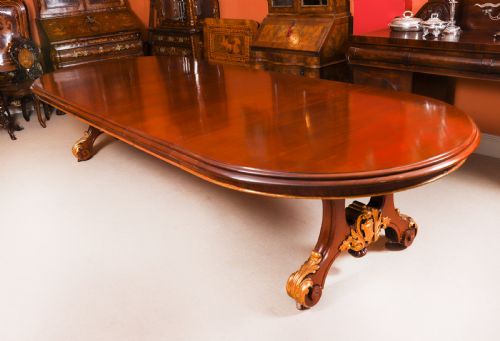
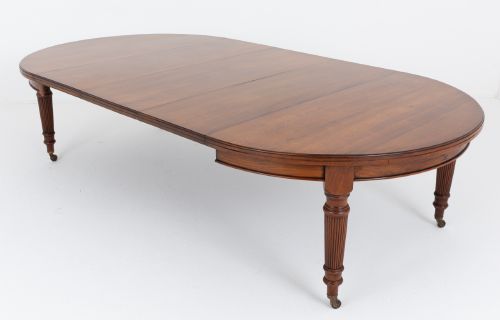
These pieces bridge domestic dining furniture and commercial boardroom use, providing substantial surface areas supported by pillars, carved legs, or D-end configurations.
Materials and Construction Methods
Cabinet makers relied predominantly on figured mahogany, Cuban mahogany, and walnut, selecting timber with strong grain patterns for the main top boards and D-ends.
Internal mechanisms frequently employed brass winding systems alongside timber runners to support added leaves smoothly without sagging across long spans.
Listings feature periods spanning from George III and Regency through to Edwardian and early twentieth-century revivals.
Distinctions in Quality
Superior examples separate themselves through the selection of premium timber veneers, such as flame mahogany or burr walnut, matched symmetrically across the leaves and central sections.
Higher grade tables maintain structural integrity through heavy, stable pedestal bases and precise mechanical joints that allow smooth operation when extending the surface for large groups.
Wylie & Lochead·Maple & Co·Whytock & Reid·Gillows
The Extendable Conference Table Glossary
- Pedestal
- A central column support resting on splayed legs, commonly found in multi-pillar formats. This design allows maximum legroom for seated guests.
- Wind-Out
- A mechanical mechanism operated by a handle that expands the frame to receive additional leaves. It ensures even separation across heavy timber tops.
- D-End
- A semi-circular table end section resembling the letter D. These sections detach or fold to form the rounded ends of large modular tables.
- Flame Mahogany
- Timber featuring a distinct, flame-like grain pattern caused by the intersection of branches with the main trunk. It was highly prized by Georgian and Regency cabinet makers.
Extendable Conference Table: Frequently Asked Questions
How do wind-out mechanisms operate?
Wind-out mechanisms utilise an internal metal screw rod turned by a detachable crank handle. This action separates the table halves evenly to insert extra leaves.
Maintenance involves keeping the wooden runners and metal screw threads lightly lubricated to ensure smooth operation over long spans.
What woods were used?
Cabinet makers relied heavily on mahogany, including Cuban and flame varieties, alongside walnut, burr walnut, and oak. These dense hardwoods provided the necessary structural strength for long tabletops.
Secondary timbers such as pine or mahogany were utilised for internal framing and under-structures.
How many people can these seat?
Capacities range from ten guests up to twenty-four depending on the number of leaves inserted. Triple and quadruple pedestal formats provide the length needed for large gatherings.
Tables can be shortened for daily use by removing intermediate leaves and closing the central pedestals together.
How do I identify a Regency table?
Regency pieces often display reeded edges, brass inlays, and robust pedestal bases fitted with brass paw castors. The timber typically exhibits deep reddish-brown tones with prominent grain figures.
Construction details include hand-cut dovetails and traditional timber shrinkage allowances across the underside.