
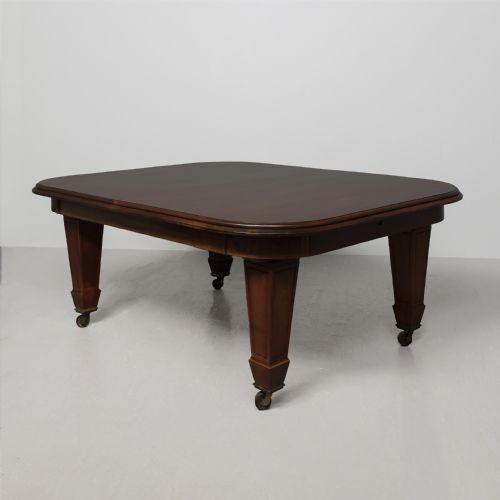
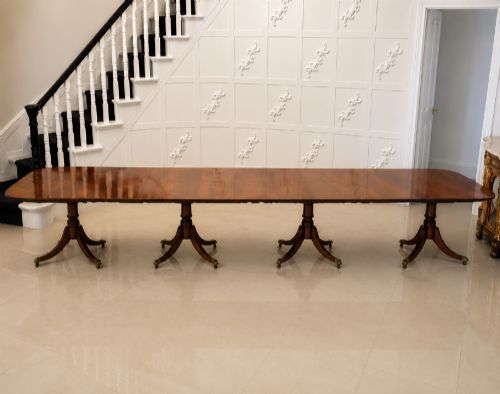
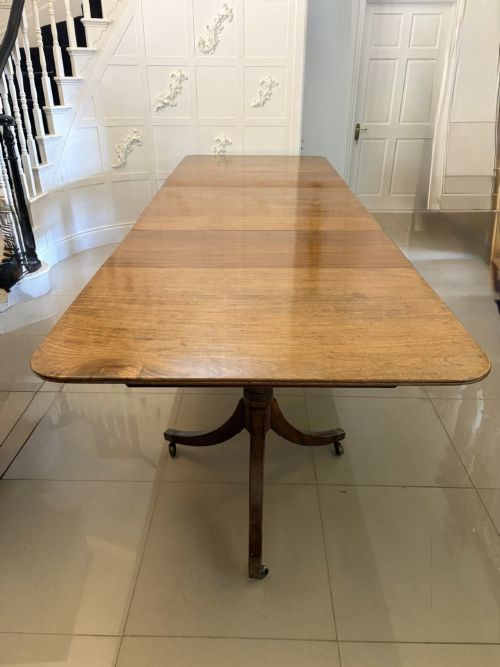


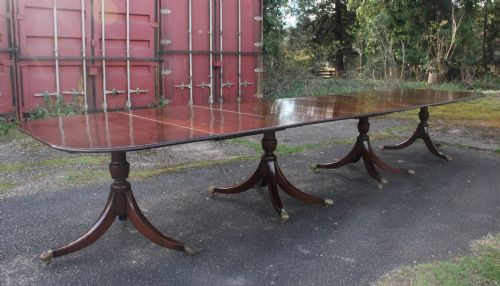
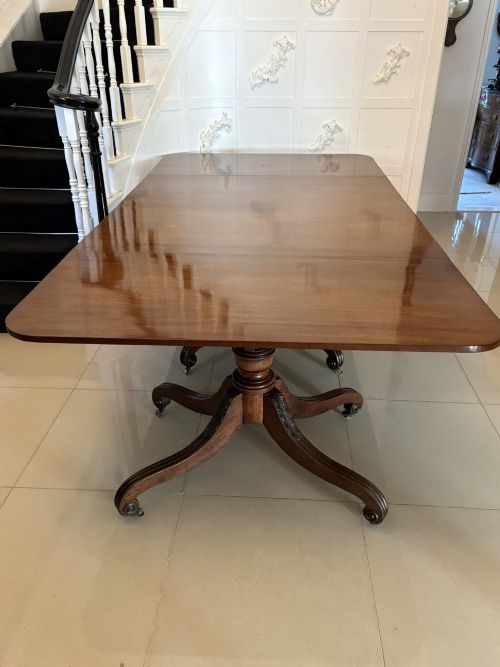
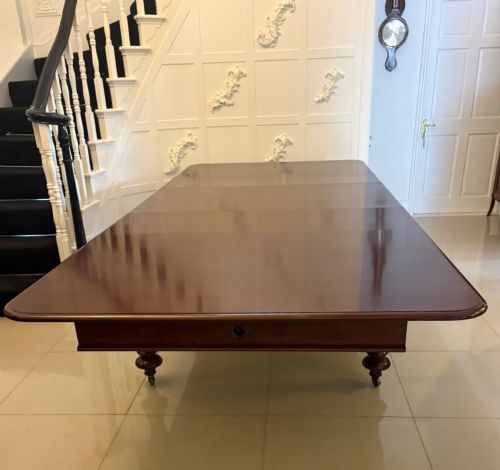
Mahogany Banqueting Table
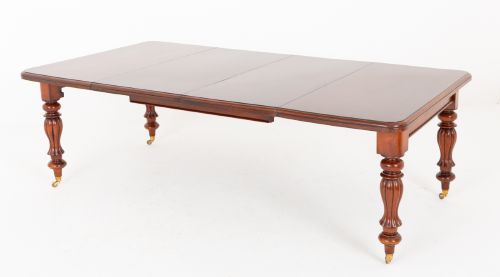
A mahogany banqueting table provides vast timber surfaces built to seat large gatherings through multiple pedestals and removable leaves.
Mahogany Banqueting Table
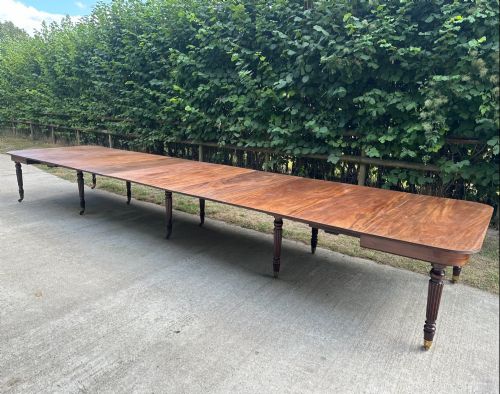
A mahogany banqueting table serves grand dining spaces through extensive length, often scaling up to seat twenty or more guests across multiple pedestals. These pieces originate predominantly from the Georgian, Regency, and Victorian eras, alongside later revival interpretations.
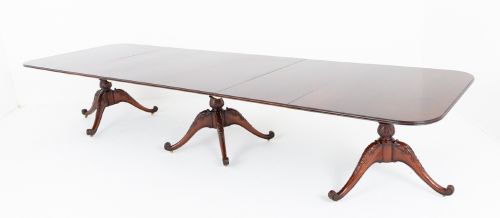
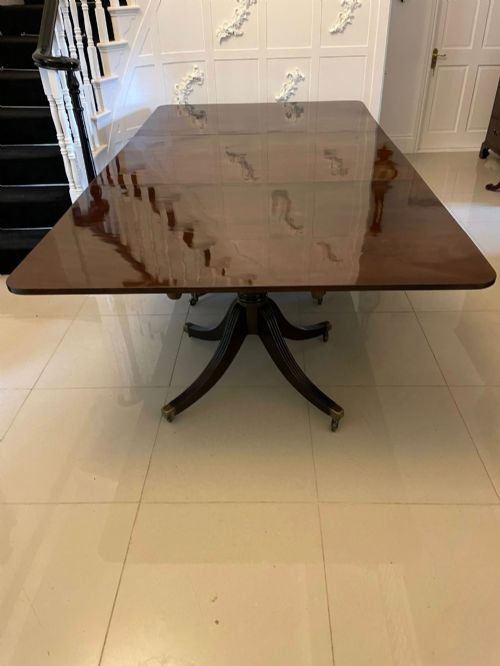
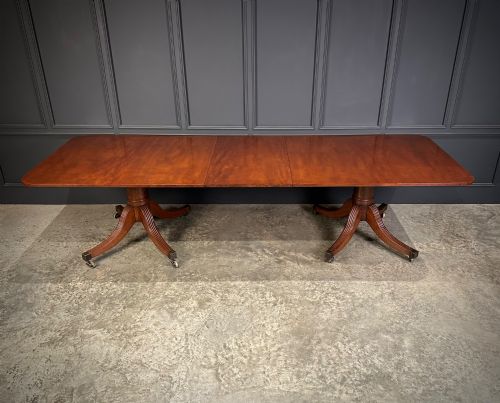
The format relies on multi-pillar configurations, typically featuring twin, triple, or four-pedestal bases combined with drop-in leaves. Buyers encounter examples designed to expand significantly for large feasts or contract for daily use.
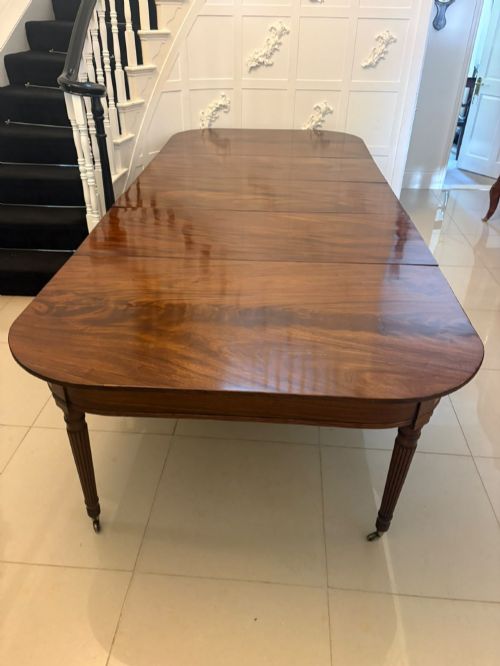
Makers constructed these dining surfaces using dense tropical timbers, incorporating D-ends and reeded legs to balance structural strength with classical proportion.
How they were made
Cabinet makers built these tables using solid and figured mahogany timber, frequently utilising Cuban mahogany for its rich grain patterns and deep colour. Brass components, including castors and connecting clips, support the movement and stability of extending sections.
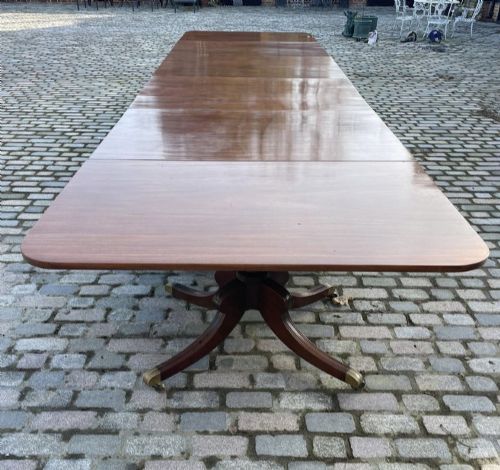
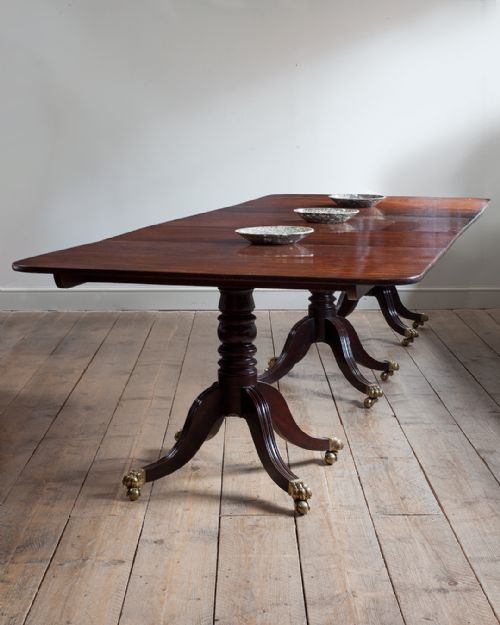
The construction employs heavy pedestals turned from solid stock, mounted on splayed legs that terminate in brass toe caps. Mechanics involve wind-out systems or drop-in leaves that allow the timber top to expand evenly across multiple pillars.
Some tables stretch long enough to require a marathon runner just to pass the salt down to the other end.
What varies in quality
The selection of timber grain dictates the visual weight of the surface, with highly figured mahogany commanding superior status over plain stock. The depth of the leaf count and the precision of the pillar turning also separate standard commercial pieces from workshop masterpieces.
Proportion and engineering define the upper tier, where weighty tables rest securely upon balanced pedestals without sagging across extended lengths. Maker attribution, such as work originating from Gillows, elevates the standing of an individual piece.
Gillows·William and Gibton·Wylie and Lochead·Whytock and Reid·Robert Adam
The Mahogany Banqueting Table Glossary
- Pedestal base
- A central column support resting on splayed legs rather than four corner legs. This construction allows diners more legroom around large dining surfaces.
- D-end
- A semi-circular table end resembling the letter D. These sections detach or fold to form smaller console tables when the full banqueting length is not required.
- Reeded legs
- Cylindrical table legs carved with parallel concave grooves running vertically. This decorative treatment appears frequently on Regency and Victorian furniture.
- Wind-out mechanism
- A mechanical screw system operated by a crank handle that separates the table halves to insert extension leaves. It maintains even tension across heavy timber tops.
- Figured mahogany
- Timber cut to reveal distinct grain patterns such as flame, curl, or fiddleback. Cabinet makers reserved these choice sections for top surfaces.
Mahogany Banqueting Table: Frequently Asked Questions
How do I extend a mahogany banqueting table?
Most large examples utilise either drop-in leaves supported by telescopic rails or a mechanical wind-out system operated with a crank handle. Turning the handle separates the pedestals to create the precise gap required for the extra timber sections.
Once opened to the correct width, the loose leaves drop into position and lock together using brass alignment pins or clips beneath the top. This design lets hosts adjust the seating capacity from intimate dinners to gatherings exceeding twenty guests.
What periods do these tables come from?
The pieces span the Georgian, Regency, William IV, and Victorian eras, alongside twentieth-century revival interpretations. George III and Regency examples often feature reeded legs and brass toe castors.
Victorian iterations tend toward heavier proportions and deeper figured mahogany surfaces. Revival pieces from the early twentieth century replicate these earlier styles using traditional construction methods.
How many people can these tables seat?
Seating capacity ranges widely depending on the number of pedestals and extra leaves incorporated into the design. Standard twin pillar models typically accommodate ten to twelve diners comfortably.
Four-pedestal tables equipped with multiple leaves expand significantly to seat twenty-two to twenty-eight people. The length and structural pillars determine the maximum seating limits.
What is Cuban mahogany?
Cuban mahogany is a dense, heavy hardwood harvested in the Caribbean and widely used in fine British cabinet making. It is prized for its rich, dark colour and dramatic grain figures.
Due to historical depletion, furniture built from this specific timber possesses a distinctive weight and depth of tone that distinguishes it from later mahogany varieties.