




Expressionist Female Canvas
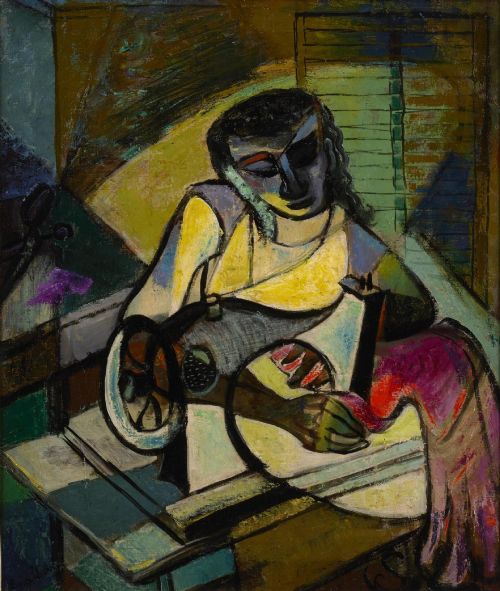
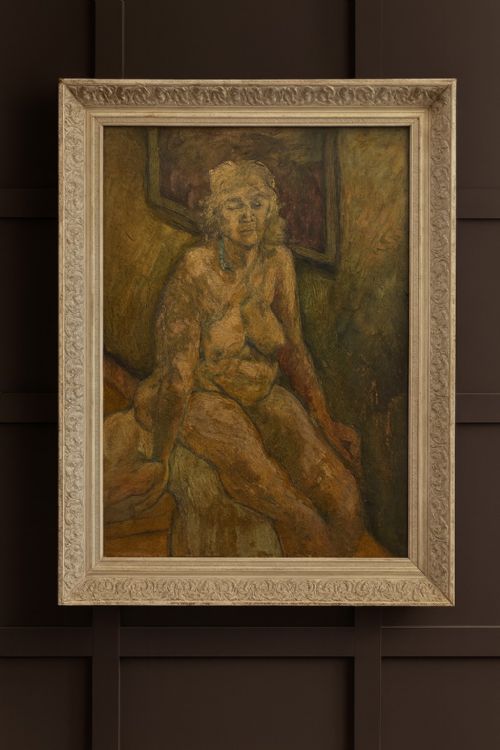
An expressionist female canvas captures human form and emotion through expressive brushwork, ranging from 1920s avant-garde studies to mid-century British and French works.
Expressionist Female Canvas
When you search for an expressionist female canvas, you encounter figurative paintings that prioritise emotional intensity over strict academic realism. These works focus predominantly on female subjects, including nudes, seated studies, and portraits captured by mid-century and earlier twentieth-century artists.
The pieces on this page span the 1920s to the 1960s, drawing on stylistic influences such as Mid-Century Modernism, Modern British art, Cubism, and Art Deco. You will find works originating from British and French contexts, often framed in wood or gilt plaster.
The form varies from intimate reclining nude studies to village scenes and expressive compositions involving figures and animals. Each piece reflects the distinct hand of its maker, ranging from identified artists to anonymous practitioners working in oil on canvas or board.
Materials and construction
These paintings rely on oil paint applied to canvas, and occasionally laid on to board, utilising the rich texture and slow drying time of the medium to build depth and gestural brushwork. Support structures include simple wooden frames as well as ornate gilt plaster surrounds.
Artists built these compositions through direct application of oil paint, creating the characteristic surface textures seen in expressionist and mid-century modern works. The physical support typically consists of stretched canvas over a wooden frame or board backing.
One canvas manages to capture both a reclining nude and a very relaxed cat sharing the same compositional space.
Distinctions in quality
Quality in these works rests upon the confidence of the brushwork and the expressive power of the composition. Stronger pieces demonstrate a commanding handling of form and light, particularly in how the artist interprets the female subject.
The cohesion of the palette and the structural integrity of the canvas and frame contribute significantly to the standing of a piece. Works that successfully balance modernist abstraction with figurative presence distinguish themselves within the field.
Lena Gurr·Tony Giles·Gaetan Dumas·Mercedes Legrand·Peter Jackson·Jean Hippolyte Marchand·Pinchus Krémègne·Yetta Kane·Raymond Arthur Roadnight·Bernard Meninsky
The Expressionist Female Canvas Glossary
- Canvas
- A heavy woven fabric utilised as a surface for oil painting. It provides a textured foundation that responds dynamically to gestural brushwork.
- Chiaroscuro
- Strong contrast between light and dark within a painting. This technique heightens the dramatic impact of the female form.
- Cubism
- An early twentieth-century avant-garde art movement that revolutionised European painting. It breaks down subjects into geometric planes and multiple viewpoints.
- Gilt plaster
- Decorative surface treatment applied to frames. It adds metallic lustre and sculptural detail around the perimeter of the painting.
- Mid-Century Modern
- A stylistic descriptor covering design and art from the middle decades of the twentieth century. It embraces simplified forms and expressive abstraction.
Expressionist Female Canvas: Frequently Asked Questions
What periods do these paintings cover?
The available works span several decades from the 1920s through to the 1960s. They capture the evolution of modernist and expressionist approaches to the female form across this timeframe.
Earlier pieces often reflect avant-garde and cubist influences, while later examples lean into mid-century expressionism and modern British styles.
What materials are used in these artworks?
The primary medium is oil paint applied to canvas, with some examples executed on board or canvas laid on to board. Supporting structures frequently include wooden frames and gilt plaster.
These traditional artist materials allow for rich textures and layered compositions that define the expressionist style.
How do I care for an oil painting on canvas?
Keep paintings away from direct sunlight and dramatic fluctuations in temperature and humidity to protect the oil paint and canvas support. Dust the surface gently with a soft, dry brush without applying pressure.
Avoid using water or chemical cleaners on the canvas or the frame.
Are these pieces signed by the artists?
Some works feature visible signatures or inscriptions left by the maker on the lower sections of the canvas. Others remain unsigned but are attributed through stylistic analysis and historical record.
Documentation provided in individual listings notes the presence of signatures where applicable.